
Catalog All books

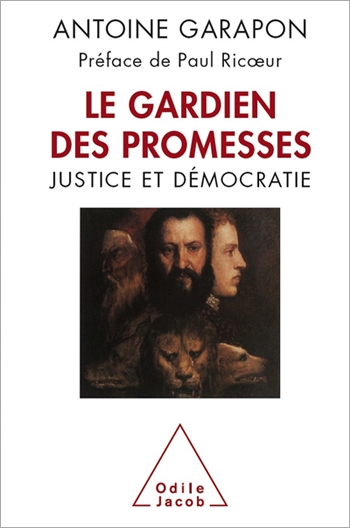
Antoine Garapon
The Guardian of Promises Justice and Democracy
The multiplying cases, the explosion of litigations, the sensational trials which catch the attention of the public : all are evidence of a growth in power of the judicial system, which we expect to be, at the same time, the arbiter of morals, the guarantee of public morality and responsible for the salvation of the people. But why dont we ask what things it cannot provide ? Isnt the idea of a judicial democracy just an illusion, which serves to hide serious problems ? The power of the judicial system is more worrying than exciting. It is an indicator of the discreditation of the State at the same time as a reduction in social cohesion. In the face of the fragility of democratic society, this book is a thorough reflection on the exercise of public power, affirming that the real role of the judge is not to take the place of the politic, but to diffuse the risk of democratic implosion by remaining the guardian of the promises at the very heart of republican laws. Antoine Garapon, a former judge and member of the editorial team of the journal Esprit, is the head of the Institute of Advanced Judicial Studies.
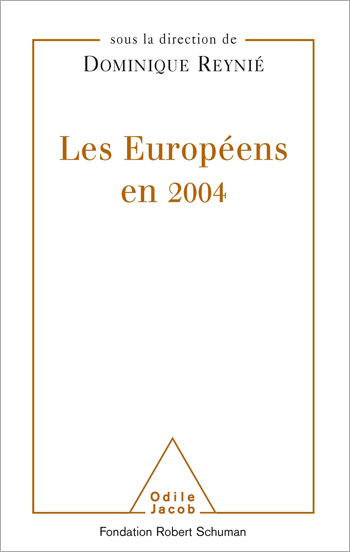
Dominique Reynié
Europeans in 2004
What does Europe's future hold? To answer this question, Dominique Reynié examines trends and developments in Europe's civil society, current events, and the debates and ideas currently under public discussion in the E.U. and in the rest of Europe. The information included here covers statistics and opinion polls; political events; political, economic and social issues; legal and constitutional questions; as well as European character traits, mind-sets and lifestyles. This is an indispensable work for anyone who wishes to become familiar with the reality of Europe in flux. Also included here is a unique synthesis of election results in all of Europe during the past year. Dominque Reynié teaches at the Institut d'Etudes Politiques, in Paris, and is the director of the Observatoire Interrégional du Politique. He is most notably the author of Le Triomphe de l'Opinion Publique.

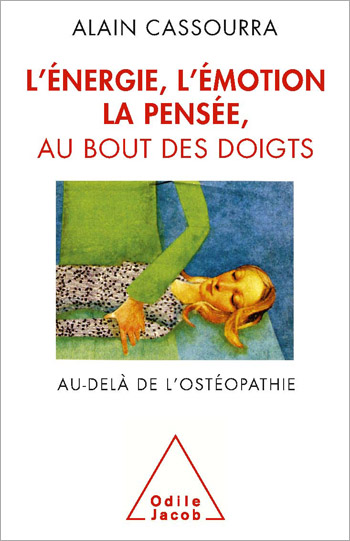
Alain Cassourra
The Energy, Emotion, Thought at your fingertips
From the body to the psyche, a new look at our aches and pains and what they mean.
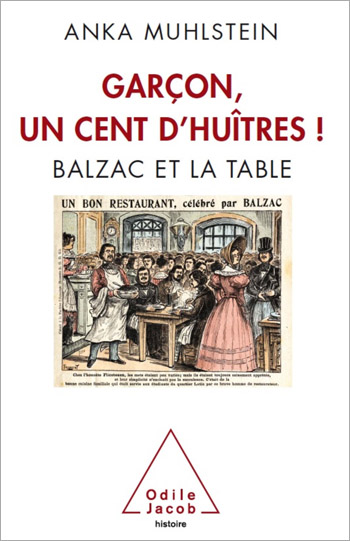
Anka Muhlstein
Balzac at Table
A luminous essay of “literary gastronomy” for food lovers as well as for anyone interested in the nineteenth-century novel
Antoine Garapon
Neoliberal Justice
An indispensable tool of critical thought to reach an independent opinion.