Catalog All books
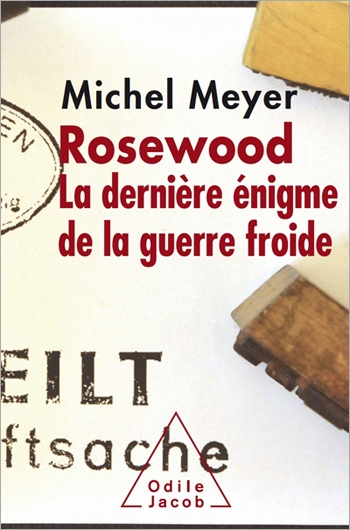
Michel Meyer
Rosewood: The Final Enigma of the Cold War
A gripping thriller that reveals the truth underlying the collapse of the Soviet Empire
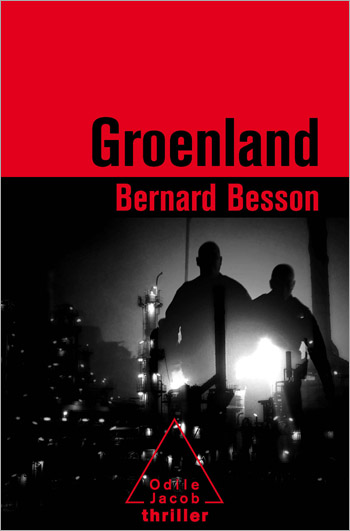
Bernard Besson
Greenland
“With an apocalyptic roar, Greenland’s Lauge Koch Kyst region had broken off from the mainland...
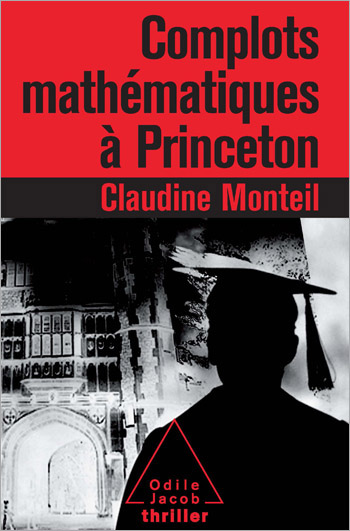

Caroline Rebstock
Amber Is Informed
Amber Materson, a young woman in her thirties, learns from a journalist that she is endowed with unique scientific properties: her blood contains stem cells still at the embryonic stage...


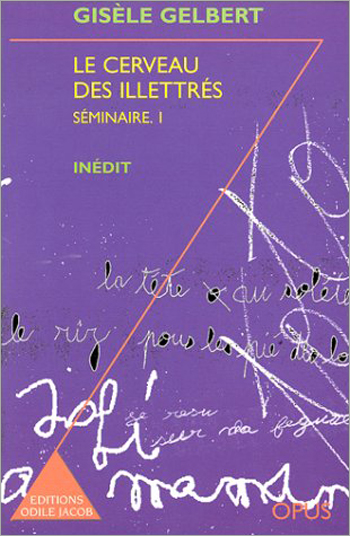
Gisèle Gelbert
The Illiterate Brain
Is illiteracy a social scourge, or is it an aphasia-like disorder? To find the answer, Gisèle Gelbert delves into the mysteries of the brain of an illiterate person, and teaches us the art of `repairing' it. By thoroughly breaking down each linguistic act, she is able to define and localise with great accuracy the disorders observed in both written and oral expression. She also makes use of the schema to develop exercices that are especially adapted to the clinical observation of localised disorders, thus opening the door to new therapeutic possiblilities. Gisèle Gelbert is a neurologist and aphasiologist. She is the author of "Lire c'est vivre "(Opus, 1996) and "Lire c'est aussi écrire" (1998).

Christian Saint-Étienne
Europe’s Wild Card The Real Solution to Exit the Economic Crisis
Christian Saint-Etienne argues that the European project was built on a fallacious concept from the start. The premises were false and Europe has become the world’s “soft underbelly”.
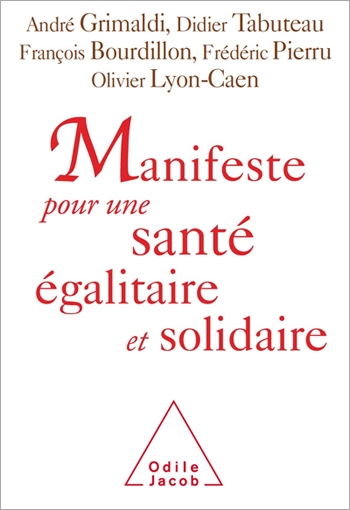
André Grimaldi, Didier Tabuteau, François Bourdillon, Frédéric Pierru, Olivier Lyon-Caen
Manifesto for Fair and Egalitarian Healthcare
In the run-up to the French presidential elections, two healthcare specialists denounce the constant and catastrophic deterioration of hospitals in France — and propose effective solutions

Luc Ferry, Axel Kahn
Legalize Euthanasia?
Based on a comparison of euthanasia legislation in several countries and an analysis of specific cases revealing the paradoxes of contemporary individualistic values...
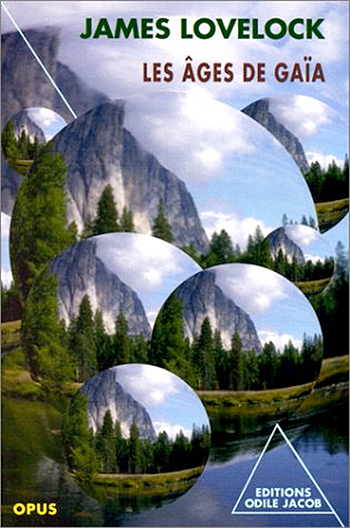
James Lovelock
The Ages of Gaia A Biography of Our Living Earth
The fascinating, controversial and most-worshipped hypothesis of ecologists - that of considering the Earth as the biggest living organism, referred to as Gaïa. It is here discussed by its inventor in person, who shows us that if our planet hasn't always had the same face, it's because there have been several ages corresponding to the predominance of very different species. In three centuries, humanity has wrought more modifications to the face of Gaïa than natural evolution did in millions of years. Although he does not doubt that the Earth, today turned completely upside-down by industrial activities, will find a new equilibrium, he does suppose that it could at the price of the disappearance of man, whose reign represents only one of the ages of Gaïa. Born in 1919, James Lovelock is the author of The Gaïa Hypothesis, a book which shook up the scientific world in the beginning of the seventies and met with great public acclaim.
Stanley Greenspan, Jacqueline Salmon
The Challenging Child (Coll. Opus) Understanding, Raising, and Enjoying the Five
There always comes a time when parents think that their child has become impossible. Hyper-sensitivity, withdrawal, systematic indiscipline, concentration difficulties, aggressiveness : through five cases of difficult children, Stanley Greenspan explains how to help by emphasising the sensory and motional differences of each of child. Importantly this book allows parents to identify for themselves the personality of their child, in order to find in the childs weaknesses the ingredients for future success. Stanley Greenspan is a doctor of medicine, and a teacher of psychiatry, behavioural psychology et paediatrics at the George Washington Faculty of Medicine in the United States. Jacqueline Salmon is a journalist at the Washington Post.
Ilya Prigogine
The End of Certainties (Coll. Opus)
As we come to the end of the century, the question of the future of science is often posed. I believe we are just at the beginning of a new endeavour. We are witnessing the development of a science which is no longer limited to simplified, idealised situations, but makes us face the complexity of the real world. This new science will allow human creativity to be experienced as the unique expression of a fundamental trait common to all aspects of nature. Ive tried to present this conceptual transformation, which implies the beginning of a new chapter in the fruitful relations between physics and mathematics, in a manner that will be comprehensible and accessible to all readers interested in the evolution of our ideas of nature. We are but at the threshold of a new chapter in the history of our dialogue with nature, writes Ilya Prigogine. Ilya Prigogine, winner of the Nobel Prize for Chemistry, teaches at the Free University of Brussels and at the University of Texas, in Austin.
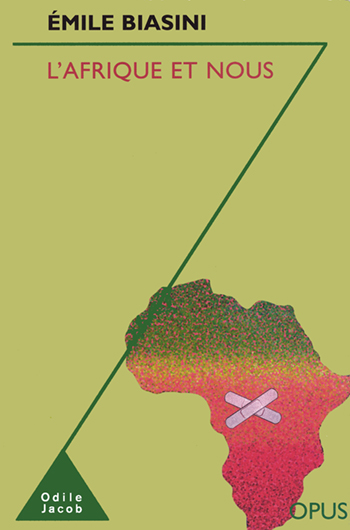
Émile Biasini
Africa and Us
Economist Charles Gide once described colonization as "a force of nature." Biasini believes that to imagine that our current phase of decolonization actually is an end to colonialism is just another manifestation of our society's megalomania. Africa today is going through a phase of change. It must stay faithful to its roots, digesting all the various cultures which have influenced it, while facing a new colonial menace. Its own elites, once fled abroad, have returned to Africa and are quickly becoming the colonists of their own countries. And such colonial ambitions, history teaches us, must inevitably lead to imperialism. Emile Biasini was a civil servant in colonial Africa. Under De Gaulle, he helped found the Ministry of Culture.