
Catalog All books

René Frydman
God, Medicine and the Embryo
With ethical questions raised about medically assisted pregnancies and medical experimentation, the eugenics debate has become a mute point. Yet bioethical legislation has remained ambiguous. René Frydman has made himself the ardent defender of progenics, a predictive and humanistic medicine. Here, Frydman reflects on the problem of the human embryo through the different points of view of science, religion, law, and morality, and answers ethical and religious questions that he has been asked by his patients. René Frydman is a gynecologist-obstetrician and a member of the FrenchEthics Committee.
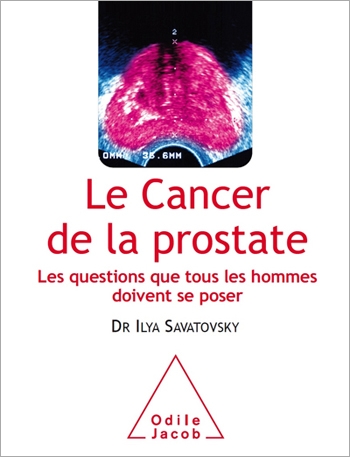
Ilya Savatovsky
The Prostate Cancer
Finding out more about prostate cancer to prevent it or overcome it
Jean-Pierre Danjean
Living With and Overcoming Chronic Fatigue
Preventing, understanding and overcoming chronic fatigue — a condition that was not recognised as a disease until 1988
Alain Cotta
Global Hypercapitalism
Erudite and original, this book presents a true portrait of the “Dynamics of hypercapitalism,” tracing its lines of strength. It is also a denunciation of the elites and of their oligarchical power, exercised on the middle classes.

Michel Godet, Marc Mousli
The Joy of Work Working brings us alive
A message for our political and economic leaders: work plays a central role in our societies, and seniors constitute a formidable pool of skills that they must learn how to use
Mario Bettati
International Environmental Law
An indispensable book for students, diplomats and activists faced with attacks on the environment

Françoise Benhamou
The Star-System Economy
We live in an age that spends fortunes on its stars. But why do we get the impression that the fees that stars receive and their popularity correspond less and less to their talent? Why does stardom seem to have so little to do with creativity and quality? Françoise Benhamou is an economist.

Jean-Baptiste de Foucauld
The 3 Cultures of Human Development Resistance, Regulation, Utopia
Today, economic growth has taken off again, creating jobs and making full employment a feasible goal. And yet, at a time when we seem to be at the brink of a new recession, nothing seems to have really changed. Modernisation may exclude fewer members of our society than had been previously feared, but, if we are not careful, their exclusion will be all the greater. It is no longer possible to retain a soft procedural approach to democracy. Democracy needs to return to its origins; it must be given a goal, based on a strong vision of humanity and of humanity as part of society. It is necessary to construct human development along the lines of three political and spiritual cultures which represent our common heritage : resistance, regulation and utopia. Jean-Baptiste de Foucauld is a senior official in the French Treasury. Until 1995 he was a commissioner of Frances economic plan. He is active in numerous think-tanks and associations that struggle against social exclusion and unemployment.

Robert Dautray
Quelles énergies pour demain ?
If there is such a thing as a French exception, it is in matters of energy. Lacking natural energy resources, France has developed a vast electro-nuclear programme which not only guarantees the country's political independence but also produces budget surpluses. Since the existing electro-nuclear equipment is not everlasting, and must thus be renewed, the question of the total dependence on nuclear energy has arisen once again. This book, by one of the most influential French scientists of the post-war period, is an in-depth analysis of the country's energy system and its problems, and the prospects for future development. The author begins by an examination of production methods by major categories (oil and natural gas, coal, hydraulic energy, solar energy, biomass, nuclear energy, geothermal energy, wind, renewable energy, bioenergy, thermonuclear energy). He then describes the role that energy plays in our society, and how society reacts to energy problems. He concludes that present and future citizen-consumers should be placed at the centre of all discussions about energy methods, that consumers should be satisfied and respected and that their opinions should be considered. But this, he says, is exactly the opposite of what has happened up to now. The last part of the book, which deals with scientific and technical research, tries to answer the questions: What should be done? What actions should be undertaken? Time is running out and irreparable harm is being done to the environment. How much time is left to discover and develop the new procedures that will enable us to save what may still be salvaged? As was amply illustrated by the heatwave of 2003, the environment remains a crucial issue. In this important book, the author has had the courage to urge scientists and experts to step out of their ivory tower, to meet with citizens, and to provide for their needs. And he takes the risk of outlining some highly specific measures to be undertaken in the next ten years. Robert Dautray is an engineer and physicist at the French Atomic Energy Commission and a member of the Academy of Sciences.