
Catalog All books

Jeanne-Marie Bréchot, Brigitte Joseph-Jeanneney, Martine Ruszniewski
Surrounding Illness The Family, the Doctor and the Psychologist
Should the same information be given to the sick person, and their family ? How can one get through the trauma day by day ? Should the entire truth be told? Should one prepare for mourning? How to say goodbye ? This book is a spontaneous and moving three-way discussion to help those faced with serious illness. Brigitte Joseph-Jeanneney is a general inspector of social affairs. Jeanne-Marie Bréchot is a thoracic cancer and lung specialist at the Hôtel-Dieu hospital, in Paris. Martine Rusniewsky is a psychologist working with patients in the palliative care ward at Hôpital de la Salpetrière, in Paris.
Antoine Garapon
Crimes Which Can Neither be Punished Nor Forgiven Towards an International Justice
The creation of a system of international criminal justice was one of the greatest political upheavals of recent decades. The fact that international criminal law has been allowed to question national sovereignty is a revolution in itself. The detractors of international justice contend that it is simply the justice of the victors. Could they be right? Have law and ethics been muddled? Have the trials conducted in its name helped heal the victims? Can justice prevent civil war? A former magistrate, Antoine Garapon heads the Institut des hautes études sur la justice.
Robert Rochefort
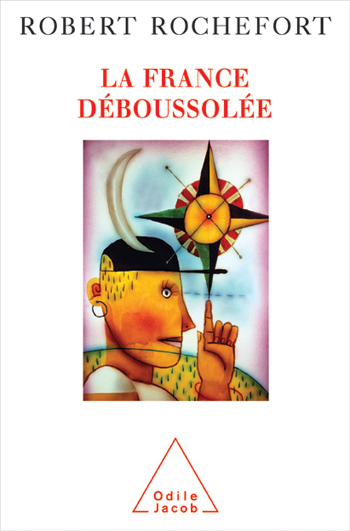
A Disorientated France
This book argues that France is seeking an impossible model: on one hand, it wishes to hold fast to its exception, constituting a society which is unlike other western ones. Yet, on the other hand, France is not only obliged to accept neo-liberal globalisation, but it actively participates in doing so, through its large industrial and banking groups. Though constantly seeking to act rationally and to be the master of its fate, the future of Descartes country is probably as unpredictable as the trajectory of a billiard ball, no matter how talented the player wielding the cue may be.