Catalog All books
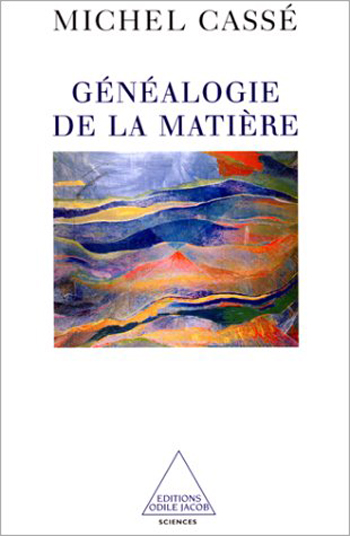
Michel Cassé
The Genealogy of Matter
Atoms originate in the stars. There is no real separation between the Earth and the sky, and matter forms one great whole, based on a series of nuclear reactions. Written in a lyrical, poetic style, this is a concise, clearly illustrated account of the birth of matter, aimed at the general reader. Michel Cassé is an astrophysicist and researcher at the CEA and the Institut Astrophysique, in Paris. He is the author of Du Vide et de la Création and La Petite Etoile.

René Frydman, Muriel Flis-Trèves
An Announcement to Marie, Sarah, Agar and the others.... Colloque Gypsy IV
Womens lives are marked by a series of physical events, which may or may not be expected, including pregnancy, illness, foetal malformation or death, and menopause. What effect do these events have? How do women cope and live with them? The reply to these questions is given here by the top specialists in the field, including psychoanalysts, gynaecologists, and philosophers.

Frédéric Fanget
Assert Yourself! For more productive relationships with others
Do you have trouble expressing your needs? Is it difficult for you to say 'no'? Are you afraid of speaking in public? Written in the form of a self-help manual, this book should enable you to pinpoint those situations in your professional and personal life that give you most difficulty: expressing yourself during a meeting; starting up a conversation when you don't know anyone; criticising your partner; saying 'no' to a friend who wants a favour; asking your boss for a raise. This book aims to help you (re)develop a balanced relationship with others, so you can learn to express yourself while avoiding the extremes of passivity or aggression. Frédéric Fanget is a medical psychiatrist and company consultant specialising in disorders related to lack of assertiveness. He teaches and practises in Lyon.