
Catalog All books
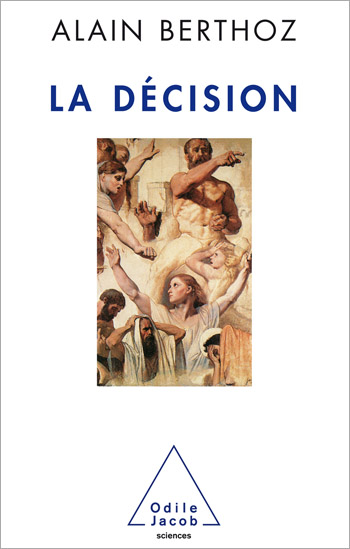
Alain Berthoz
The Decision
In this work, Alain Berthoz examines the psychology of decision-making, based on his conception of the human brain not as a calculator or compiler but as a simulator of action. Instead of considering the process of decision-making as a rational one, based on logical tools, he regards it as the fundamental property of the nervous system, its goal being to prepare, command and control actions and shows that to decide is to predict. Alain Berthoz teaches physiology of action and perception at the Collège de France.

Jacques Perriault
Access to Online Knowledge
It is now possible to research and organise information and study online, through the Internet and with the help of satellites. However, the euphoric claims made for e-learning in the past, and the posturing strategies of telecommunications operators, were followed by a profound feeling of disillusion. What is the digital future ? What role can it play in education ? What measures need to be put in place in order to ensure long-lasting development ? Jacques Perriault teaches media and communications studies at the University of Paris-X-Nanterre.
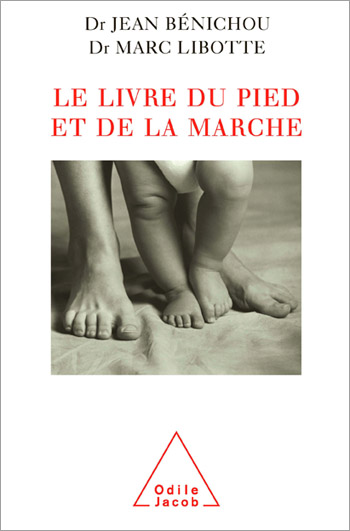
Jean Bénichou, Marc Libotte
The Book of Feet and Walking
Do you have flat feet ? Hollow feet ? How can deviations of the toe be treated ? Sprains ? How can you look after the nails and the skin ? How should you treat athletes foot ? What to make of reflexology ? Why are the feet of children, athletes and senior citizens so fragile ? How is the marvel of bipedalism possible ? What is the position of the foot in our culture ? Dr Jean Bénichou and Professor Marc Libotte are orthopaedic surgeons, specialising in foot surgery.

Jeanne-Marie Bréchot, Brigitte Joseph-Jeanneney, Martine Ruszniewski
Surrounding Illness The Family, the Doctor and the Psychologist
Should the same information be given to the sick person, and their family ? How can one get through the trauma day by day ? Should the entire truth be told? Should one prepare for mourning? How to say goodbye ? This book is a spontaneous and moving three-way discussion to help those faced with serious illness. Brigitte Joseph-Jeanneney is a general inspector of social affairs. Jeanne-Marie Bréchot is a thoracic cancer and lung specialist at the Hôtel-Dieu hospital, in Paris. Martine Rusniewsky is a psychologist working with patients in the palliative care ward at Hôpital de la Salpetrière, in Paris.

Antoine Garapon
Crimes Which Can Neither be Punished Nor Forgiven Towards an International Justice
The creation of a system of international criminal justice was one of the greatest political upheavals of recent decades. The fact that international criminal law has been allowed to question national sovereignty is a revolution in itself. The detractors of international justice contend that it is simply the justice of the victors. Could they be right? Have law and ethics been muddled? Have the trials conducted in its name helped heal the victims? Can justice prevent civil war? A former magistrate, Antoine Garapon heads the Institut des hautes études sur la justice.
Serge Tisseron
The Benefits of the Image
Should sex and violence be banned on our television screens ? Is there a danger that their presence can lead to them becoming common-place, or to delinquency ? In light of this current debate, Serge Tisseron argues that as soon as we become accustomed to a type of image, and it ceases to upset us, we invent another type which will once more allow us to confuse image and reality, and thus to shiver again with fear and anxiety. In a society which is flooded with images, it is thus essential to use them as best we can, and to avoid the dangers that are inherent in them. This book aims to contribute to this end. Serge Tisseron is a psychiatrist, psychoanalyst, doctor of psychology and research fellow at the University of Paris-X. For the past fifteen years, he has worked on the relations that viewers have with different types of images.
Vilayanur S. Ramachandran, Sandra Blakeslee
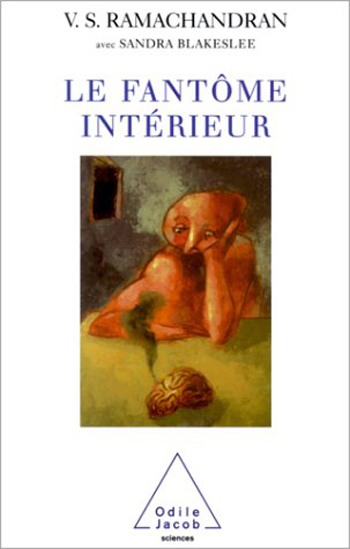
Phantoms in the Brain Human Nature and the Architecture of the Mind
How do we make decisions? Why do we deceive ourselves? Why do we dream? Why may we believe in God? Why do we laugh or become depressed? Few scientists have dared address these questions that inform our daily lives with so much acumen and audacity. V.S. Ramachandran is a brilliant Sherlock Holmes of neuroscience. He reveals the strangest case studies he has encountered of patients suffering from serious neurological disorders and the insights they yield about human nature and the workings of the mind. V.S. Ramachandran is professor and director of the Center for Brain and Cognition, at the University of California.
Marc D. Hauser
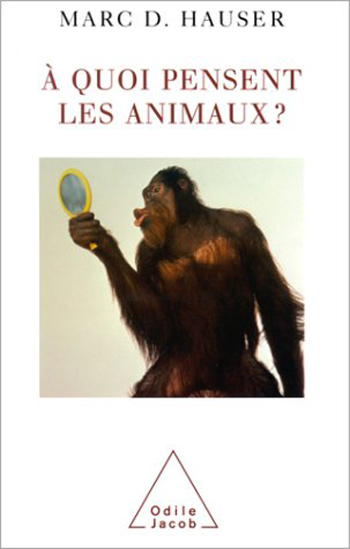
Wild Minds: What Animals Really Think
A slender loris comes up to a zoo keeper and hugs him. A dog lowers its head and whines when its master is unhappy. Is such behaviour a sign of affection and empathy or are other mechanisms at work, to explain the animals near-human behaviour? Why do chimps and dolphins form coalitions to defend themselves? How do lions determine, from far away, the number of gazelles calmly watering by a stream? How is it that a few species can recognise their own image in a mirror? Marc D. Hauser is a professor of psychology and neuroscience at Harvard University, where he is a fellow of the Mind, Brain and Behavior Program. Besides performing laboratory research, he has done extensive fieldwork in Kenya, Uganda and Puerto Rico.
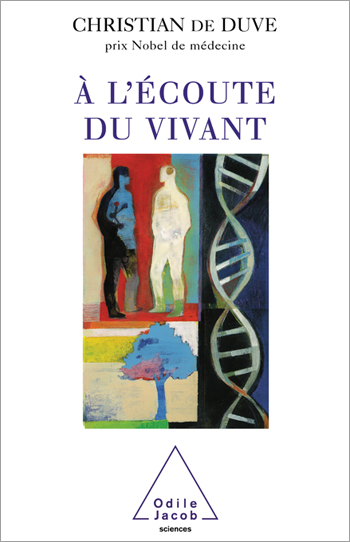
Christian de Duve
Listening to the Living
Everything one should know about biology is explained here by a Nobel Prize winner, including the origin of life, its chemical production and reproduction, the history of life, its earliest forms and also human evolution, the brain, the genius of genetics, and extra-terrestrial life. Finally, the author shows that although biology has undermined arguments in favour of the existence of God, religion and faith are a necessary product of nature selection. Christian de Duve is the director of the Brussels-based International Institute on Cellular Pathology. He was awarded the Nobel Prize in Physiology or Medicine in 1974 for his findings concerning the structural and functional organisation of cells.