
Catalog All books
Mario Bettati
The Drug Trade Why Drug Trafficking Must be Internationally Controlled
An up-to-date review of international drug rings and of the legal and administrative measures to combat them

Yves Michaud
Equality and Inequalities Volume 10
This volume continues and prolongs the earlier, highly successful series "LUniversité de tous les savoirs" (365 lectures, published in six volumes by Editions Odile Jacob). Renowned specialists in their fields examine the inequalities that exist between countries as well as among individuals: unequal access to education, the technological gap, unequal treatment before the law, economic inequalities, and disparities concerning health and hygiene.
Denis Stora
Guide to the Main Medications and Their Generic Equivalents
Since October 2003, France's health-care system has required users to purchase generic medications, when these exist, if they wish their medical prescriptions to be covered. Physicians have agreed that 75% of all prescriptions will be for generic medications, and pharmacists are committed to making the necessary substitutions. Physicians, pharmacists and users will thus be utilising an increased volume of generic medications. Presented here in alphabetical order are the 150 molecules contained in approximately 1600 medications that are on the market today. More than a list of generic equivalents, this is an intelligent guide to medications. Each molecule listed is described with its pharmacological activity, therapeutic indications and contra-indications, dosages and major recommendations. This is a highly useful pedagogical guide, since brand names will gradually disappear in favour of their chemical names (paracetamol instead of Doliprane, fluoxetine instead of Prozac). Denis Stora, the holder of a doctorate in pharmaceutical studies, has been a licensed pharmacist for twelve years. He is a teacher and the author of numerous practical books for nurses and pharmacists.


Richard S. Tedlow
Audacity and the Market The Invention of Marketing in the United States
What great commercial battles in the United States are at the origin of marketing ? What strategic choices, technologies and infrastuctures have made possible one of the great social and economic upheavals of the 20th century ? This book recounts the combats waged without mercy between Coca-Cola and Pepsi-Cola, and Ford and General Motors, and also the story of the pioneer manufacturers and distributors who created marketing, invented standardised products, international brands, the segmentation of markets, chains of shops and supermarkets... Richard Tedlow is a professor at Harvard Business School and has long been Editor-in-Chief of the famous Business History Review.
James Gleick
Genius: Richard Feynman and Modern Physics
Richard Feynman, Nobel Prize winner for his work on the description and calculation of interactions between particles, was a genius of our time. Quantum physics theoretician, enfant terrible of the Manhattan project and ascerbic critic of the investigative committee of the American space shuttle, Feynman left a profound impression on modern physics. James Gleick, a former journalist at The New York Times and author of the best-selling Chaos Theory, tells how Feynman's ideas were formed and how he reinvented particle physics. Through this portrait, Gleick explores the nature of genius itself and provides insight about the fascination that it engenders.
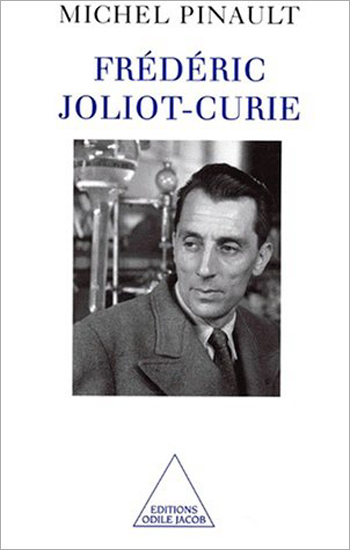
Michel Pinault
Frédéric Joliot-Curie
This is the first biography of Frédéric Joliot-Curie, the founder of French nuclear research and winner of the Nobel Prize for Chemistry in 1935. For many, he represents the political commitment of French intellectuals in the struggle against Fascism in the twentieth century. His life illustrates the transition from traditional science, limited to the world of academia, to Big Science, with major national and international repercussions. Michel Pinault holds an agrégation and a doctorate in history from the University of Paris I.

Patrice Huerre, Martine Pagan-Reymond, Jean-Michel Reymond
Adolescence doesn't exist (New Edition)
Adolescence is a recent conception in the history of man, a method of signifying, via puberty, the passage from childhood to adulthood which has always existed. In the past, this passage was celebrated and defined through the practice of rituals. Today the transition is no longer marked within such a strict timescale. Even more serious is the tendency for adults to refuse young people entry into their grown up world, either as a result of their own fear of aging, or of their desire to protect the young person from all possible risk. Patrice Huerre is a hospital psychiatrist, psychoanalyst and director of the Georges Heuyer University Medical Clinic in Paris. Martine Pagan-Reymond is a certified professor in Modern Literature. Jean-Michel Reymond, formerly Chief of Staff of Child and Adolescent Psycology is now Director of the Medical-Pedagogic Center of Saint-Lô.


Walter J. Gehring
Master Control Genes in Development and Evolution: The Homeobox
What can be more amazing than an embryos development? How do the cells know that the eyes go on the face and not on a leg or some other part of the body? And why does this information sometimes go awry giving rise to a deformed creature? Walter J. Gehring, a renowned specialist in the genetics of embryonic development, traces recent developments in the field. Walter J. Gehring teaches cellular biology at the University of Basle, Switzerland.

Yves Michaud
New Therapeutics
Advances in medical science are constantly being made, but it is often difficult for patients to realise what these advances entail and to understand their applications. The twelve lectures collected in this new volume in the series L'Université de tous les savoirs aim to inform us about some of these recent advances by addressing the following questions: What is the procedure for putting new medication on the market? How is new medication tested? What are the policies for furthering pharmaceutical innovation? How are health care structures organised? What will the hospital of the future be like? What are biotechnologies? What has been the impact of the neurosciences on therapeutics? What advances have been made in genetic mapping? What benefits can patients hope to gain from it? Gathered here are contributions by a geneticist, a surgeon, a psychiatrist, an emergency doctor, a neurologist and a philosopher. They examine the state of medical research today and address a question that concerns us all: What will medical care be like in the future? Contributions by Yves Agid, Pierre Carli, Alain Carpentier, Patrick Couvreur, Claude Debru, Bernard Golse, Didier Houssin, Gérard Le Fur, Jacques Marescaux, Arnold Munnich, Luis Omnès and Olivier Saint-Jean. Other books in the series include Qu'est-ce que la vie?, Qu'est-ce que l'humain?, Qu'est-ce que la société?, Qu'est-ce que l'Univers?, Qu'est-ce que les technologies?, Qu'est-ce que la culture?, Qu'est-ce que la vie psychique?, Le Renouvellement de l'observation dans les sciences, La Chine aujourd'hui, Egalité et inégalités, Qu'est-ce que la diversité de la vie?, Qu'est-ce que la globalisation?, Paris and La Guerre d'Algérie 1954-1962.