
Catalog All books

Bernard Frank
Gods and Buddhas in Japan (Work of the Collège de France)
Japanese Buddhism descends directly from the Chinese Buddhist tradition which flourished from the sixth to the eighth centuries.



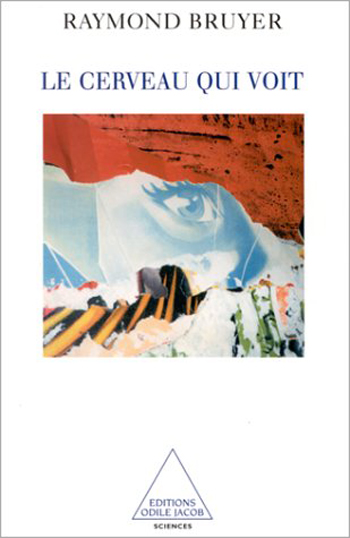
Raymond Bruyer
The Brain that "Sees"
Based on numerous examples, this book describes and explains the phenomenon of perceptive recognition: how with minimal information the human brain can identify not only general forms (a man, a woman, a cat, a dog, a house, and so forth), but also specific individuals who might seem scarcely distinguishable from one another, unless a large amount of information is provided. This study of the brain that sees is also an exploration of the perceived world. Raymond Bruyer teaches experimental psychology at the University of Louvain La Neuve, Belgium.


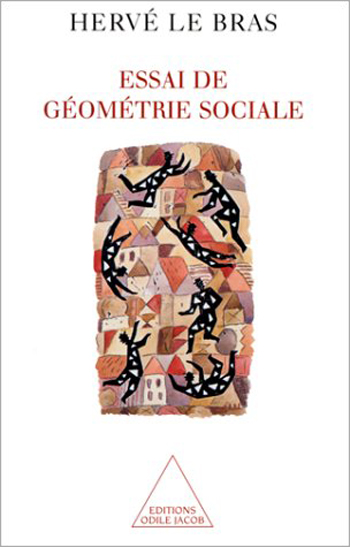
Hervé Le Bras
Essay on Social Geometry
Hervé Le Bras examines here how post-modern mathematics, targeting concrete issues, can help us to address a fundamental concern of all human societies, i.e., how space is occupied. Among many topics he examines pastoral nomadism, agricultural sedentariness, territorial conquest, migrations, ancient and modern urban planning, national and regional development, and road traffic. Hervé Le Bras is a demographer and course director at the Ecole des Hautes Etudes en Sciences Sociales.


Jean-François Peyret, Jean-Didier Vincent
Faust A Natural History
It all began in July 1995, when theatre director Jean-François Peyret met with biologist Jean-Didier Vincent, in the latters lab. The intellectual exchange and friendship that developed from that meeting resulted, several years later, in a theatrical production based on a free adaptation of Goethes Faust, until then deemed unperformable. In this book, they look back on their production of Faust, and take stock of their experience. Their book can be regarded as a novel, a dialogue, a confession, a reinterpretation of Faust, or simply a mind game. Quietly and without ostentation, Peyret offers the reader a brilliant examination of the theatre today, and Vincent upholds his views more freely and strongly than ever before.


Steven Pinker
How the Mind Works
In his new book, Steven Pinker studies the human mind. What is it? How did it evolve? How does it enable us to see, think, feel, laugh, interact with others, have aesthetic experiences, and reflect on our own lives? This is the long-awaited synthesis encompassing all the major explanations offered by evolutionary biology and the cognitive sciences concerning mental life of human beings. Steven Pinker heads the Center of Cognitive Neurosciences at the Massachusetts Institute of Technology. He is the author of the highly acclaimed Language Instinct.









Collectif
The National Gendarmerie A Republican Institution for Civic Service
The national Gendarmerie has passed through eight centuries of history in constantly adapting to the needs of the State and citizens. The changes of political regimes and governments has little by little forged an original military institution, faithful to republican principles. Its specificity lies in the multiplicity of its tasks : defence, judiciary policing, and public security. On October 12th 1999, more than three hundred members of parliament, senior officials, academics, practitioners, researchers and military men were brought together at the Luxembourg Palace. The proceedings of this conference are gathered together in this book for the purpose of helping to trace a vision of the future for tomorrows Gendarmerie.

Bernard Walliser
Cognitive Economics
This book should help readers gain a greater understanding of economic reasoning and rationality. It shows how a period of study and apprenticeship can improve the otherwise limited rationality of economic decisions-makers, how to co-ordinate the various actors expectations in a given situation, and how speculation results from the circulation of the opinions of the economic decision-makers. Bernard Walliser teaches economics at the Ecole des Ponts et Chaussées.
Giulia Sissa
The Soul is a Feminine Being
Do women have a soul ? Philosophers have historically doubted this, refusing to accord women rationality. However, at the same time, they have been unable to imagine the soul without the help of feminine metaphors : the soul conceives, it is pregnant with knowledge, it gives birth in pain and distress but always with the help of someone. In reading classic texts such as Derrida, and deconstructing them while drawing comparisons with others and focusing on what may seem paradoxical, such as the many Freudian slips, Giulia Sissa leads us to interrogate ourselves on the exclusively feminine attributes of the Western soul. A radical questioning of the difference between the sexes which leads us to the most profound aspects of our culture.