Results for the series Le champ médiologique
Jacques Perriault
Access to Online Knowledge
It is now possible to research and organise information and study online, through the Internet and with the help of satellites. However, the euphoric claims made for e-learning in the past, and the posturing strategies of telecommunications operators, were followed by a profound feeling of disillusion. What is the digital future ? What role can it play in education ? What measures need to be put in place in order to ensure long-lasting development ? Jacques Perriault teaches media and communications studies at the University of Paris-X-Nanterre.
Régis Debray
Believe, See, Do Crossings
In this work, Régis Debray gives free rein to his thoughts and tackles the varied subject matter provided by daily events encountered " in the news, out of the blue, or through friendship or surprise, at a moments notice and without great forethought. " The subjects he writes about range from " the Gulf War to a photo exhibit, from Tatis Jour de Fête to copyright registration, from a daydream about water to a meditation on road travel. " Other works by Régis Debray published by Editions Odile Jacob include Que Vive la République!, Tous Azimuts, and Transmettre.
Régis Debray
God, An Itinerary
"If we can be said to have a goal, it is to reply as precisely and soberly as possible to a childish question, which has been frequently set aside as trivial: Why are these beliefs, which came to light in the desert three thousand years ago, still among us? And why is it that hundreds of millions of men and women still follow them? The study of God's minor aspects does not, in our opinion, lessen its significance. Instead, it gives new life to spiritual issues." Régis Debray Régis Debray teaches at the University of Lyon-III.
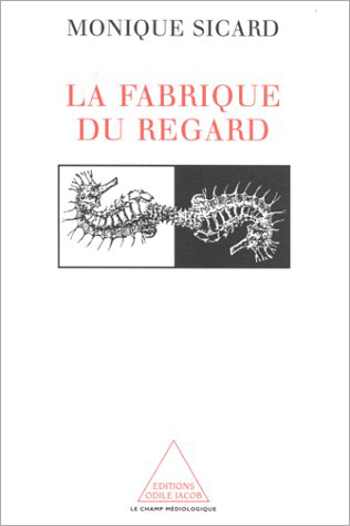
Monique Sicard
The Making of the Image
It was during the Renaissance that images and pictures were first used by anatomists, microscopists, and astronomers as scientific tools. In that era, scientific images served as a kind of inventory of the known world. In the 19th century, the popularization of scientific ideas gave science a new vigor. Photographic images gave science a new reality, explaining and legitimizing scientific concepts--movement, for example--to a fascinated public. In our days, the scientific image is often a construction--helping us to represent objects and ideas that, like fractals or black holes, cannot be defined through actual observation. Monique Sicard is Projects Director at CNRS Images Média.