Catalog All books
Jacques Bouveresse, Daniel Roche
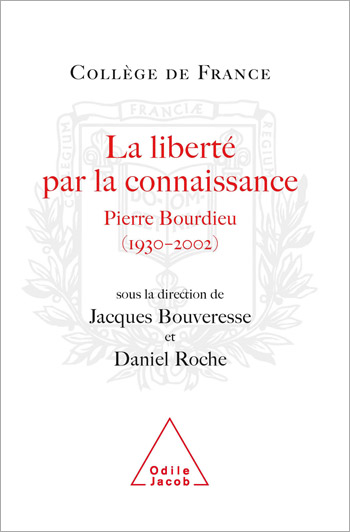
Freedom Through Knowledge: Pierre Bourdieu, 1930-2002 (Travaux du Collège de France)
Gathered in this volume are the texts of lectures given in memory of Pierre Bourdieu at an international colloquium held on 26-27 June 2003 and jointly organised by the Collège de France and the Ecole Normale Supérieure, with the backing of the Hugot Foundation.
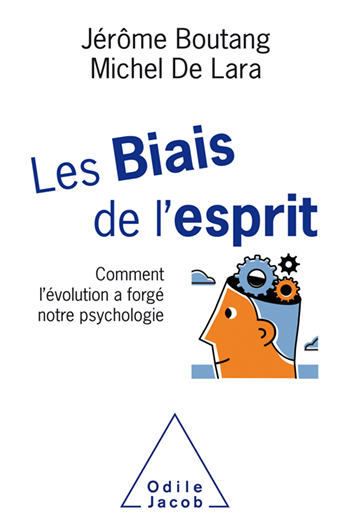
Jérôme Boutang, Michel DeLara
The Biases of the Mind Ways of thinking modeled by evolution
An evolutionist psychology for dummies. A fun book on a subject that concerns us all.
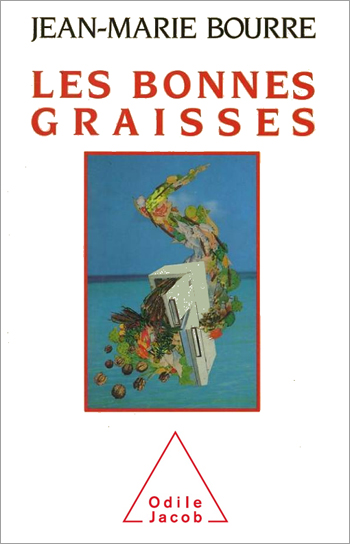
Jean-Marie Bourre
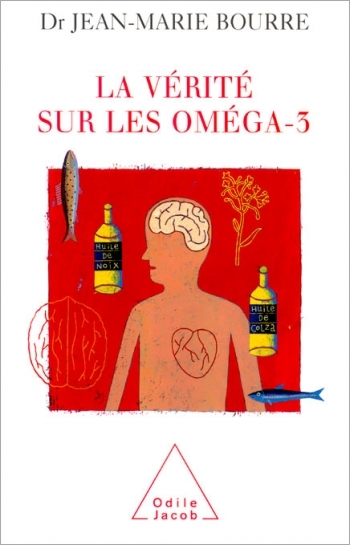
The Good Fats
Are fats the demons of modern times? Are they the bane of too rich diets? Are they the poison of opulent societies? Without fats, which are an absolute necessity for our brain and our health, life would be impossible. Fats are also the vectors of culture, through the many joys of cooking.
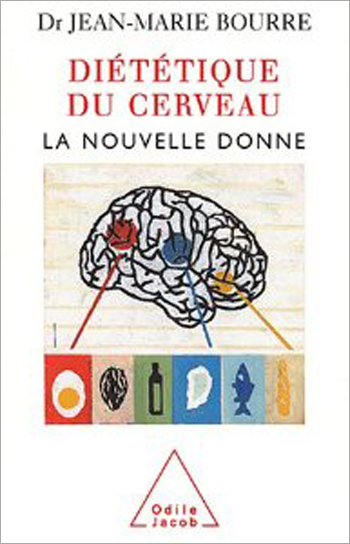
Jean-Marie Bourre
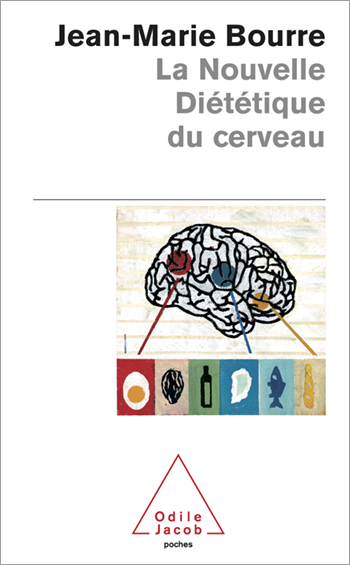
The Dietetics of the Brain
How should you eat to improve how you think? This book sounds the death knell of repressive rules of nutrition and celebrates the joys of the food-loving, gourmet brain. What is the greatest nutritional risk? An unbalanced diet. By providing the keys to proper nutrition, this book shows the way to greater mental awareness, energy, health and fulfilment, while respecting the real needs of both the body and the brain that most crucial organ. Throughout the book, pleasure (adapted to every budget) remains one of the authors main concerns. Jean-Marie Bourre heads a research team specialising in the chemistry of the brain, at INSERM.
Jean-Marie Bourre
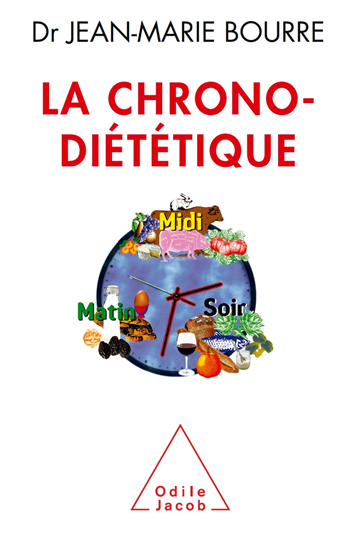
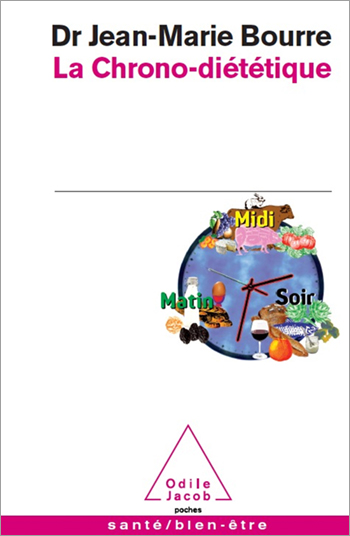
Chrono-dietetics
For an optimum absorption of the nutrients our bodies require we must pay close attention to our biorhythms
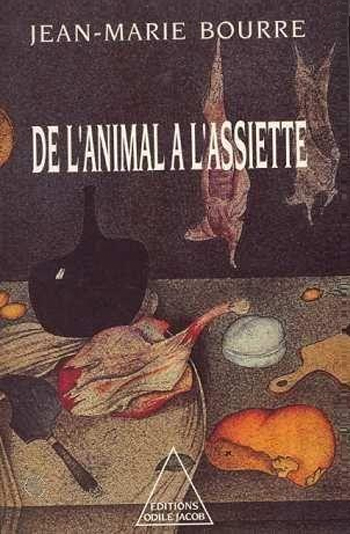
Jean-Marie Bourre
From the Animal to the Plate
Traditionally, meat was the basis of our meals. Today it has become the object of dietary resentment: too much fat, too rich, too heavy... Yet meat contains proteins essential to a healthy existence. J.-M. Bourre joins the search for meat replacements, exploring the riches of the sea, the ressources found in vegetal proteins, innovative cooking techniques, and recent changes in breeding.

Jean-Marie Bourre
Chrono-dietetics
For an optimum absorption of the nutrients our bodies require we must pay close attention to our biorhythms
Jean-Marie Bourre
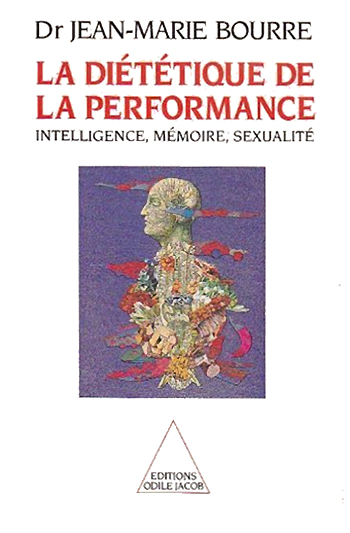
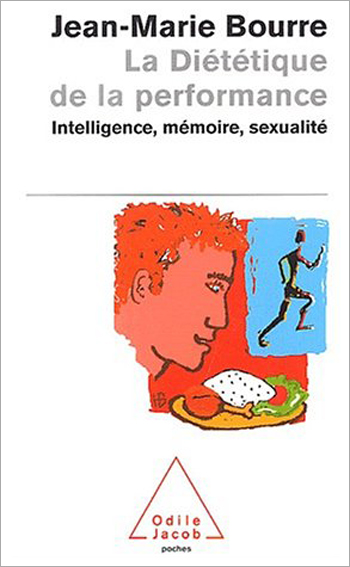
The Performance Diet Intelligence, Memory, Sexuality
How can we stay concentrated all day long? How can we avoid energy drops and sleepiness? How can we keep and develop our memory? How can we stimulate our intellectual alertness? How can we sleep well? How can we improve our sexuality? How can we stay fit and enhance our physical capacities? J.M. Bourre shows that the answers to all these questions and many others can be also found in what we eat.
Jean-Marie Bourre
Food for Thought And Pleasure
"Why do we eat? For our intelligence capacity, aswell as the harmonious functioning of the body. Yes, for the brain you must eat eggs, charcuterie, red meat, as oily fish as possible, accompanied by fruit and vegetables, and complemented by wine and beer. Yes, you must derive pleasure from eating. And no, you don't need to become a herbivore, which would only serve to hinder the development and operation of your brain!" Jean-Marie Bourre
Jean-Marie Bourre
Chrono-dietetics of the Brain
How eating the right food at the right time can enhance brain health, efficacy and pleasure
Jean-Marie Bourre
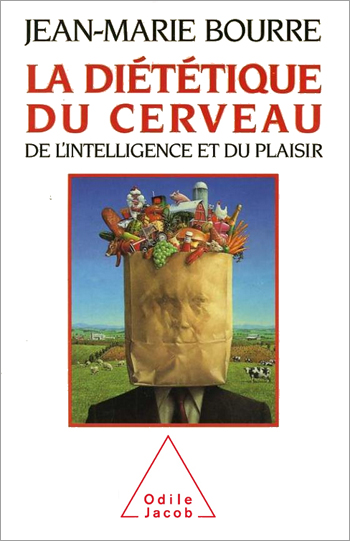
The Dietetics of the Brain Intelligence and Pleasure
What mechanisms govern our cravings, our taste, our nutritional needs? How should we eat to think well and work productively? J.-M. Bourre, a neurotoxicologist, celebrates the pleasures of a greedy brain, a gastronomical brain. He takes us on a fascinating exploration of the complex chemistry which links our brain to our plate in the world of proteins, vitamins, mineral salts, and lipids.
Jean-Marie Bourre
The Dietetics of the Brain New Edition
How should we eat to think well and work productively? J.-M. Bourre, a neurotoxicologist, celebrates the pleasures of a greedy brain, a gastronomical brain. He takes us on a fascinating exploration of the complex chemistry which links our brain to our plate in the world of proteins, vitamins, mineral salts, and lipids. By providing the keys to proper nutrition, this book shows the way to greater mental awareness, energy, health and fulfilment, while respecting the real needs of both the body and the brain that most crucial organ. Throughout the book, pleasure (adapted to every budget) remains one of the authors main concerns.
Jean-Marie Bourre
A Program to Feed Your Brain Well
A clear and instructive approach that enables the reader to understand what is needed to be at the height of one’s intellectual abilities.
Dominique Bourg
In Defence of an Ecological Sixth Republic
Proposals for a reform of the French Constitution in the run-up to the 2012 Presidential elections
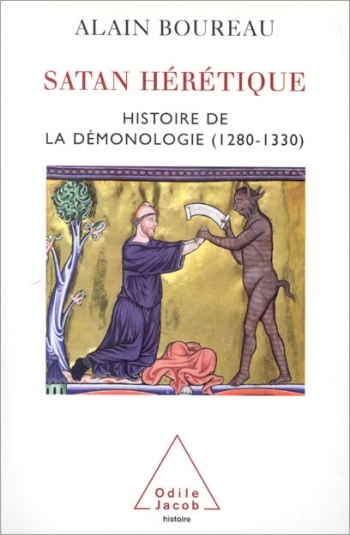
Alain Boureau
Satan, the Heretic History of demonology in Medieval Europe, 1260-1350
Alain Boureau is one of the most original French medievalists. In his earlier, best-selling book on the droit du seigneur, he showed that such a custom had never actually existed. The present work is not about Satan and Satanism, but about the birth of demonology, i.e. about the demons that inhabit Satan's Court - a fascinating topic for a medievalist. Before the end of the thirteenth century, theology had shown little interest in demons, according to Boureau. But Saint Thomas Aquinas' Treatise on Evil, written in 1272, changed all this. Boureau tries to find an explanation. He is not concerned with why people believe in demons - he has not written a social history of demonology. Instead, he sets out to understand why theologians became interested in the subject - for this is a history of theological ideas about demons. The author summarises his explanation as follows: I propose that the date of the invention of demonology be moved forward by more than a century, not because a new doctrine was established and enforced then, as was the case in the fifteenth century, but because of the considerable procedural changes that assimilated witchcraft and invocations of the devil with the crime of heresy, which in turn led to new legal developments and more revelations. In addition, the injection of doctrinal content into the ancient theme of the devil's pact explained demoniac activity in the world. The issue that lies at the heart of these discussions about a pact with the devil, evil and evidence is obviously the emergence of our legal system. Alain Boureau is a director of studies at the Ecole des Hautes Etudes en Sciences Sociales.
Patrice Bourdelais
The Age of the Elderly
Today's sixty-year old hardly resembles the old man of the past. Demographic history since the seventeenth century, reread with the fresh eye of P. Bourdelais, reveals to what extent notions of the elderly and aging have changed. His book is a crucial new contribution to current historical and social debates. P. Bourdelais is the Research Director of the CNRS.
Patrice Bourdelais
The Age of the Elderly
Today's sixty-year old hardly resembles the old man of the past. Demographic history since the seventeenth century, reread with the fresh eye of P. Bourdelais, reveals to what extent notions of the elderly and aging have changed. His book is a crucial new contribution to current historical and social debates. P. Bourdelais is the Research Director of the CNRS.