
Catalog All books

Jean-François Gayraud, François Thual
Geostrategy of Crime
Crime has not escaped from the effects of globalisation — with dire results. Two experts examine here the threats to our present and future security.

Boris Cyrulnik
A Child in the War: Memoirs
For the first time, Boris Cyrulnik recounts his early years, the war, his life as a hidden child, police roundups and how he found the strength to survive.


François Saint-Pierre
In the Name of the French People Trial by Jury or by Professional Judges?
Who should judge serious crimes?
Didier Pleux
From Emperor-Adults to Tyrant-Parents
It would seem everyone in our society has a complaint about incivilities, widespread selfishness and the loss of “values” in an increasingly materialistic society whose members are perceived as rude and badly brought up...
Tobie Nathan
The New Interpretation of Dreams
“A dream that has not been interpreted is like an unread letter,” according to one of the treatises of the Talmud. For a long time, it was thought that psychoanalysts were dream specialists, and Freud himself regarded The Interpretation of Dreams as his seminal work. But Freud never revised the general principles that he defined in 1899, and no psychoanalyst since then has made new propositions to the Freudian postulates concerning methods of dream interpretation. Today, the majority of researchers working on dreams are neurophysiologists, who completely exclude any notion of interpretation. So the issue remains intact and is far from being resolved. While conceding that dreams constitute a physiological reality, Tobie Nathan argues that they cannot be regarded as the hallucinatory fulfilment of the dreamer's repressed wishes, as is generally claimed. So do dreams serve any purpose? Do dreams have any meaning? Nathan returns to these age-old questions and examines them with the audacity and originality that he is known for. In the process, he draws on recent findings in the neurosciences, on the teachings of psychoanalysis — as well as on the lessons of the Talmud.

Roland Trompette, Daniel Nahon
Short Stories of the EarthAnd Universe
The mysteries of planet Earth revealed in 37 lively accessible chapters

Bill Clinton
Back to Work Why We Need Smart Government for a Strong Economy
“There is simply no evidence that we can succeed in the twenty-first century with an antigovernment strategy,” based on “a philosophy grounded in ‘you’re on your own’ rather than ‘we’re all in this together.’ ” Bill Clinton

Israël Nisand, Brigitte Letombe, Sophie Marinopoulos
Let’s Talk to Teens About Sex How to Reduce the Number of Teenage Pregnancies
Teenage pregnancy is a serious problem in many countries yet the subject is often taboo
Bernard Granger, Daria Karaklic
Borderline Personality Disorder
If you suffer from borderline personality disorder take heart — it is not irreversible!

Jeannette Favre, Catherine Jousselme
A Twin and Unique Enjoying Being a Twin
This unusual testimonial will support and assist anyone who is closely or more distantly concerned with twins and twin births
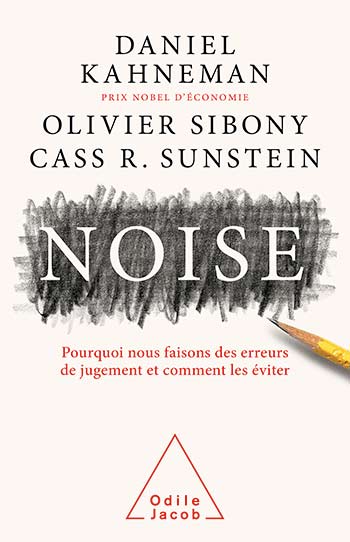
Daniel Kahneman, Olivier Sibony, Cass R. Sunstein
Noise A Flaw in Human Judgement
How can we explain the great variability in judgements in realms in which there shouldn’t be any – medical diagnostics, judicial sentences, recruitment, insurance policies, etc.? A powerful and innovative work.

Louis Bodin, Bernard Thomasson
Weather Travel Guide
An indispensable guide to worldwide weather conditions to help you choose your travel destination
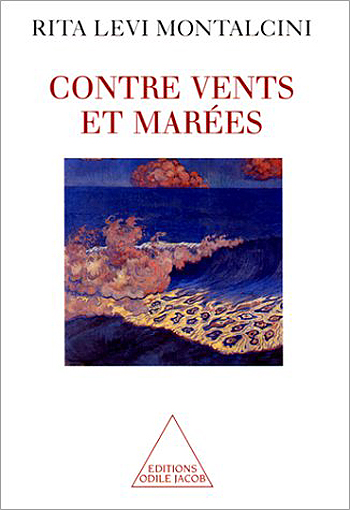
Rita Levi Montalcini
Against All the Odds
What do Primo Levi, the author of one of the most powerful accounts of life in a Nazi death camp, and Max Delbrück, one of the founding fathers of molecular biology, have in common? The answer is that they--as well as the others described in this book--were able to face the trials and tribulations of their lives with exceptional courage, and without losing their sense of humanity. Through a series of portraits, drawn with great warmth and restraint, Rita Levi Montalcini recounts the course of several exemplary lives. Rita Levi Montalcini taught neurobiology at Washington University for thirty years.

Fabrice Delaye
The Messenger RNA Revolution Vaccines and New Therapies
Messenger RNA, or the revenge of the outsiders: 40 researchers and entrepreneurs tell of the prodigious discoveries of the last few decades, their current development, and their immediate future.