Catalog All books

Ricardo Bofill, Nicolas Véron
Urban Architecture
What is there in common between all my designs ? What meaning can I give today to my architecture ? Without doubt, that of a desire to organise space. Due to an apprenticeship in perception, observation, and geometrisation of nature, in addition to a historical journey, I have learnt that in order to go past the initial momentum, I have to acquire the mastery of a whole new language." Ricardo Bofill Ricardo Bofill is probably one of the most famous, yet most controversial architects of his time. In this book illustrated with pictures and plans, he delivers an analysis of his art which amounts to an invitation to read the city.
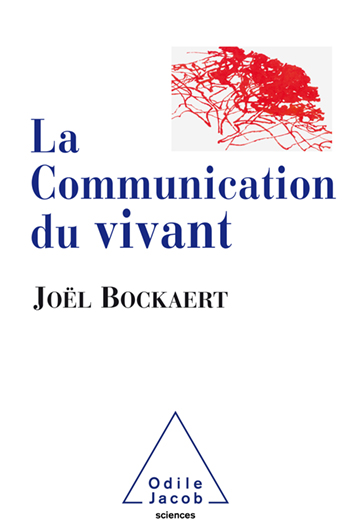
Joël Bockaert
The Communication of living things
A unique theme, communication, which encompasses all the kingdoms of life: a great opportunity to see them in a different light. If living is about communication, how is hyper-communication shaping the human being of tomorrow?

Xu Bo
A Chinese Man from Paris Talks about the New China
A wonderful tale, teeming with anecdotes and portraits that bring to life from the inside the incredible revolution China has experienced in the past two decades.

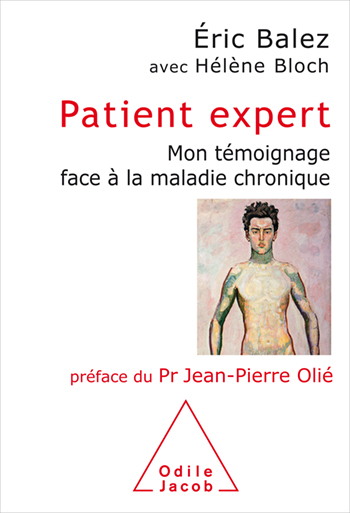
Éric Balez, Hélène Bloch
An Expert Patient A Personal Testimony of Chronic Illness
The inspiring testimony of a chronically ill patient who has drawn on his experiences to help others

Maurice Bloch
The Anthropology and the Cognitive Challenge
An introduction to cognitive anthropology by one of the world’s most distinguished anthropologists
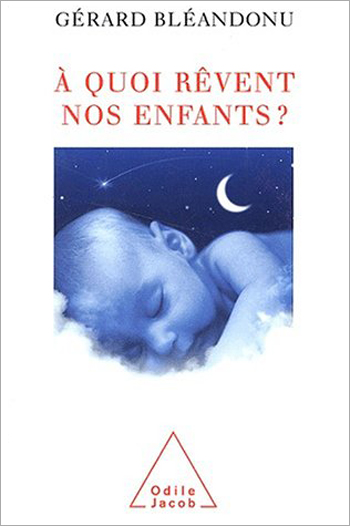
Gérard Bléandonu
What do our children dream ?
When does the foetus start to dream? What are its early dreams? What is the function of infant dreams? What is the impact of nightmares? How do dreams evolve during adolescence? Gérard Bléandonu brings to these questions his experience as a psychotherapist specialising in children suffering from psychological difficulties. The author also makes use of recent findings in neuro-physiology which have improved our understanding of dream mechanisms. Gérard Bléandonu is a psychiatrist and head of Child Psychiatry at the regional hospital of Savoie, France. He is the author of numerous works on child and adolescent psychiatry.
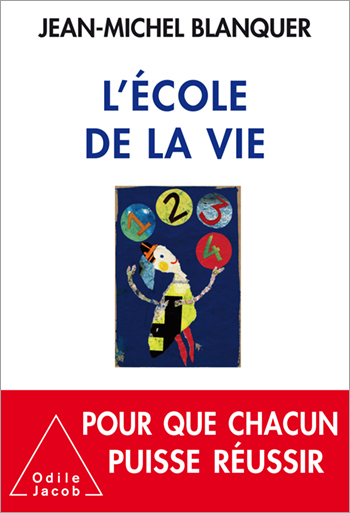
Jean-Michel Blanquer
The School of Life
To surmount the on-going fruitless discussions on education, the author proposes a series of guidelines for an open, humanistic school system.
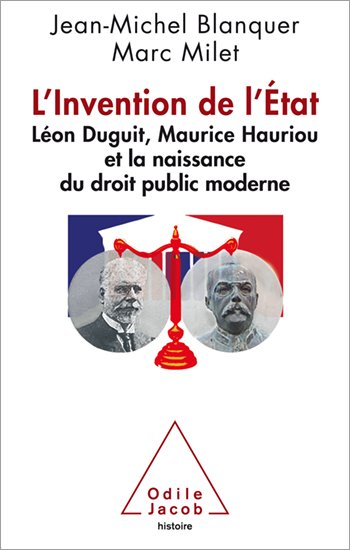
Jean-Michel Blanquer, Marc Milet
The Invention of the State Léon Duguit, Maurice Hauriou and the Birth of Modern French Public Law
How France’s judicial state was constructed in the early years of the 20th century, as reflected in the lives of two eminent legal figures
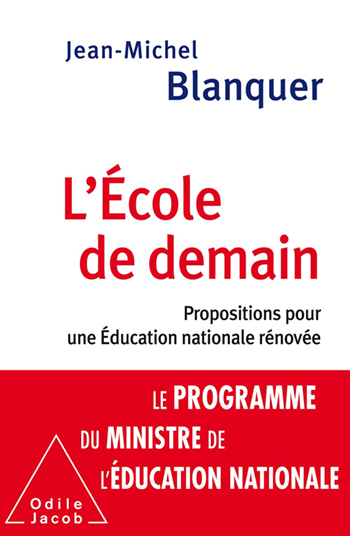
Jean-Michel Blanquer
The School for the Future in France
A informed contribution to the debate on education and the university in this pre-election period. Selected and finely-drawn examples from around the world illustrate how these contradictions can be overcome: Stanford and Silicon Valley, Singapore University, the Ecole Polytechnique de Lausanne nd research, ESSEC and entrepreneurship, and more.
Anasthasia Blanché
The Odyssey of Retirement: A Private and Collective Adventure
A sociologist’s point of view on a new phase of life that will concern ever-more people.

Nathalie Blanc
Animals in an Urban Environment
Those of you who live in an urban centre, do you think the rightful place of the animal is in the countryside ? Do you think that dogs are simply kept at the whim of lonely citizens ? That cats should not be allowed to roam the streets ? That there should be no more cockroaches to invade homes ? Yet, do you really want a city without nature ? Without green areas, but also without animals ? A sterilised city in other words.. Nathalie Blanc analyses here the role of the animal, and thus the living, in our urban societies. Nathalie Blanc is a researcher specialising in urban geography, at the Centre National de la Recherche Scientifique.
Christian Blanc
Greater Paris
How to save Paris from turning into a dead city and France into a nation in decline
Christian Blanc
The Strength of Kanak Roots in New Caledonia
An exceptional account of a significant episode in the recent history of France, by one of its principal participants.

Jacques Blamont
The Number and The Dream
Jacques Blamont is a professor at the University of Paris-VI and a member of the French Academy of Sciences. He is one of the fathers of the French space programme and was formerly the scientific director of the CNES.
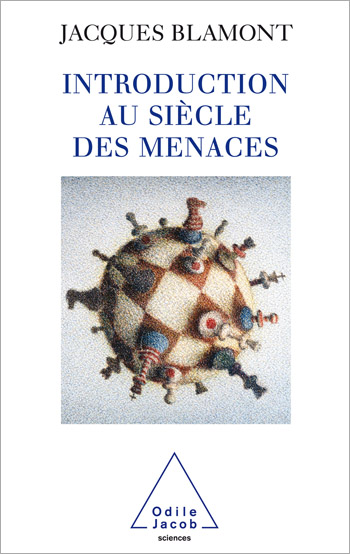
Jacques Blamont
Introduction au siècle des menaces
Although the confrontation between rich and poor is universal, it can be heightened by various factors. According to Jacques Blamont, the widening technological gap between the poor and rich nations is one such aggravating factor. The revolution in information technology has been largely responsible, because it has helped to concentrate more and more power and wealth in the hands of the few - particularly in the United States. Blamont lists various potentially threatening situations that are converging to create an explosion such as the world has never seen before. These include: the demographic growth of the very poor, the ageing population in the developed countries, new climatic risks that are endangering the environment, the spread of new epidemics as a result of globalisation, and the limited effects of the military strategies adopted by the most powerful nations. Step by step, the author deconstructs the hellish machine that our children will inherit from us - because we put too much faith in technological progress. Jacques Blamont is a member of the French Academy of Science and a professor at the University of Paris-VI. He is one of the fathers of the French space programme and was formerly the scientific director of the CNES. He is most notably the author of Vénus dévoilée and Le Chiffre et le Songe.

Jean-Paul Binet
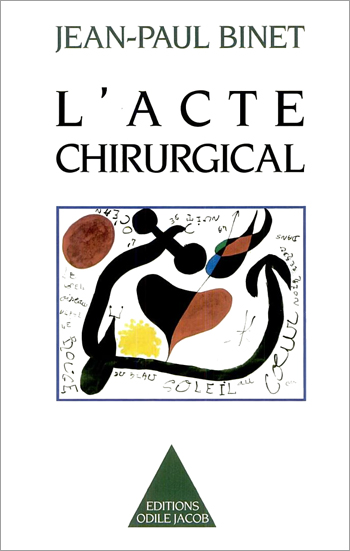
The Surgical Procedure
One of the great names in cardiovascular surgery, Jean-Paul Binet, wished to embrace his discipline it its generality (working with hands) but also in showing its prodigious diversity, progress and transformations. The reader is invited to follow him, and in so doing to surpass the mixed sentiments of fascination and horror that are often inspired by this branch of medicine. Jean-Paul Binet is a member of the Medical and Surgical Academies, and a correspondent for the Academie des Sciences. He practices at the Marie-Lannelongue Surgical Center.

Alvaro Bilbao
The Child's brain explained to parents
This educational manual, written by a neuropsychologist, explains everything parents can do to promote their child's brain development. Practical and educational advice that acts positively to help him/her acquire good intellectual and emotional skills.
Claudine Biland
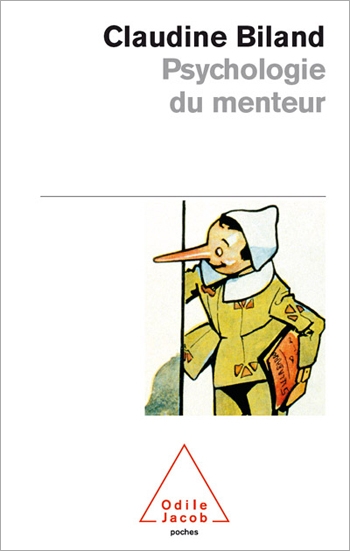
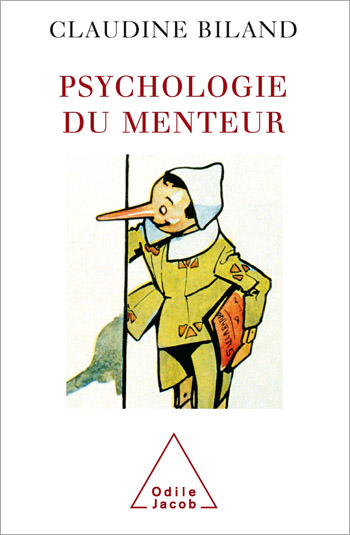
Liar's Psychology
When people tell lies what are they really trying to do? The goal of liars is to convince others that an event that never occurred took place or that they have opinions and feelings that they do not. The function of liars is thus to simulate fictional states and to dissimulate real situations; their task is to convince others - and to avoid being found out. What is it that makes liars so unbearable? Lying has a negative connotation in every culture. Children are taught not to tell lies. As a little girl says in an advert, you mustn't cheat, “'cause if you do, you betray the trust that your parents have planted inside you”. Lying always implies deceiving trust or even manipulating another's naiveté - both highly unpleasant experiences for the liar's interlocutor. How can liars be detected? Lying is a delicate, complex art, and non-verbal communication is highly fugitive and difficult to read. Nevertheless, certain conversations leave us with strange, discordant feelings. Then there are those hastily formed opinions about someone or a situation that linger on in our memories. Almost imperceptibly, the impression of sincerity is communicated through words, a voice and gestures. The goal of this book is not to determine if and when lying is justifiable, but to explain to us the types of behaviour that liars do or do not adopt and to develop our ability to unmask them. Shunning a Manichaean approach, the author shows that truth cannot govern all our everyday relations with others - neither in our professional lives nor in our private dealings with friends and partners. If we told the truth all the time, life would become unbearable. Lying is an indispensable human activity, which everyone indulges in. In this work of social psychology, the author has made available to professionals and general readers alike the results of the most advanced research on the subject of lying. Claudine Biland is a psychologist specialising in non-verbal communication. She teaches in Paris.