
Catalog All books
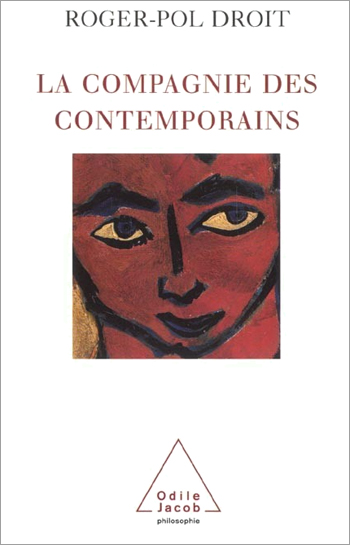
Roger-Pol Droit
The Company of Contemporaries
In this book, Droit reviews the works of some major contemporary thinkers: Bourdieu, Foucault, Girard, Habermas, Lévi-Strauss, Serres, and Vernant, among others. The interviews included here allow the reader to encounter biologists and sociologists, as well as anthropologists and psychoanalysts. Philosophers are well represented, but all the humanities have been included, and practically all major contemporary issues are considered, from bio-ethics to the end of history, from the construction of Europe to the rise of violence, from globalisation to the environment, from the development of science to political and religious extremism. Roger-Pol Droit is a philosopher and researcher at the Centre National de la Recherche Scientifique.
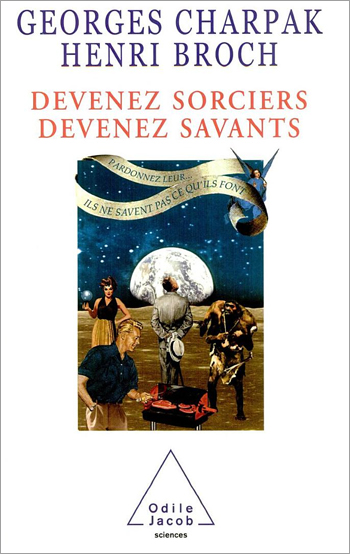
Georges Charpak, Henri Broch
Becoming a Magician is Becoming Wise
Would you like to know how to burn out a light bulb from afar? Would you like to know how to walk barefoot on burning coals without scorching your feet and as comfortably as if you were walking on the softest deep-pile rug? And would you like to understand why this is possible? Magic here has simply switched sides: it no longer belongs to the realm of the supernatural; it has become completely natural.The goal of this book is to make the reader understand that the supernatural does not exist and that it is essential in todays world to be scientifically literate. Georges Charpak, a physicist at CERN, is a winner of the Nobel Prize for Physics. Henri Broch heads the Laboratoire de Zététique at the University of Nice-Sophia Antipolis.
Jean-Baptiste de Foucauld
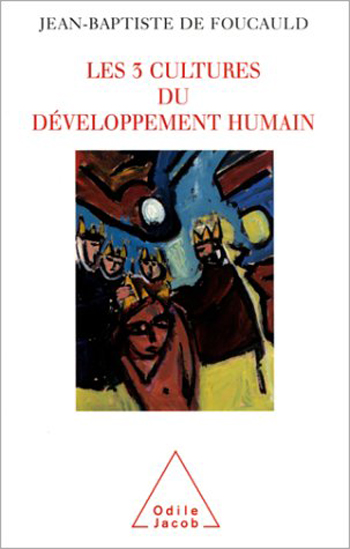
The 3 Cultures of Human Development Resistance, Regulation, Utopia
Today, economic growth has taken off again, creating jobs and making full employment a feasible goal. And yet, at a time when we seem to be at the brink of a new recession, nothing seems to have really changed. Modernisation may exclude fewer members of our society than had been previously feared, but, if we are not careful, their exclusion will be all the greater. It is no longer possible to retain a soft procedural approach to democracy. Democracy needs to return to its origins; it must be given a goal, based on a strong vision of humanity and of humanity as part of society. It is necessary to construct human development along the lines of three political and spiritual cultures which represent our common heritage : resistance, regulation and utopia. Jean-Baptiste de Foucauld is a senior official in the French Treasury. Until 1995 he was a commissioner of Frances economic plan. He is active in numerous think-tanks and associations that struggle against social exclusion and unemployment.

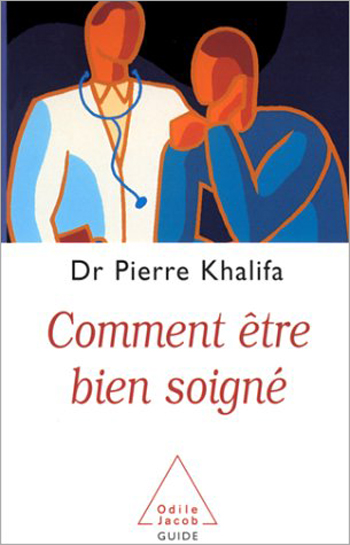
Pierre Khalifa
How to be Well Treated
"The goal of this book is to answer some of the many questions that are asked about patient-doctor relations and healthcare. How should we go about choosing the doctor in whom we will entrust our health? How can we contribute to make our consultation more effective, in order to help our doctor make a better diagnosis and find the most appropriate solutions? And when should we put an end to the relationship of trust with our doctor?" Pierre Khalifa Pierre Khalifa, a specialist in internal medicine, has worked as a house doctor in Parisian hospitals and was formerly a clinical director at the Hôpital Cochin, in Paris.
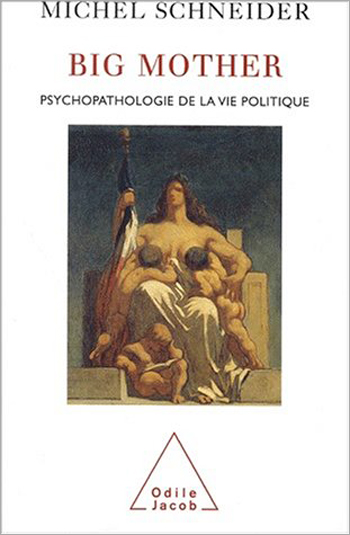
Michel Schneider
Big Mother The Psychopathology of Political Life
Listening, closeness, emergencies, love - politicians today play up to the mother. Leaders dare not lead, the citizens are now so child-like that they simply wait to be told what to do by the State : the Leisure State behaves like those mothers who cannot stand to think that their children can play by themselves, and insist on keeping them busy. Where are the fathers ? Is this the end of the paternal reference and the symbolic order of things ? A psychoanalyst, Michel Schneider was formerly a director of music and dance at the Ministry of Culture.
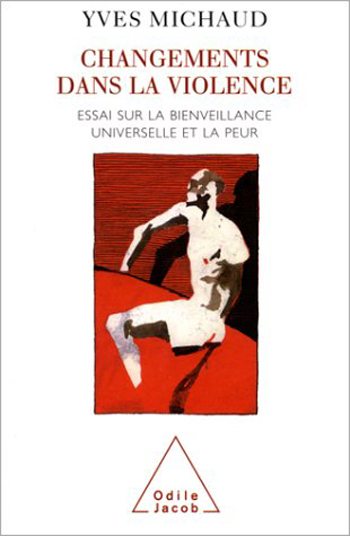
Yves Michaud
Changes in Violence An Essay on Universal Goodwill and Fear
For better or for worse, violence has accompanied humanity throughout its history. It is consubstantial with history, technical knowledge and even culture, and it is unlikely that it will disappear. Human beings are inhabited by darkness great darkness and they must have the courage to confront it. Then why are we so frightened and shocked by each flare-up of violence on the international stage and in our own streets? We feel that there is both more and less violence; that life on our planet has become easier and yet more ruthless; that although benevolence is the universal law, hate is equally strong, if not stronger; that feeling safe may be a right but that fear reigns. Yves Michaud, a philosopher, teaches at the University of Paris-I.
Antoine Jeancourt-Galignani
Disorientated Finance
This book analyses the events that shook French and international finance during the last twenty-five years of the twentieth century. In a straightforward style, eschewing all clichés, the author shows why Pierre Bérégovy was instrumental in bringing about the revolution in French finance, how Edouard Balladurs closest followers created a caste which is now in control of upper management, and how they prevented the creation of pension funds in other words, how they prevented the realisation of the Gaullist dream of participation and finally, how and why U.S. banks have managed to take over financial control of large French businesses. Antoine Jeancourt-Galignani is now chairman of the board of directors of GECINA.