Catalog All books
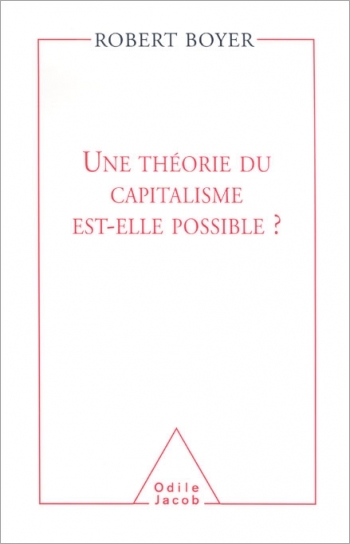
Robert Boyer
General Theory of Capitalism is it possible?
Robert Boyer is a leading figure of the regulationist school of economics, which believes that capitalism requires external, political, monetary and social regulations, and that the capitalist economy cannot be reduced to the self-regulating laws of the market. In this book, he proposes a general theory of capitalism, from two angles. First of all, he argues that there are several models of capitalism - not just one. America's ultra-liberal capitalism is unlike German capitalism, which is characterised by the fusion between banks and businesses, just as it is unlike French state-interventionist capitalism and Japan's capitalism of consensus. Secondly, in order to understand how capitalism works, every aspect has to be considered - not just the market but also political and social institutions (the State, central banks, unions, etc.) and the conventions they create among themselves (salary agreements, etc.). Robert Boyer is a research fellow at the Centre National de la Recherche Scientifique, a director of studies at the Ecole des Haute Etudes en Sciences Sociales and a member of the French prime minister's Council for Economic Analysis.
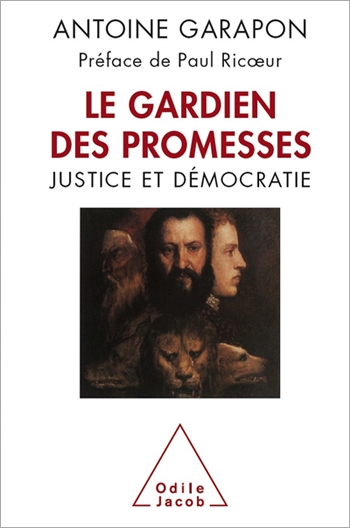
Antoine Garapon
The Guardian of Promises Justice and Democracy
The multiplying cases, the explosion of litigations, the sensational trials which catch the attention of the public : all are evidence of a growth in power of the judicial system, which we expect to be, at the same time, the arbiter of morals, the guarantee of public morality and responsible for the salvation of the people. But why dont we ask what things it cannot provide ? Isnt the idea of a judicial democracy just an illusion, which serves to hide serious problems ? The power of the judicial system is more worrying than exciting. It is an indicator of the discreditation of the State at the same time as a reduction in social cohesion. In the face of the fragility of democratic society, this book is a thorough reflection on the exercise of public power, affirming that the real role of the judge is not to take the place of the politic, but to diffuse the risk of democratic implosion by remaining the guardian of the promises at the very heart of republican laws. Antoine Garapon, a former judge and member of the editorial team of the journal Esprit, is the head of the Institute of Advanced Judicial Studies.
Dominique Reynié
Europeans in 2004
What does Europe's future hold? To answer this question, Dominique Reynié examines trends and developments in Europe's civil society, current events, and the debates and ideas currently under public discussion in the E.U. and in the rest of Europe. The information included here covers statistics and opinion polls; political events; political, economic and social issues; legal and constitutional questions; as well as European character traits, mind-sets and lifestyles. This is an indispensable work for anyone who wishes to become familiar with the reality of Europe in flux. Also included here is a unique synthesis of election results in all of Europe during the past year. Dominque Reynié teaches at the Institut d'Etudes Politiques, in Paris, and is the director of the Observatoire Interrégional du Politique. He is most notably the author of Le Triomphe de l'Opinion Publique.
Alain Cassourra
The Energy, Emotion, Thought at your fingertips
From the body to the psyche, a new look at our aches and pains and what they mean.

Anka Muhlstein
Balzac at Table
A luminous essay of “literary gastronomy” for food lovers as well as for anyone interested in the nineteenth-century novel
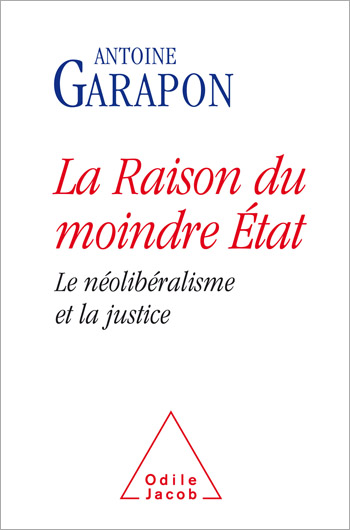
Antoine Garapon
Neoliberal Justice
An indispensable tool of critical thought to reach an independent opinion.

Thierry Lodé
Amorous Biodiversity Sex and Evolution
A new approach to evolution, linked to sexuality, for a better understanding of the history of biodiversity
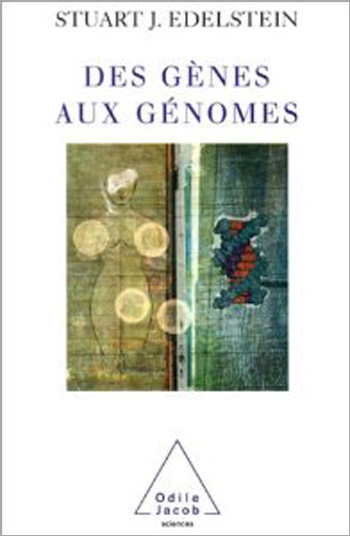
Stuart J. Edelstein
From genes to genomes
Rapid progress in the field of genetics is changing our lives in more ways than one. In order to understand these changes, Stuart Edelstein has approached each facet of the subject from three points of view: contemporary society and politics; technical developments; and basic research. By keeping to some fundamental points, this book will enable the lay reader to understand before judging the social implications of recent discoveries in biology. This is science with a civic sense. Stuart Edelstein teaches biochemistry at the University of Geneva.
Dominique Rousseau
The Fifth French Republic Is Dying! Long Live Democracy!
The First French Republic was consular, the Second was presidential, the Third and Fourth were parliamentary, but the Fifth seems to have no distinguishing qualities.

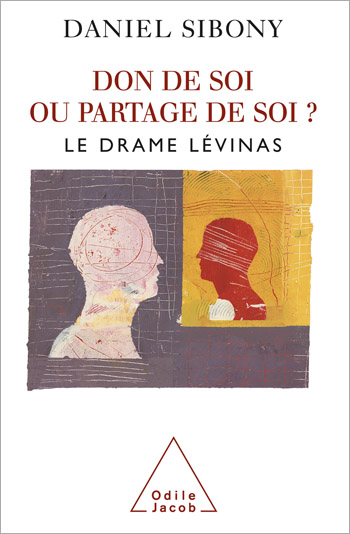
Daniel Sibony
Giving Yourself or Sharing Yourself ?
How can one be oneself without denying others? How can one consider others without negating oneself? How can one avoid the two extremes of complete selfishness and total self-sacrifice ? What if the ethics of the other, of responsibility for others which can lead us to risk our lives for others resulted not only in a dead-end (inefficient action, lack of action, justification of past actions) but also kept us from knowing ourselves and, consequently, others and the true nature of our relations with them? Daniel Sibony was trained as a philosopher and is a practising psychoanalyst.
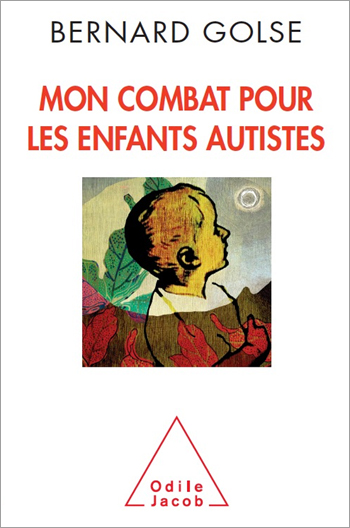
Bernard Golse
My Struggle For Autistic Children
The author pleads for a multifaceted approach to the treatment and care of autistic children.
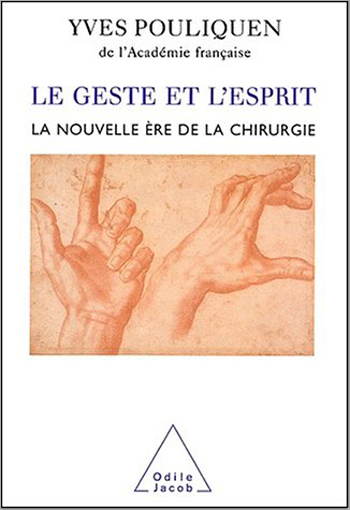
Yves Pouliquen
The Action and the Mind
What does it signify for a surgeon to run the numerous risks, present in every slightest move, in accepting to operate on an eye ? What does it mean for the patient undergoing the operation to place themselves in the hands of strangers, inevitably with a degree of mistrust, in order to be able to see again ? The surgeon and the patient are in fact the protagonists of a human adventure, a scientific conquest and a forgotten medical revolution, which deserve to be related. This is especially since the surgery of the 21st century will also demand creativity, ingenuity, faith and discipline all the forms of engagement that one calls human intelligence Yves Pouliquen An internationally known specialist in ocular surgery, Professor Yves Pouliquen is the author of several books published with Odile Jacob, such as The Transparency of the Eye.


Jean-Louis Fellous
Tempest Warning The New Climatic Order
Is it true that we are heading toward global warming? And if so, what is the time frame? What will be the consequences on our lives and those of our children and grandchildren? This book will help readers understand the physical phenomena that make up the Earths climate, as well as the possible consequences of the natural and human alterations which have been inflicted on it. It also makes a plea for a concerted effort on a global scale. Jean-Louis Fellous currently heads ocean exploration for Ifremer (Institut français de recherche pour lexploitation de la mer).


Daniel Sibony
Marrakech, Departure Point
During a weekend trip to Marrakech — his hometown — a novelist has a love affair that becomes intertwined with reminiscences of his childhood.


Yves Christen
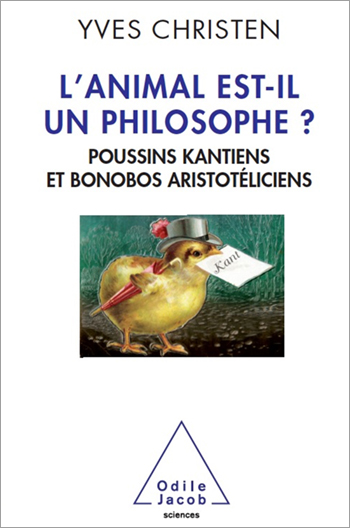
Are Animals Philosophers? Kantian Chickens and Aristotelian Bonobos
Because animals, both human and non-human, are not the passive toys of the surrounding world but, on the contrary, active creators and because they are carriers of weltanschauung, I regard them as philosophers.
François Ansermet, Pierre Magistretti
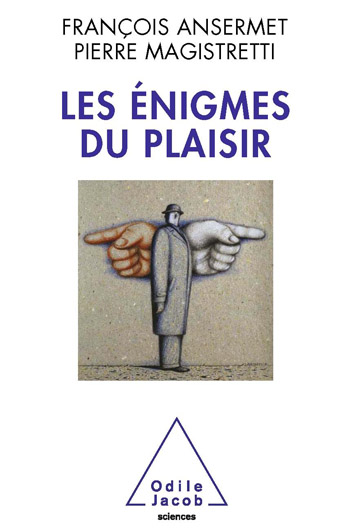
The Enigmas of Pleasure Between Psychoanalysis and Neurosciences
A fascinating exploration of some contemporary forms of malaise, individual and collective: destructiveness, fanaticism, violence, as well as boredom, depression, dependence on gadgets, hyperactivity and addictions