
Catalog All books




Stanislas Dehaene
Science Helping Schools
Presented in a concise and clear way, the most important discoveries concerning the brains of the youngest students.

Alexandra Meert
Living With Cancer A Better Quality of Life Thanks to Cognitive Behavioural Therapy
A book that gives cancer patients the guidance and support they need

Hippolyte D'Albis, Françoise Benhamou
Economists respond to populists
In the arena where populists are rampant, the economic question is at the heart of the denunciation of the elites and 'their' policy...




Christophe De Jaeger
The Muscle, Sport and Longevity
Christophe De Jaeger is a geriatrician and gerontologist...







Henri Rozenbaum
How to have a Happy Menopause
The low-down on everything we know about the symptoms of the menopause today, from prevention to treatment. Constituting a small scale medical encyclopaedia, this book answers your questions and allows you to identify the most suitable treatment for your own particular case. For a better quality of life, better health, and a happy menopause. Gynaecologist, and president and founder of the French Association for Menopausal Studies, Dr Henri Rozenbaum is one of the most renowned international experts in the area of the menopause.


Françoise Sironi
Torturers and Victims The Psychology of Torture
To fight against torture, a simple denunciation of violence is not enough. It is necessary to help the victims find a "normal life" again. According to Françoise Sironi, this supposes an penetration into the mind of the torturer. How is it possible to influence someone to the point of forcing them to confess, reveal information and betray others? Physical violence alone does not suffice. What psychological methods are used ? The mechanisms of torture can only be understood by an examination of how torturers are "created". Françoise Sironi is a lecturer in clinical psychology and psychopathology at the University of Paris-VIII and director of the Georges Devereux Centre for Ethnopsychiatry at the University of Paris-VIII. She is also the co-founder of the Centre Primo Levi, which specialises in the treatment of victims of torture and collective violence.


Jacques Arnould
The Earth Under Surveillance
he history of space technology (particularly on the subject of spy or reconnaissance satellites) and the hopes and fears raised by space exploration.

Christian Rémésy
Sustainable Food
The author explains how to establish eating habits that are truly preventive.

Nathalie Zajde
The Hidden Children In France
How did the Jewish children who hid and survived the Holocaust succeed in developing their unique strength and their love of life?

Robert Rochefort
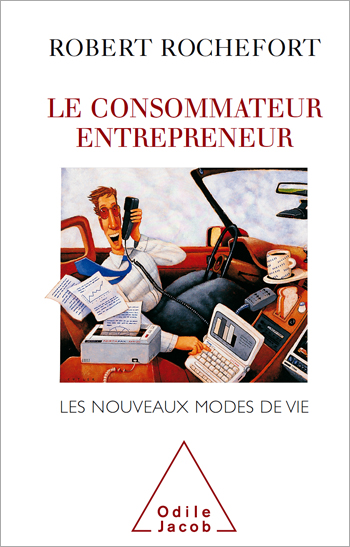
The Consumer-Entrepreneur
The author shows in this new book how in the age of the consumer-entrepreneur professional life and private life tend to merge ; thus on one hand, the consumer tends to manage his family life as he would a company - paying attention to efficiency, cost effectiveness, optimization. On the other hand, he uses more and more products that have a professional and personal use - portable phones, computers - and buys more half finished, do-it-yourself products that he completes. This book profiles a society of individual entrepreneurs that is emerging from the previous salary society of the nineteenth and twentieth centuries. Robert Rochefort is the director of the Research Center for the Study and Observances of Living Conditions.

Gilbert Lagrue
Ageing Well is Possible: I’ve Done It
Everything you need to know to age well, by a celebrated 91-year-old doctor

Pierre Humbert, Jérôme Palazzolo
A Short History of Masturbation
A physician and a psychiatrist trace the medical and psychological history of masturbation...