
Catalog All books
Daniel C. Dennett
Evolutionist theory of freedom
Billions of years ago, there was no freedom on earth, for the simple reason that there was no life. What forms of freedom have evolved since the first stirrings of life? Can freedom and free will exist in a deterministic universe? If we are free, are we responsible for our freedom, or is it governed by chance? Drawing on evolutionary biology and the cognitive sciences, Daniel Dennett provides a series of unorthodox replies to these traditional philosophical questions. It is generally held that what is determined is inevitable and that freedom can only exist in a non-deterministic universe. This is untrue, says Dennett. It is also held that in a pre-determined universe, we have no real choices: all we have is the illusion that we can choose. This too is false, argues Dennett. He then goes on to explain how, some day, we will be able to create robots endowed with free will. In this groundbreaking book, written in a striking, lively style, Dennett interweaves philosophical creativity with the latest scientific developments, and challenges a series of philosophical orthodoxies. Daniel C. Dennett is University Professor and Director of the Center for Cognitive Studies at Tufts University, Mass., U.S.A. He is the author of Consciousness Explained and Darwin's Dangerous Idea.
Alain Bentolila
All about scholl
This is a brilliant, clearly argued demonstration of how the inability of the school system to evolve and develop a critical spirit may lead to the general failure of our entire society.
Françoise Héritier, Margarita Xanthakou
Body and Affects
The articles gathered here, written by eminent French anthropologists, present a novel angle on the way societies function. The writers argue that because societies are not abstract intellectual constructions, they cannot be dissociated from the physical individuals that constitute them, or from the affects (feelings and emotions) expressed by them. Included here are studies of Western and non-Western societies on such subjects as skin colour, religious rituals involving animals, witchcraft and flying sorcerers, passion in traditional North African cultures, and breast-feeding (both induced lactation to breastfeed infant girls and spontaneous lactation to breastfeed infant boys) in parts of Italy. Françoise Héritier is an anthropologist and teaches at the Collège de France. She is the author of Les Deux Soeurs et leur mère and Masculin/Féminin I and II, published by Editions Odile Jacob. Margarita Xanthakou, an anthropologist, is a research fellow at the Centre National de la Recherche Scientifique (CNRS).

Boris Cyrulnik
Talking About Love Near The Abyss
Resilience, the human capacity to recover from trauma and to overcome hardship, can come into play at any age...

Gilbert Hottois
Philosophy of Science, Philosophy of Technology (Travaux du Collège de France)
Is the philosophy of science concerned with the technique and the philosophy of technology?
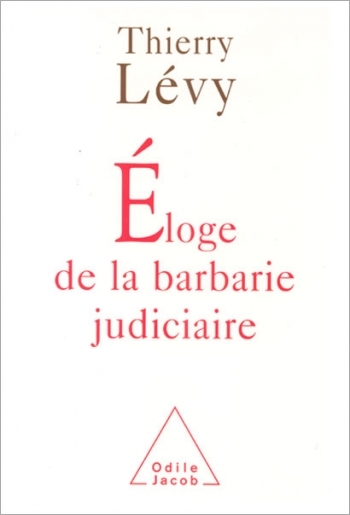
Thierry Lévy
In Praise of Judicial Barbarity
In March 2004, France instituted a special legal procedure, to be applied in infractions judged as serious, as part of an effort to give police more powers to combat new types of crime. If money-laundering and giving assistance to illegal immigrants may be regarded as relatively recent infractions, stealing, murder, procuring and counterfeiting are all ancient violations. The new procedure extends the powers of police to hold prisoners in custody; it will also allow some offenders who plead guilty and accept the public prosecutor's sentence to avoid a public trial. Thierry Lévy, a renowned criminal lawyer, shows that the new law only confirms a tendency that has been at work for a long time, since many trials are no more than empty ceremonies sanctioning decisions that have already been reached. The author examines the way Justice in France today functions and puts some current dysfunctions of the legal system in their historical perspective. He argues that Justice cannot be served if the rights of the defence are ignored. Thierry Lévy is a lawyer and a member of the Paris Bar. He is the author of Justice sans Dieu and the co-author, with Jean-Denis Bredin, of Convaincre.
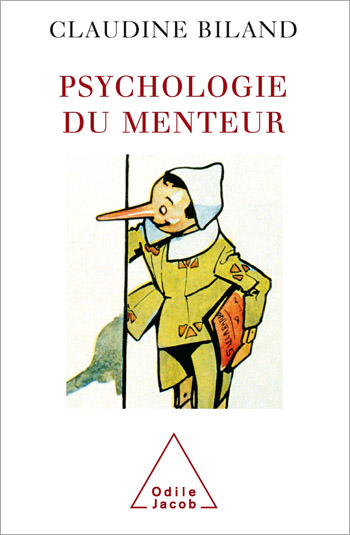
Claudine Biland
Liar's Psychology
When people tell lies what are they really trying to do? The goal of liars is to convince others that an event that never occurred took place or that they have opinions and feelings that they do not. The function of liars is thus to simulate fictional states and to dissimulate real situations; their task is to convince others - and to avoid being found out. What is it that makes liars so unbearable? Lying has a negative connotation in every culture. Children are taught not to tell lies. As a little girl says in an advert, you mustn't cheat, “'cause if you do, you betray the trust that your parents have planted inside you”. Lying always implies deceiving trust or even manipulating another's naiveté - both highly unpleasant experiences for the liar's interlocutor. How can liars be detected? Lying is a delicate, complex art, and non-verbal communication is highly fugitive and difficult to read. Nevertheless, certain conversations leave us with strange, discordant feelings. Then there are those hastily formed opinions about someone or a situation that linger on in our memories. Almost imperceptibly, the impression of sincerity is communicated through words, a voice and gestures. The goal of this book is not to determine if and when lying is justifiable, but to explain to us the types of behaviour that liars do or do not adopt and to develop our ability to unmask them. Shunning a Manichaean approach, the author shows that truth cannot govern all our everyday relations with others - neither in our professional lives nor in our private dealings with friends and partners. If we told the truth all the time, life would become unbearable. Lying is an indispensable human activity, which everyone indulges in. In this work of social psychology, the author has made available to professionals and general readers alike the results of the most advanced research on the subject of lying. Claudine Biland is a psychologist specialising in non-verbal communication. She teaches in Paris.