
Catalog All books
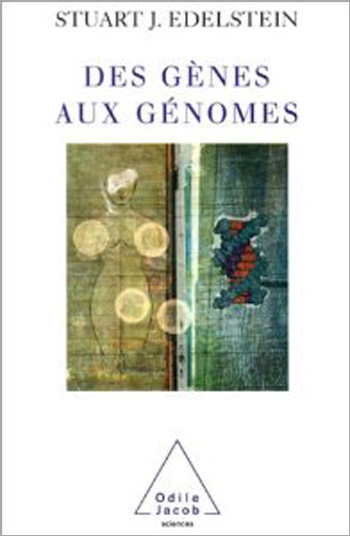
Stuart J. Edelstein
From genes to genomes
Rapid progress in the field of genetics is changing our lives in more ways than one. In order to understand these changes, Stuart Edelstein has approached each facet of the subject from three points of view: contemporary society and politics; technical developments; and basic research. By keeping to some fundamental points, this book will enable the lay reader to understand before judging the social implications of recent discoveries in biology. This is science with a civic sense. Stuart Edelstein teaches biochemistry at the University of Geneva.
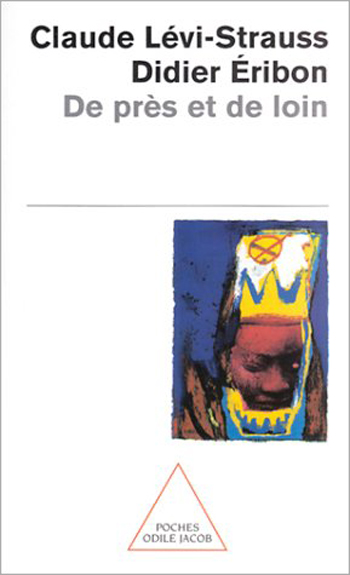

Claude Lévi-Strauss, Didier Éribon
From Far and Wide
A famous anthropologist, known as one of the greatest minds of our time, C. Lévi-Strauss is a discreet man whose autobiographical writings are few. His talks with D. Eribon not only present the reader with the keys to his works, but also convey a new perspective of our time, a 20th century of discovery and catastrophy. Through intellectual anecdotes, tales of trips and meetings, secret tastes and dislikes, we discover at the same time a great scholar, a privileged witness, and a passionate, witty man.

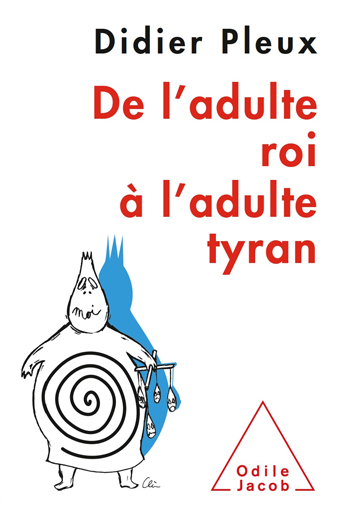
Didier Pleux
From Emperor-Adults to Tyrant-Parents
It would seem everyone in our society has a complaint about incivilities, widespread selfishness and the loss of “values” in an increasingly materialistic society whose members are perceived as rude and badly brought up...
Pascal Picq
From Darwin to Lévi-Strauss
An appeal by an eminent scientist for greater biodiversity, in Nature and humans
Kevin Padian
From Darwin to Dinosaurs (Work of the Collège de France) An Essay on the Idea of Evolution
In this book, Kevin Padian, world-renowned expert on dinosaurs, takes a historical approach to evolution and gives his view of some of the key problems of the theory of evolution
Michel Henry
From Communism to Capitalism : A Theory of Disaster
Communist totalitarianism is breaking apart because it rejected reality in favour of abstractions and falsely universal principles. Those who now rush West from Prague or Bucarest cannot imagine what awaits them: the levelling of values and individuality. M. Henry s work is a meditation against everything which undermines these disoriented refugees, whether it be spiritual starvation, creative thirst, or physical hunger.


Bertrand Cramer, Christiane Robert-Tissot, Sandra Rusconi Serpa
From Baby to Preadolescent A Longitudinal Study
In 1991, 103 mother-and-infant pairs visited Genevas Guidance Infantile. The infants all displayed functional and behavioural disorders. Ten years later, the same mother-child pairs were re-evaluated by Professor Cramers team, who was thus able to make a number of prospective analyses. What became of the symptoms that the infants had first presented? Did any of the symptoms first displayed indicate a predisposition to other disorders? Can the characteristics that helped them to endure be identified? And what can be said of the role played by cognitive development and parental representations, as well as by protective factors? Professor Bertrand Cramer is a child psychiatrist.
Étienne Guyon, Jean-Paul Troadec
From a Bag of Marbles to a Heap of Sand
Why don't sand dunes collapse? How does sand flow in an hourglass? How is it possible to empty a silo of all its wheat? What's a ceramic? The answer to all these questions can be found in the science of the complex organizations of matter, a science which is pluridisciplinary. Étienne Guyon, head of the École Normale Supérieure, and Jean-Paul Troadec, a researcher, present the characteristics of grain matter, the rules by which it is organized (in both crystal and fluid) as well as its movements (in silos as in avalanches).

Didier Pleux
The Freudian Couch Revolution
Existential psychotherapy: a new approach grounded in the power of consciousness

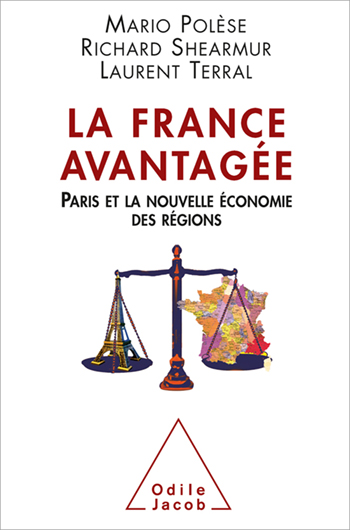
Mario Polèse, Richard Shearmur, Laurent Terral
French Territorial Equality Paris and the rest of the country
How in less than half a century France restored territorial equilibrium between Paris and the rest of the country
Fondation pour la Recherche Stratégique, François Heisbourg
French Strategic and Military Yearbook 2002-2003
The advent of hyperterrorism on "9/11" and subsequent military operations have marked the return of strategic affairs as a core concern of the citizens of our countries. This French Strategic and Military Yearbook analyses from a European vantage point the major themes of our time: American military operations, Russsia's new geopolitics, the struggle against mass destruction terrorism. The Yearbook is complemented by on-line data provided by the Paris-based Fondation pour la Recherche Stratégique (FRS).

Norbert Rouland
The French State and Pluralism A Political History of Public Institutions from 476 to 1792
Has France become a multicultural society? Are we heading towards a dislocation of French unity, or a more advanced form of democratic life due to this pluralism? Can we invoke the French tradition which has given us several reference points? These are the serious questions which History must confront, and it is the aim of this history of public institutions to do just that. The author shows that the French State has constructed the Nation through a stronger voluntarist policy than found in most other Western European countries. His clear yet detailed style makes this book accessible to a wide readership, both those wishing to know more about the origins of our current political regime, and also to first year students, to whom this work represents a source of valuable information.

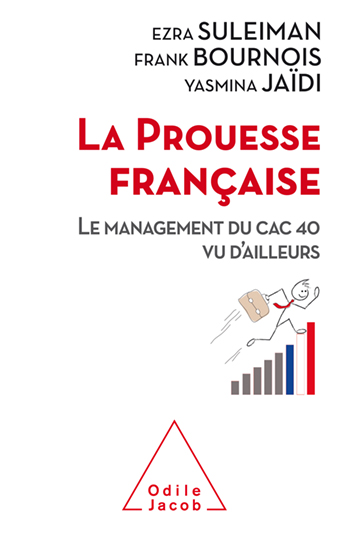
Ezra Suleiman, Yasmina Jaïdi, Frank Bournois
The French Prowess Management, French-style
More than 2,500 foreign executives from 20 CAC 40 companies were interviewed for this broad survey of French management. The extent of this analysis is the key to the richness of the book. Concrete advice for executives and directors of human resources to improve their management style.
Jean-Paul Betbèze
French people's economic fear
France has economic possibilities, but it remains blocked in several areas. Although the country's leaders are aware of this, they seem unable to make the necessary reforms to move forward. France seems to be the prey of fears that paralyse it, but which have benefited a new class of economic as well as social rentiers who constitute a powerful economic, ideological and political group. These new rentiers are fully cognisant that the defence of their acquired privileges is not a practical long-term solution - as has been shown by rising deficits, decreased competitiveness and job losses. The author argues that it is necessary to make changes and implement reforms - and to do so it is essential to understand and overcome existing fears. It cannot be expected that everything will be changed at once, but some initial efforts must be made. The single reform that will fix everything does not exist, he says, but this is hardly an excuse for refusing to make a start. In other countries, programmes for economic reform are being implemented. Yet France is only beginning to consider such reforms. The object of this book is to provide a greater understanding of the present situation, in the form of a how-to manual. A ruthless analysis of some of France's psychological blocks, apprehensions and economic fears, this book can be regarded as a sort of economic psychotherapy. In addition, the author provides a critique of the false solutions that hinder modernisation and proposes his own solutions for change and reform. Jean-Paul Betbèze is a professor of economics at the University of Paris Panthéon-Assas and a member of the French prime minister's Council for Economic Analysis. He is a consultant to the president and the C.E.O. of a major bank and the author of Les Dix Commandements de la finance, which was awarded the Risques-Les Echos Prize in 2004.
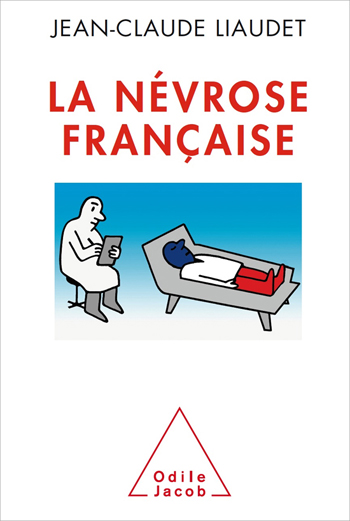
Jean-Claude Liaudet
The French Neurosis
A psychoanalyst examines France’s collective neurosis and asks: Can the patient be cured?
Claude Hagège
The French Language and the Centuries
Claude Hagege illustrates how the internal purity of the French language, less endangered than one might think, has been pushed aside in favor of its external promotion, less real than one might imagine. He increases our awareness of a major reality of the times. The French language is no longer the exclusive property of France; it has become an international affair. Claude Hagege is a professor at the Collège de France.
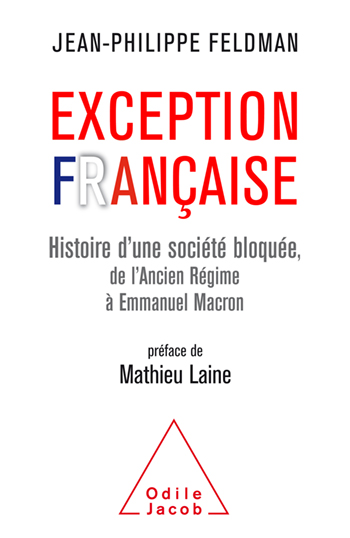
Jean-Philippe Feldman
The French Exception From the Ancien Régime to Emmanuel Macron, the story of a blocked society
Abundant historical documentation used to address a current issue and a very heated polemical debate.
Jacques Andréani
The French Exception
An expert on foreign affairs, Jacques Andréani draws on his extensive international experience to enhance his examination of what it means to be French.
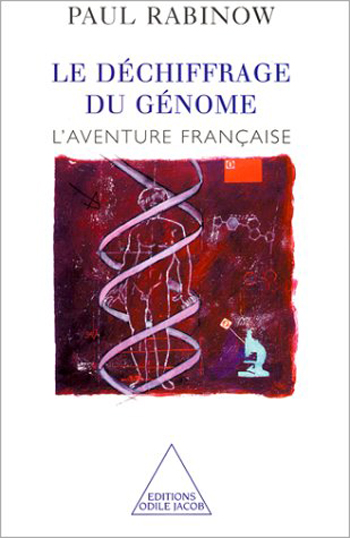
Paul Rabinow
French DNA: Trouble in Purgatory
This book offers some surprising viewpoints: an anthropologist tells the story of the human genome sequencing project; a scholar of the humanities follows the crisis between a French laboratory, the Centre dÉtude du Polymorphisme Humain (CEPH), and a U.S. rival; an American intellectual describes the politics within the French scientific community. This exceptional survey of the most recent research trends and of the state of international competition in the field of genetic research gives us a notion of how our future health care is being prepared. Paul Rabinow teaches anthropology at the University of California at Berkeley.

Maurice Vaïsse
French Diplomacy Tools and Participants Since 1980
A complete and documented view of the Ministry of Foreign Affairs and of French diplomatic policy. A diplomatic history of the Fifth Republic, from the 1970s to the present.