
Catalog All books
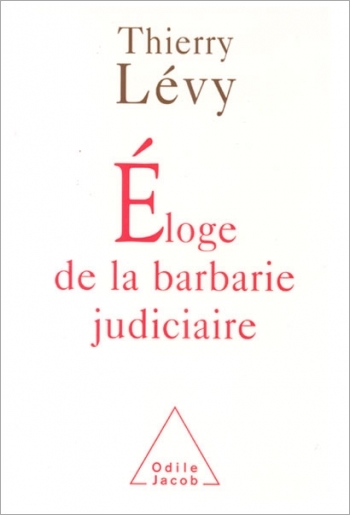
Thierry Lévy
In Praise of Judicial Barbarity
In March 2004, France instituted a special legal procedure, to be applied in infractions judged as serious, as part of an effort to give police more powers to combat new types of crime. If money-laundering and giving assistance to illegal immigrants may be regarded as relatively recent infractions, stealing, murder, procuring and counterfeiting are all ancient violations. The new procedure extends the powers of police to hold prisoners in custody; it will also allow some offenders who plead guilty and accept the public prosecutor's sentence to avoid a public trial. Thierry Lévy, a renowned criminal lawyer, shows that the new law only confirms a tendency that has been at work for a long time, since many trials are no more than empty ceremonies sanctioning decisions that have already been reached. The author examines the way Justice in France today functions and puts some current dysfunctions of the legal system in their historical perspective. He argues that Justice cannot be served if the rights of the defence are ignored. Thierry Lévy is a lawyer and a member of the Paris Bar. He is the author of Justice sans Dieu and the co-author, with Jean-Denis Bredin, of Convaincre.
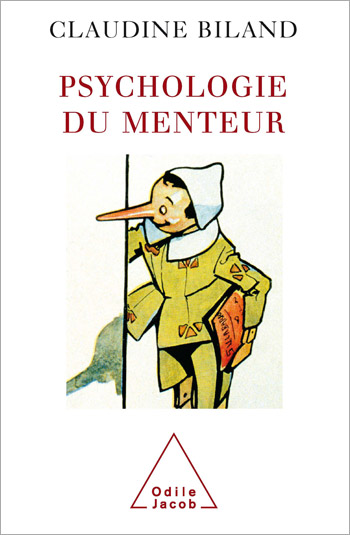
Claudine Biland
Liar's Psychology
When people tell lies what are they really trying to do? The goal of liars is to convince others that an event that never occurred took place or that they have opinions and feelings that they do not. The function of liars is thus to simulate fictional states and to dissimulate real situations; their task is to convince others - and to avoid being found out. What is it that makes liars so unbearable? Lying has a negative connotation in every culture. Children are taught not to tell lies. As a little girl says in an advert, you mustn't cheat, “'cause if you do, you betray the trust that your parents have planted inside you”. Lying always implies deceiving trust or even manipulating another's naiveté - both highly unpleasant experiences for the liar's interlocutor. How can liars be detected? Lying is a delicate, complex art, and non-verbal communication is highly fugitive and difficult to read. Nevertheless, certain conversations leave us with strange, discordant feelings. Then there are those hastily formed opinions about someone or a situation that linger on in our memories. Almost imperceptibly, the impression of sincerity is communicated through words, a voice and gestures. The goal of this book is not to determine if and when lying is justifiable, but to explain to us the types of behaviour that liars do or do not adopt and to develop our ability to unmask them. Shunning a Manichaean approach, the author shows that truth cannot govern all our everyday relations with others - neither in our professional lives nor in our private dealings with friends and partners. If we told the truth all the time, life would become unbearable. Lying is an indispensable human activity, which everyone indulges in. In this work of social psychology, the author has made available to professionals and general readers alike the results of the most advanced research on the subject of lying. Claudine Biland is a psychologist specialising in non-verbal communication. She teaches in Paris.
Alain Berthoz, Gérard Jorland
The Empathie
Empathy is the ability to put oneself in the position of others, and thus to understand and know them. Ever since Darwin, empathy has been regarded as the basis of all human social behaviour, and most notably of ethics. Some major psychological disorders - autism, for example - can be described as the inability to empathise. Certain types of perverse behaviour, such as the torture of defenceless victims, have been explained as distortions of empathy. This book offers an overview of studies on empathy for the past 250 years. It also describes the latest research on the subject in a variety of fields: cognitive psychology, philosophy, ethology and ethics. Alain Berthoz is a professor at the Collège de France and a member of the French Academy of Sciences. He is the author of Le Sens du mouvement and La Décison, both published by Editions Odile Jacob. Gérard Jorland is a director of studies at the Ecole des Hautes Etudes en Sciences Sociales and the author of Les Paradoxes du capital (Editions Odile Jacob) and La Science dans la philosophie.
François Ansermet, Pierre Magistretti
To Each His Own Brain Biology of the Unconscious
This book is the result of the coming together of psychoanalysis and neuroscience around the shared observation that experience leaves a mark. Although the idea that experience produces psychic imprints - whether conscious or unconscious - has always been central to psychoanalysis, it was not until recently that findings in neurobiology demonstrated that neuronal plasticity existed and that it operated throughout a person's life. This constant remodelling in relation to experience poses certain basic questions about each individual's identity and future. How does psychic life emerge from experience and from what it imprints? What are the respective contributions of external stimuli (the reality behind experience) and of internal stimuli (the imprinted marks)? How do the mechanisms of synaptic plasticity participate in the establishment of an unconscious internal reality? What is the role of the body in this new dynamic organisation? This book provides the foundations for a better understanding of the relations between neuroscience and psychoanalysis and offers an original theory of the unconscious, by combining recent findings in neurobiology with the basic principles of psychoanalysis. Eschewing genetic determinism, it shows that each individual is different and each brain unique. Pierre Magistretti, a physician and neurobiologist, is a professor of physiology and director of the Centre for Psychiatric Neuroscience at the University of Lausanne's medical school. In addition, he is the president of the Federation of European Neuroscience Societies. François Ansermet is a psychoanalyst and professor of child and adolescent psychology at the University of Lausanne. He is the co-author, with O. Halfon and B. Pierrehumbert, of Filiations psychiques (Presses Universitaires de France, 2000).
Fondation pour la Recherche Stratégique, François Heisbourg
Strategic and Military Yearbook 2004
As the consequences of U.S. involvement in Iraq are making themselves felt worldwide, and as the U.S. presidential campaign comes to a climax, this book provides a timely survey of the changing strategic and geopolitical landscape. The articles included here, written by some of the top experts in their fields, evaluate the repercussions for all of us of developments in the world's most powerful nation; they also examine the so-called clash of civilisations and consider the real risks of such a clash. This is an indispensable, complete and informed book that will enable readers to understand present and future changes in the global situation. A veritable gold mine of information, the Annuaire stratégique et militaire provides an annual examination of France's defence situation and allows a comparison with France's partners. François Heisbourg, an internationally renowned specialist in international and defence issues, is the director of the Fondation pour la Recherche Stratégique (FRS) and president of the International Institute of Strategic Studies. He is the author of Hyperterrorisme: la nouvelle guerre (2001) and the editor of Annuaire stratégique et militaire 2002 (English edition: French Strategic and Military Book) and Annuaire stratégique et militaire 2003, all published by Editions Odile Jacob.