Catalog All books
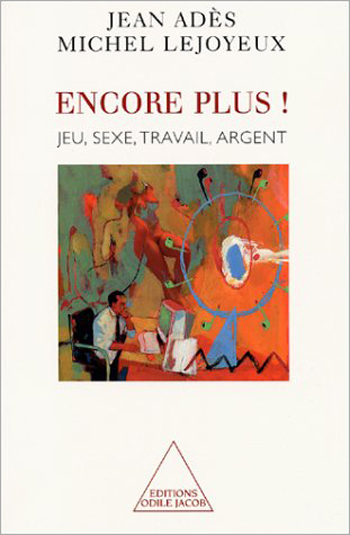
Jean Adès, Michel Lejoyeux
Give Me More! Gambling, Sex, Work, Money
Do we live in an age of addictions? Some pass their time in the office, to the detriment of their family life. Others blow their budget on useless and spontaneous buys. Others still crave thrills and sensations, obtained through participating in extreme sports. But is there a link between a drug addict and a person addicted to shopping, sex or work? Are these new dependencies increasingly frequent, symptomatic of our society? Where does pleasure stop and danger begin? Jean Adès is professor of medicine. Professor Michael Lejoyeux is a psychiatrist.
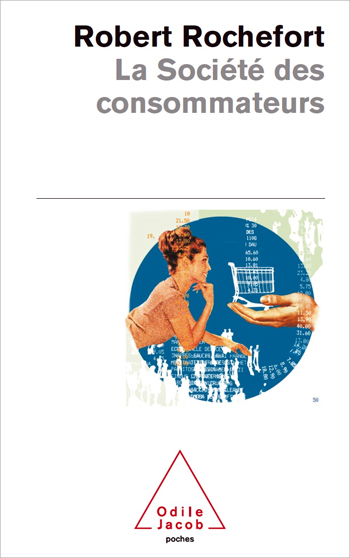
Robert Rochefort, Dominique Voynet
The Environment - A Social Question The Result of Ten Years of Research for the Environmental Ministry
This book collects 31 contributions from sociologists, legal experts, economists, and philosophers. All of these reflections point to two major motifs: that of a durable association between economy and ecology, and that of the principle of precaution necessary in and for future generations.
Howard Gardner
Creating Minds An Anatomy of Creativity Seen Through the Lives of Freud, Einstein, Picasso, Stravinsky, Eliot, Grah
What is creativity? Do there exist psychological traits common to all creative geniuses? Can one characterize creativity in different forms and in different areas? It is impossible to respond to these questions without examining variegated and specific cases of creative genius: artistic, literary, scientific and even political. Thus, Gardner proposes seven psychobiographies characteristic of each type of genius: Freud, Einstein, Picasso, Stravinsky, T.S. Eliot, Martha Graham, and Gandhi. What were the different paths that they chose? How did their creative spirits work? Howard Gardner is a cognitive psychologist.
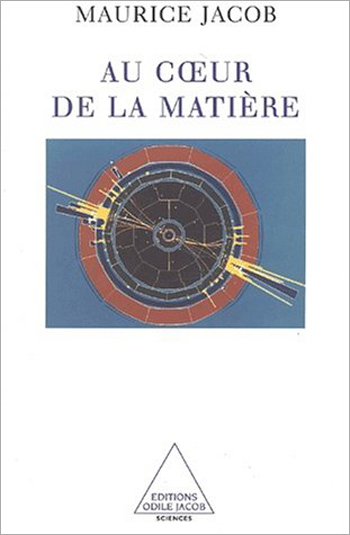
Maurice Jacob
At the Heart of the Matter
The study of elementary particle physics and high energies, undertaken in huge laboratories such as the accelerators of Stanford, Chicago, Brookhaven, CERN at Geneva, and Dubna et Serpukhov near Moscow, is one of the most astonishing scientific feats of the last half century. The field not only allows us to understand the composition of matter and the origin and evolution of the universe, but also helps prevent these scientific instruments being used as weapons of war. The Pugwash conferences, held between scientists of the East and West, won a Nobel Prize for this very reason. Maurice Jacob, the honorary director of the division of theoretical physics at CERN, recounts in this book how these objectives have been achieved. Maurice Jacob is a theoretical physician of elementary particles.