Catalog All books
Gilbert Lagrue
Trying to quit smoking ?
Why do people smoke ? What is the role of nicotine, which produces all the pleasant sensations of tobacco inhalation ? Why do smokers find it so difficult to quit, when their health and even their lives are at risk? This is book is aimed at smokers, and all those who are interested in the mysteries of human behaviour. In order to break the futile vicious circle of guilt and failure, Gilbert Lagrue examines both the positive and the negative effects of tobacco.The authors goal is to lead the reader from understanding to action. How do smokers decide to quit? What are the different methods used in giving up smoking? How can smokers fight against physical and psychological dependence? And how can those who have quit ensure that they will not start smoking again? Professor Gilbert Lagrue is a renowned specialist on tobacco abuse and withdrawal. He is the founder of the tobacco-withdrawal unit at Hôpital Henri Mondor in Créteil.

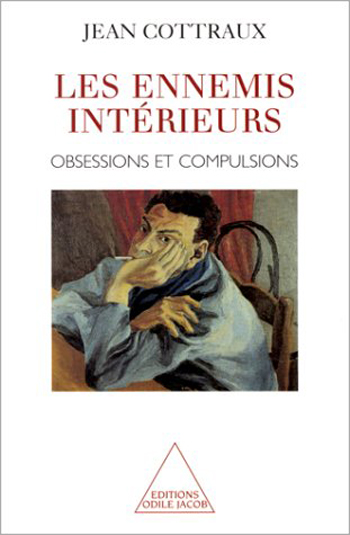
Jean Cottraux
Internal Enemies Obsessions and Compulsions
Why do some people become obsessed with cleanliness, fear of causing accidents, or the idea that they are guilty of some fault or imperfection? Where should the line be drawn between "normal" obsessions, from which everyone suffers to a greater or lesser degree, and pathological obsessions? When should measures be taken to treat those who suffer from obsessions? Why have obsessive-compulsive disorders become so common (2.5% of the population now suffer from them)? Jean Cottrauxs study of several clinical cases enables him to describe how obsessive-thought processes function. Doctor Jean Cottraux is a clinical psychiatrist and lecturer at the Université de Lyon I.
Ilya Prigogine
The End of Certainties (Coll. Opus)
As we come to the end of the century, the question of the future of science is often posed. I believe we are just at the beginning of a new endeavour. We are witnessing the development of a science which is no longer limited to simplified, idealised situations, but makes us face the complexity of the real world. This new science will allow human creativity to be experienced as the unique expression of a fundamental trait common to all aspects of nature. Ive tried to present this conceptual transformation, which implies the beginning of a new chapter in the fruitful relations between physics and mathematics, in a manner that will be comprehensible and accessible to all readers interested in the evolution of our ideas of nature. We are but at the threshold of a new chapter in the history of our dialogue with nature, writes Ilya Prigogine. Ilya Prigogine, winner of the Nobel Prize for Chemistry, teaches at the Free University of Brussels and at the University of Texas, in Austin.


Jacques Delors
France and Germany - the Leap Forward
"During the past fifty years, the Franco-German ship has been shaken by numerous storms--although they never seriously halted her forward movement. In our opinion, strengthening the friendship between our two countries and working towards European political union will not lead to the loss of our French and German identities, nor will it dampen their vitality, for there can be no great design unless our national communities are fully alive and strengthened by a sense of social and citizens' cohesion." Jacques Delors
René Frydman, Myriam Szejer
The Baby Through All Stages of Development Gypsy II Conference
Can communication be established with new-born infants? Is it true that certain forms of sensory information can be transmitted to foetuses? How can doctors detect medical disorders which are the expression of psychic suffering in infancy? Can psychoanalysis help to relieve such disorders? To produce this report, paediatricians, midwives, psychotherapists, psychoanalysts, and researchers pooled their experience to provide a better understanding of what makes human beings develop harmoniously. The Gypsy II Conference was held in association with the organisation known as "La Cause des Bébés".
Tobie Nathan, Alain Blanchet, Serban Ionescu, Nathalie Zajde
Psychotherapies
This book is a rigorous presentation of what is now called the Nathan method, that is to say the therapeutic methods (using objects or discussion) which result in a cure through that influence. Using the differences between Western and African techniques as a starting point, he explains how following a psychotherapeutic treatment, or consulting an African healer constitutes an affiliation to a certain group. That is not to say, however, that all therapeutic methods are the same. On the contrary, this book tries to define some kind of criteria of evaluation which is conducive to an informed choice. The two main elements of psychotherapy, the therapy and the trauma, in other words the object and the motivation of the sick person for taking the step of getting treatment, are re-examined in this new context.
Stanley Greenspan, Jacqueline Salmon
The Challenging Child (Coll. Opus) Understanding, Raising, and Enjoying the Five
There always comes a time when parents think that their child has become impossible. Hyper-sensitivity, withdrawal, systematic indiscipline, concentration difficulties, aggressiveness : through five cases of difficult children, Stanley Greenspan explains how to help by emphasising the sensory and motional differences of each of child. Importantly this book allows parents to identify for themselves the personality of their child, in order to find in the childs weaknesses the ingredients for future success. Stanley Greenspan is a doctor of medicine, and a teacher of psychiatry, behavioural psychology et paediatrics at the George Washington Faculty of Medicine in the United States. Jacqueline Salmon is a journalist at the Washington Post.
Rita Levi Montalcini
Praise of Imperfection New Edition
Rita Levi Montalcini's life has been entirely dedicated to scientific research. She grew up in a tightly knit Jewish family and studied medicine in Turin. Forced into inactivity by the racist laws of Fascist Italy, she set up a makeshift laboratory in her bedroom and began studying the development of the nervous system. Her research, which she completed in the United States after the war, led to the discovery of the nerve growth factor whose role is to stimulate the growth of nerve fibres. Her autobiography, written with warmth and simplicity, traces the progress of her life, including being awarded the Nobel Prize for Medicine.
Peter Reichel
Germany and its Memories
How has Germany absorbed the heritage of National Socialism? What became of the Nazi buildings in Munich and Berlin? Have they been destroyed, rebuilt or abandoned? What is the significance of the present state of the concentration camps of Buchenwald, Dachau, and Ravensbrück? Does their condition signify an active desire to commemorate the past, or rather of a wish to make it commonplace? Peter Reichel draws on examples from one city after another, and sometimes in one neighbourhood after another, to highlight the hesitations and the contradictions of a nation confronted with a past that will not, or should not, go away.
Rita Levi Montalcini
Against All the Odds
What do Primo Levi, the author of one of the most powerful accounts of life in a Nazi death camp, and Max Delbrück, one of the founding fathers of molecular biology, have in common? The answer is that they--as well as the others described in this book--were able to face the trials and tribulations of their lives with exceptional courage, and without losing their sense of humanity. Through a series of portraits, drawn with great warmth and restraint, Rita Levi Montalcini recounts the course of several exemplary lives. Rita Levi Montalcini taught neurobiology at Washington University for thirty years.