
Catalog All books
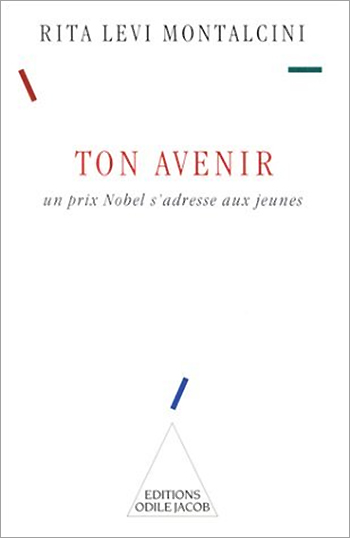
Rita Levi Montalcini
Your Future A Nobel Prize which speaks to young people
When a great scientist makes a point of getting through to young people and those around them.... When a Nobel prize brings within everyones reach all the key principles of biology.... When an exceptional woman passes down to new generations the values on which she has based her life.... Science with a conscience ! Rita Levi Montalcini recieved the Nobel Prize for Medicine. Born in Turin, but forced from Italy by the Fascism, she has for many years taught in the United States.
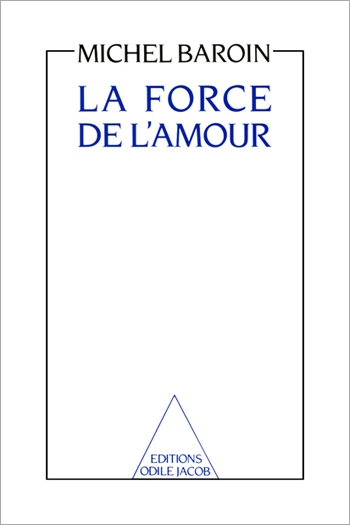
Michel Baroin
The Power of Love
Defining who I am, what I believe in, and where I exercise my responsabilities, whether within my family, the city, or the companies I am in charge of; taking from this experience a message of hope for the future, a moral for the individual, a conception of society: this is the aim of this essay, written by M. Baroin, the former Grand Master of the Grand-Orient de France, who died in an aircrash in 1987.
Charles Millon
Internal Peace
With regard to those who deny the fundamental and cardinal principals of law, which are the absolute respect of the dignity of the human person, the respect of each man whatever his race, class or religion and the eminent and equal dignity of each person; with regard to those who adopt a mindset of hatred, of cynicism and contempt, it is not only out of the question to collude with these people in any way, it is also necessary to fight against them and have the courage to exclude them. Charles Millon, a former Defence Minister and currently deputy mayor of Belley, gives us in this book an insight into his analysis of politics, his personal agenda, his strategy, and his proposals for the law, and for France, so that each one of us can make a judgement with full knowledge of the facts.

Bernard Lechevalier
Mozart's Brain
In this book, the author uses episodes from Mozarts life which illustrate a specific aspect of musical perception. He explores the mechanisms of musical memory - how is it mentally possible to memorise a fifteen-minute musical composition for nine voices, in two choirs? Is this ability due to a listening technique? To an emotionally-based one? What mental operations are at work in musical memory, in general? Bernard Lechevalier is a neurologist specialising in neuropsychology, and a professor of neurology and medicine in teaching hospitals.