Catalog All books

Claude Olievenstein
Written in the Mouth
"The mouth is beautiful. Everything starts with the mouth, from the first scream to the first sucking, from the first love kiss to the last farewell kiss. It is possible to view it only as an obscure hole or a devouring machine. It becomes more difficult when, from the labial to the short syllabe, it shapes itself as an instrument for language or music. Then, new questions are raised, especially regarding its relation to the cerebral systems." Claude Olievenstein
Robert Axelrod
Quid Pro Quo The Theory of Cooperative Behaviour
How to succeed in a world of selfish people: strategists, negotiators, decision makers, managers, those with common sense, as well as good (or bad) faith operators will find food for thought in this exploration of reasoning. Once thought patterns are understood, cooperation can thrive -- even in the most unfavorable of situations. Game theory specialist Robert Axelrod teaches political science at the University of Michigan.
Roger-Pol Droit
Michel Foucault, interviews
On 25 June 1984, Michel Foucault died of AIDS-related complications at a hospital in Paris. Since then, his reputation and influence - already great during his lifetime - have not ceased to grow. Whether his subject was asylums, prisons or the history of sexuality, Foucault always tried to understand the organising forces behind prevalent social attitudes, by which a society defines itself, so as to disrupt the existing order. A philosopher as well as a historian, Foucault was an unclassifiable, unpredictable, subversive thinker, and the inventor of a new style of intellectual investigation. He rarely spoke of himself, or of his goals, or of his relations to his own writing, experiences and intellectual development. He did, however, talk about himself in a series of interviews that he gave me in June 1975, a few weeks after the publication of Discipline and Punish: The Birth of the Prison. Wishing to pay homage to his memory, I have gathered here three of those interviews, which were previously published in the press, along with some of my memories and thoughts about him, writes Roger-Pol Droit. Roger-Pol Droit is a research fellow in philosophy at the Centre National de la Recherche Scientifique (CNRS) and a columnist for the French daily newspaper Le Monde. He is the author of La Compagnie des philosophes, La Compagnie des contemporains, 101 Expériences de philosophie quotidienne and Dernières nouvelles des choses.


Philippe Lazar
The Health Explorers Voyage to the Centre of Medical Research
Research is a keystone of modern medicine, and is a critical factor in the independence of the nation, and yet medical research is still not well-known to the general public. How do researchers work? How is research organized in France? What are the links between the various public players and researchers? Since 1982, Philippe Lazar has been director-general of the French National Health and Medical Research Institute.
Jean-Pierre Danjean
Forgetfulness and Memory Lapses
From banal forgetfulness to serious memory disorders: tests and essential guidelines to help decide how and when to take action.

René Frydman
God, Medicine and the Embryo
With ethical questions raised about medically assisted pregnancies and medical experimentation, the eugenics debate has become a mute point. Yet bioethical legislation has remained ambiguous. René Frydman has made himself the ardent defender of progenics, a predictive and humanistic medicine. Here, Frydman reflects on the problem of the human embryo through the different points of view of science, religion, law, and morality, and answers ethical and religious questions that he has been asked by his patients. René Frydman is a gynecologist-obstetrician and a member of the FrenchEthics Committee.
Ilya Savatovsky
The Prostate Cancer
Finding out more about prostate cancer to prevent it or overcome it

Jean-Pierre Danjean
Living With and Overcoming Chronic Fatigue
Preventing, understanding and overcoming chronic fatigue — a condition that was not recognised as a disease until 1988
Michel Godet, Marc Mousli
The Joy of Work Working brings us alive
A message for our political and economic leaders: work plays a central role in our societies, and seniors constitute a formidable pool of skills that they must learn how to use
Alain Cotta
Global Hypercapitalism
Erudite and original, this book presents a true portrait of the “Dynamics of hypercapitalism,” tracing its lines of strength. It is also a denunciation of the elites and of their oligarchical power, exercised on the middle classes.

Mario Bettati
International Environmental Law
An indispensable book for students, diplomats and activists faced with attacks on the environment
Françoise Benhamou
The Star-System Economy
We live in an age that spends fortunes on its stars. But why do we get the impression that the fees that stars receive and their popularity correspond less and less to their talent? Why does stardom seem to have so little to do with creativity and quality? Françoise Benhamou is an economist.
Robert Dautray
Quelles énergies pour demain ?
If there is such a thing as a French exception, it is in matters of energy. Lacking natural energy resources, France has developed a vast electro-nuclear programme which not only guarantees the country's political independence but also produces budget surpluses. Since the existing electro-nuclear equipment is not everlasting, and must thus be renewed, the question of the total dependence on nuclear energy has arisen once again. This book, by one of the most influential French scientists of the post-war period, is an in-depth analysis of the country's energy system and its problems, and the prospects for future development. The author begins by an examination of production methods by major categories (oil and natural gas, coal, hydraulic energy, solar energy, biomass, nuclear energy, geothermal energy, wind, renewable energy, bioenergy, thermonuclear energy). He then describes the role that energy plays in our society, and how society reacts to energy problems. He concludes that present and future citizen-consumers should be placed at the centre of all discussions about energy methods, that consumers should be satisfied and respected and that their opinions should be considered. But this, he says, is exactly the opposite of what has happened up to now. The last part of the book, which deals with scientific and technical research, tries to answer the questions: What should be done? What actions should be undertaken? Time is running out and irreparable harm is being done to the environment. How much time is left to discover and develop the new procedures that will enable us to save what may still be salvaged? As was amply illustrated by the heatwave of 2003, the environment remains a crucial issue. In this important book, the author has had the courage to urge scientists and experts to step out of their ivory tower, to meet with citizens, and to provide for their needs. And he takes the risk of outlining some highly specific measures to be undertaken in the next ten years. Robert Dautray is an engineer and physicist at the French Atomic Energy Commission and a member of the Academy of Sciences.

Jean-Baptiste de Foucauld
The 3 Cultures of Human Development Resistance, Regulation, Utopia
Today, economic growth has taken off again, creating jobs and making full employment a feasible goal. And yet, at a time when we seem to be at the brink of a new recession, nothing seems to have really changed. Modernisation may exclude fewer members of our society than had been previously feared, but, if we are not careful, their exclusion will be all the greater. It is no longer possible to retain a soft procedural approach to democracy. Democracy needs to return to its origins; it must be given a goal, based on a strong vision of humanity and of humanity as part of society. It is necessary to construct human development along the lines of three political and spiritual cultures which represent our common heritage : resistance, regulation and utopia. Jean-Baptiste de Foucauld is a senior official in the French Treasury. Until 1995 he was a commissioner of Frances economic plan. He is active in numerous think-tanks and associations that struggle against social exclusion and unemployment.
Robert Rochefort, Dominique Voynet
The Environment - A Social Question The Result of Ten Years of Research for the Environmental Ministry
This book collects 31 contributions from sociologists, legal experts, economists, and philosophers. All of these reflections point to two major motifs: that of a durable association between economy and ecology, and that of the principle of precaution necessary in and for future generations.
Hubert Montagner
The Child : The Real Question of Education
This ambitious work aims to provide a comprehensive view of the mechanisms, processes, influences, factors, and past and present events that may keep children from constructing, structuring or mobilising their abilities in an academic environment, and from acquiring new abilities and successfully constructing the required learning skills. In the struggle against academic failure, the main tool is understanding the child better. In order to do this, it is essential to base educational practice on the most recent knowledge.
Geneviève Bédoucha
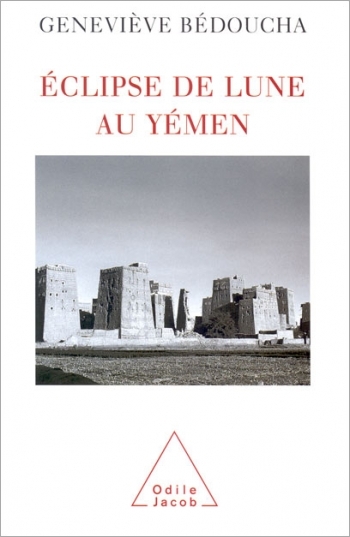
Lunar Eclipse in Yemen An Anthropologist's Emotions and Feelings of Bewilderment
This is a fascinating approach by a woman of a tribal society in a mountain valley in northern Yemen, near the Saudi Arabian border. Partly a travel book and partly a journal of the author's fieldwork, it restores an anthropologist's unique first-hand experience, questionings, hesitations and discoveries, from the first moments spent in an unfamiliar village. There are few anthropological works on Yemen, and even fewer about private life in rural societies in the hinterland of the former Arab Republic of Yemen (the author's fieldwork dates from the 1980s, before reunification). At the time, the presence of a female anthropologist led both men and women to talk openly, often jokingly and provocatively, of male-female relations, and it seemed to encourage women to voice strong criticisms of male behaviour and privileges. The women's comments reveal them to be lucid independent thinkers, and not at all submissive. This book is an invitation to discover a little-known rural community at close quarters, and to penetrate the secret universe of Yemen's many-storied mud houses. It reveals relations between men and women in a closed, but curious and hospitable, Muslim Arab society. An anthropologist and research fellow at the Centre National de la Recherche Scientifique (CNRS), Geneviève Bédoucha is a specialist in the relations between socio-political structures and irrigation systems in Arabic and Islamic societies.