
Catalog All books
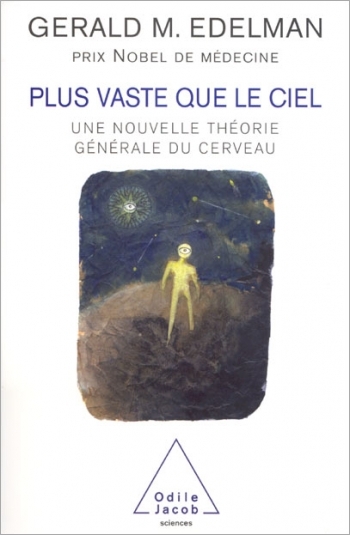
Gerald M. Edelman
Wider than the Sky
The brain is wider than the sky, For, put them side by side, The one the other will include With ease and you beside, wrote the American poet Emily Dickinson in the mid-nineteenth century. The fundamental mechanisms governing mental life are now the subject of scientific study. In this book, Gerald Edelman examines a major aspect of the mind - consciousness. How can the firing of neurons give rise to subjective sensations, thoughts and emotions? How can the disparate domains of mind and body be reconciled? A scientific explanation of consciousness must take into account the causal connections between these two domains. Such a theory must show how the neural bases of consciousness appeared during the evolutionary process and how certain animals developed consciousness. These are some of the key issues that Gerald Edelman examines here. He shows that consciousness cannot be located in a specific area of the brain, because it is a process linked to how the brain functions as a whole, to its wealth of connections and to its great complexity. The brain, he argues, is not a kind of computer. Edelman is regarded as one of the greatest theoreticians of the brain, and his notion of consciousness dominates all discussions on the subject among the international scientific community. This book offers the most accessible version of his theories that is available today. The winner of the 1972 Nobel Prize in Medicine, Gerald Edelman heads the Institute for Neurosciences, in La Jolla, California.
Thierry Najman
Places of Asylum Should We Open Psychiatric Wards?
Locking up psychiatric patients is shameful and ineffective

Jean-Paul Binet
The Surgical Procedure
One of the great names in cardiovascular surgery, Jean-Paul Binet, wished to embrace his discipline it its generality (working with hands) but also in showing its prodigious diversity, progress and transformations. The reader is invited to follow him, and in so doing to surpass the mixed sentiments of fascination and horror that are often inspired by this branch of medicine. Jean-Paul Binet is a member of the Medical and Surgical Academies, and a correspondent for the Academie des Sciences. He practices at the Marie-Lannelongue Surgical Center.

Temple Grandin
Calling All Minds How To Think and Create Like an Inventor
From world-renowned autism spokesperson, scientist, and inventor Temple Grandin -- a book of personal stories, inventions, and facts that will blow young inventors' minds and make them soar.

François Heisbourg
Return of War
Centered on the China-United States-Russia trio, this follow up to Le Temps des prédateurs: La Chine, L’Amérique, la Russie et nous provides essential keys for understanding the world to come.



Pierre Karli
The Brain and Freedom
What is the relationship of man with the world, the others, with himself? To this perpetual question, many answers have been given by the various, religious or philosophical systems of thought. Pierre Karli, a neurophysiologist, proposes to look in the direction of science. He shows, by synthesizing the most advanced scientific works, how individual freedom finds its roots at the very heart of the brain.
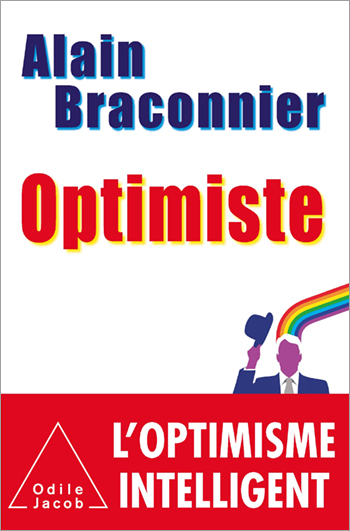
Alain Braconnier
Optimist
How to develop and cultivate optimism, to contribute to our happiness and well-being

Paul Jorion
Understanding Our Times
A brilliant, iconoclastic work by the anthropologist and sociologist Paul Jorion
Olivier Houdé
Human Intelligence is Not an Algorithm
An original theory that proposes a new model of intelligence centered on intuition, logic, but also inhibition, indispensable for correcting our cognitive biases.

Antoine Guédeney
A Baby Doesn’t Wait Identifying, Treating, and Preventing Distress in the Very Young Child
The adventure of The Alarm Distress Baby Scale, which has become a formidable tool for prevention in perinatal and early childhood care.
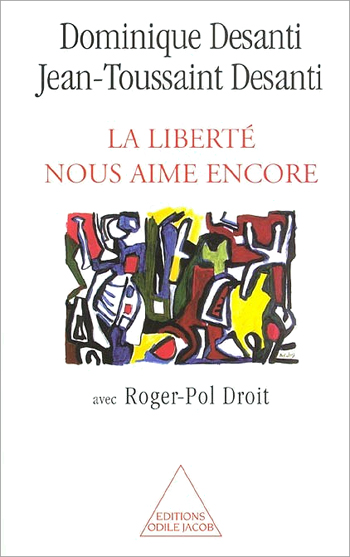
Dominique Desanti, Jean-Toussaint Desanti, Roger-Pol Droit
Liberty Still Cherishes Us
In this book, the authors, Dominique and Jean-Toussaint Desanti, relate their lives of active political and intellectual commitment to Roger-Pol Droit. The story begins with Dominique and Jean-Toussaints first meeting, their lives as an open couple, their involvement in the French Resistance and, later, in the Communist Party, their support of the FLN during the Algerian war of independence, their participation in the events of May 1968 in France and the United States, and their espousal of the feminist movement. They also discuss the numerous works they have written literature in Dominiques case, philosophy in Jean-Toussaints. Their political path is one that was shared by many French intellectuals of their generation. The enthusiasm of many young people for left-wing causes had first been stirred by the Popular Front government. The Soviet victory at Stalingrad (rather than support of Marxist thought) later fanned this enthusiasm, with the result that many French intellectuals joined the Communist Party. Each event in the authors lives is recounted individually from each ones point of view, before being retold by both of them in unison. This manner of telling their story fully respects each writers personality and style, and has resulted in an especially intense book. Dominique Desanti is a journalist, essayist and novelist. Jean-Toussaint Desanti is a philosopher and professor emeritus at the University of Paris I-Sorbonne.