Catalog All books
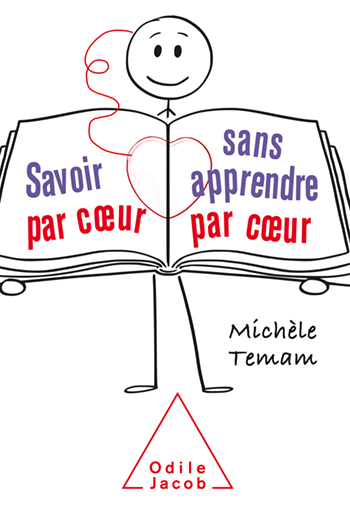
Michèle Temam
Memorizing without Memorization
A practical guide intended for students, combining a method, its direct application, and a scientific explanation for that method.
Claude Hagège
The French Language and the Centuries
Claude Hagege illustrates how the internal purity of the French language, less endangered than one might think, has been pushed aside in favor of its external promotion, less real than one might imagine. He increases our awareness of a major reality of the times. The French language is no longer the exclusive property of France; it has become an international affair. Claude Hagege is a professor at the Collège de France.
Rita Levi Montalcini
Your Future A Nobel Prize which speaks to young people
When a great scientist makes a point of getting through to young people and those around them.... When a Nobel prize brings within everyones reach all the key principles of biology.... When an exceptional woman passes down to new generations the values on which she has based her life.... Science with a conscience ! Rita Levi Montalcini recieved the Nobel Prize for Medicine. Born in Turin, but forced from Italy by the Fascism, she has for many years taught in the United States.
Bernard Lechevalier
Mozart's Brain
In this book, the author uses episodes from Mozarts life which illustrate a specific aspect of musical perception. He explores the mechanisms of musical memory - how is it mentally possible to memorise a fifteen-minute musical composition for nine voices, in two choirs? Is this ability due to a listening technique? To an emotionally-based one? What mental operations are at work in musical memory, in general? Bernard Lechevalier is a neurologist specialising in neuropsychology, and a professor of neurology and medicine in teaching hospitals.
Christian de Duve
Listening to the Living
Everything one should know about biology is explained here by a Nobel Prize winner, including the origin of life, its chemical production and reproduction, the history of life, its earliest forms and also human evolution, the brain, the genius of genetics, and extra-terrestrial life. Finally, the author shows that although biology has undermined arguments in favour of the existence of God, religion and faith are a necessary product of nature selection. Christian de Duve is the director of the Brussels-based International Institute on Cellular Pathology. He was awarded the Nobel Prize in Physiology or Medicine in 1974 for his findings concerning the structural and functional organisation of cells.
François Ansermet, Pierre Magistretti
To Each His Own Brain Biology of the Unconscious
This book is the result of the coming together of psychoanalysis and neuroscience around the shared observation that experience leaves a mark. Although the idea that experience produces psychic imprints - whether conscious or unconscious - has always been central to psychoanalysis, it was not until recently that findings in neurobiology demonstrated that neuronal plasticity existed and that it operated throughout a person's life. This constant remodelling in relation to experience poses certain basic questions about each individual's identity and future. How does psychic life emerge from experience and from what it imprints? What are the respective contributions of external stimuli (the reality behind experience) and of internal stimuli (the imprinted marks)? How do the mechanisms of synaptic plasticity participate in the establishment of an unconscious internal reality? What is the role of the body in this new dynamic organisation? This book provides the foundations for a better understanding of the relations between neuroscience and psychoanalysis and offers an original theory of the unconscious, by combining recent findings in neurobiology with the basic principles of psychoanalysis. Eschewing genetic determinism, it shows that each individual is different and each brain unique. Pierre Magistretti, a physician and neurobiologist, is a professor of physiology and director of the Centre for Psychiatric Neuroscience at the University of Lausanne's medical school. In addition, he is the president of the Federation of European Neuroscience Societies. François Ansermet is a psychoanalyst and professor of child and adolescent psychology at the University of Lausanne. He is the co-author, with O. Halfon and B. Pierrehumbert, of Filiations psychiques (Presses Universitaires de France, 2000).
François Dalle
The L'Oréal Adventure
It is difficult to imagine that in 1948 L'Oréal was a small company operating mainly in France and in a few neighbouring countries. Over a period of 35 years, L'Oréal's annual revenue rose from $ 30 million to $ 3 billion. This book shows that money and classical management techniques played a minor role in L'Oréal's growth. For François Dalle the company's success can be explained by the wide acceptance by the staff to what he calls the "spirit of L'Oréal" : this is what enabled L'Oréal to diversify its activities, spread all over Europe, Japan and America and successfully manage the hard times of the 1970s and '80s. François Dalle managed L'Oréal from 1948, at first with Eugène Schueller, then as CEO, a position he held from 1957-1985.
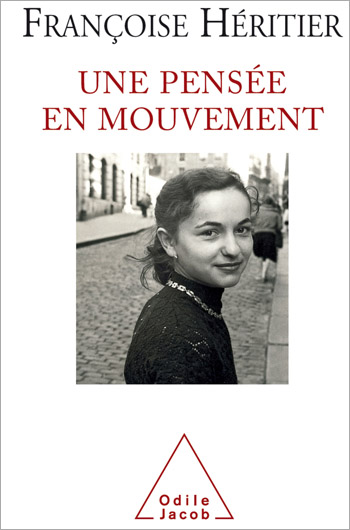
Françoise Héritier
Thought in motion
Based on a series of interviews, this book traces the career of a brilliant anthropologist, whose thinking enlightens and moves us
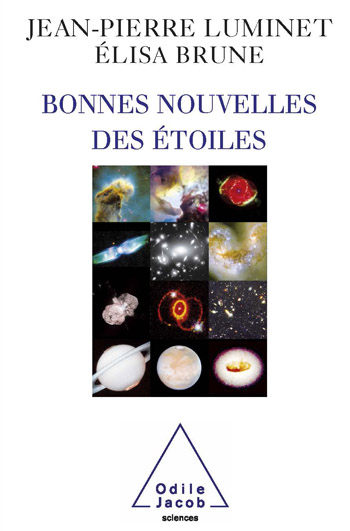
Jean-Pierre Luminet, Élisa Brune
Good News from the Stars
This book describes the current state of knowledge on astronomy, without taking the form of a science lesson.