Catalog All books
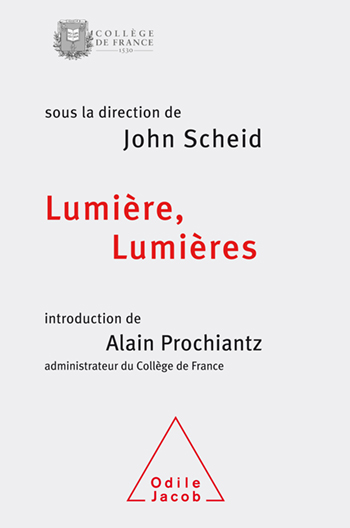
John Scheid, Alain Prochiantz
Lights, light
The 2015 Colloquium of the Collège de France unites some of the most eminent authors in physics and astrophysics, in biology, in neuroscience and the history of science. Light is a timeless subject: it has always had the power to fascinate and disturb. Here it is explained.
Dominique Schnapper, Paul Saloma, Perrine Simon-Nahum
Thinking about anti-Semitism A Symposium on Anti-Semitism
Commentary from the latest reports on anti-Semitism in France, in order to go well beyond journalistic and political discourse. The current character of the issue, which is examined here with the resources of both history and philosophy. The scope of the analyses proposed by some of the most respected specialists on the issue.
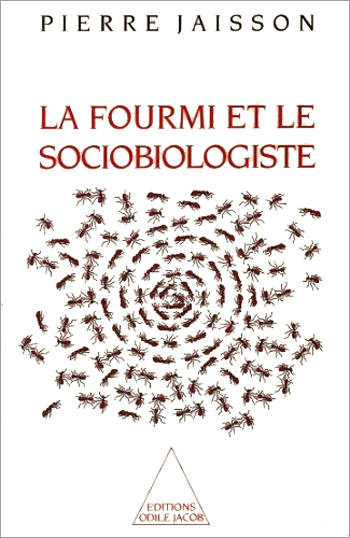
Pierre Jaisson
The Ant and the Sociobiologist
What are the advantages of social organization? P. Jaisson, a sociobiologist, explains how among animals as various as ants, bees, tadpoles and rats, certain altruistic behavior is dependent on a recognized social order. The generalizations fostered by these findings and their application to the human speces are a source of violent debate and moral questioning. Jaisson provides an honest look at the ideological exploitation born of sociobiological study.
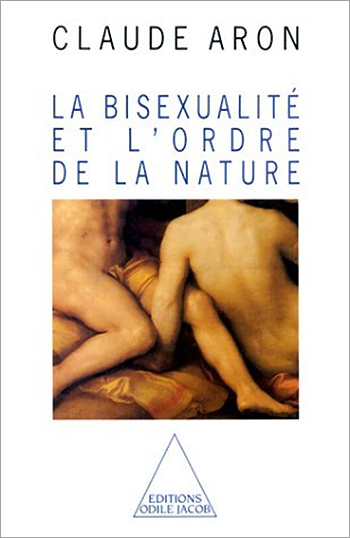
Claude Aron
Bisexuality and the Order of Nature
Our sex defines our identity before we are even named - "It's a boy" or "It's a girl" is the traditional welcome we receive in this world. Similarly, throughout our entire life, our gender defines our diverse social roles. Yet, this book shows how nature presents us with only one model, that of bisexuality. Endocrinian manipulations have shown that it is possible to change from one sexuality to another in a reversible manner. This book is key reading in the debate about the genetic character, or not, of homosexuality. Claude Aron, a specialist in in the physiology of reproduction, is also an honorary professor of the Louis-Pasteur University in Strasbourg.
Jean-Claude Cousseran, Philippe Hayez
Intelligence and Intelligence Gathering in Democracies
A thoroughly researched, pedagogical work for anyone interested in Intelligence
James B. Collins
The Republican Monarchy State and Society in France Under Louis XIV
A new approach to France under Louis XIV and to Ancien Régime society
Colette Chiland, Jean-Philippe Raynaud
The Brain, the Psyche and Development
A fascinating work on the mental development and treatment of children, by eminent specialists in psychiatry and the neurosciences
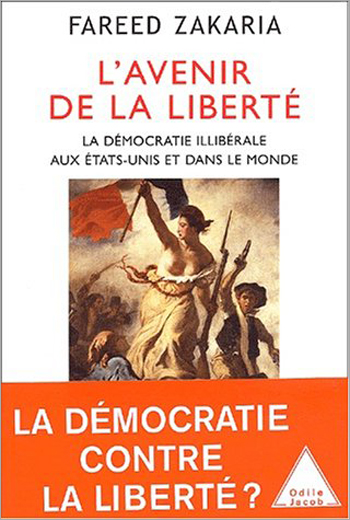
Fareed Zakaria
The Future of Freedom
Is it really so that more democracy leads automatically to more freedom ? Why, in the four corners of the world, are we now seeing an increased capacity for religion to mobilise the people ? Why, in Europe as in the United States, do we have minorities and oligarchies reigning in the name of the people ? Why has there been an increase in the number of regimes which are born from the polling booth, yet which exalt fanaticism, repression and war ? A dazzling world tour of the geo-political horizon, and also a lesson in modern and contemporary history, which we lead us to reexamine our own prejudices. Fareed Zakaria is the editor of Newsweek International and was formerly the managing director of the review Foreign Affairs.
Serban Ionescu, Boris Cyrulnik
Resilience: From Cells to Societies The 2nd World Congress on Resilience
How to create resilience, at every level, step by step. A book that places the concept of resilience on a continuum going from cellular to societal level.
Michel Cassé
The Void and Eternity
A synthesis of current cosmological theories, by one of the greatest astrophysicists of our time
Conseil franco-britannique, Giles Radice, Jacques Viot
A Century of the Entente Cordial Franco-British Council
The publication of this book commemorates the centenary of the signing of the Entente Cordiale, a key date in Anglo-French relations. T