Catalog All books
Monique Sicard
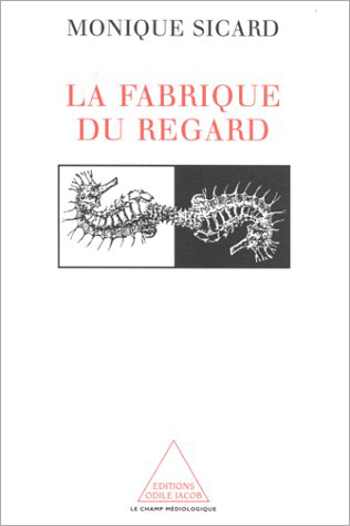
The Making of the Image
It was during the Renaissance that images and pictures were first used by anatomists, microscopists, and astronomers as scientific tools. In that era, scientific images served as a kind of inventory of the known world. In the 19th century, the popularization of scientific ideas gave science a new vigor. Photographic images gave science a new reality, explaining and legitimizing scientific concepts--movement, for example--to a fascinated public. In our days, the scientific image is often a construction--helping us to represent objects and ideas that, like fractals or black holes, cannot be defined through actual observation. Monique Sicard is Projects Director at CNRS Images Média.
Alain Séguy-Duclot
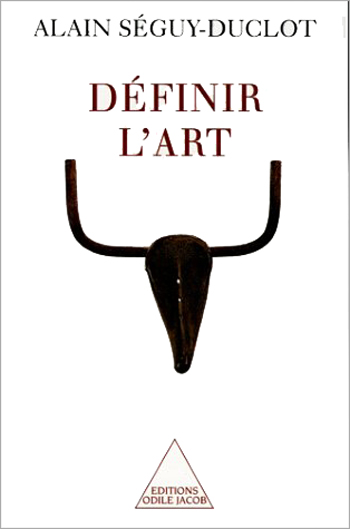
Defining Art
The general consensus is that art is impossible to define and that the evaluation of works of art is always subjective. Countering these affirmations, Alain Séguy-Duclot shows in this work that art can, in fact, be defined. Duchamp's readymades (industrial objects in series, snow shovels, wine racks, etc) constitute a point of departure for this reflection. He argues that, rather than showing that art was undefinable, the readymades proved that art was definable. It is this that Séguy-Duclot sets out to prove in this incisive and passionate work. Alain Séguy-Duclot is a philosopher, and a professor at the University of Tours.
Danièle Voldman
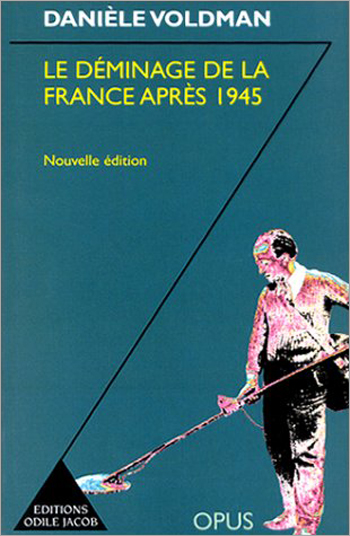
The Mine Clearance of France after 1945
At the liberation of France, the country was covered in mines, planted by the Germans, the Allies and the Resistance during the conflict. The population were fearful of resuming normal life in the face of this danger: France had to remove the mines. Thus in 1945, mine clearance was invented, as before then no-one had any idea how to defuse these weapons of death! Who would be given the heavy responsibility of leading this task ? What did it involve ? What role did the German prisonners of war play ? Danièle Voldman, a historian, is the research director of the CNRS (Institute of Contemporary History).
Alain Ehrenberg
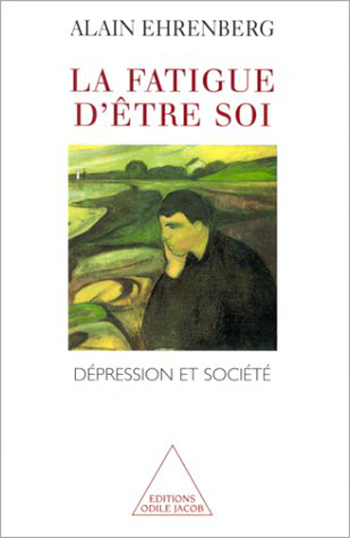
Tired of Yourself Depression and Society
Examining the changes that have occurred since the 19th century in both psychiatry and society at large, this book shows how the internal collapse that is depression is the ultimate symbol of our culture of powerlessness. The depressed person cannot rise above the demands imposed on him or that he imposes on himself. He has no recourse but fatigue, inhibition, and indecision. But what does it mean to learn to be oneself? Is our society merely creating huge numbers of hypochondriacs? Can we any longer draw a line between the small unhappinesses and frustrations of daily life, and pathological suffering? Alain Ehrenberg is a sociologist.
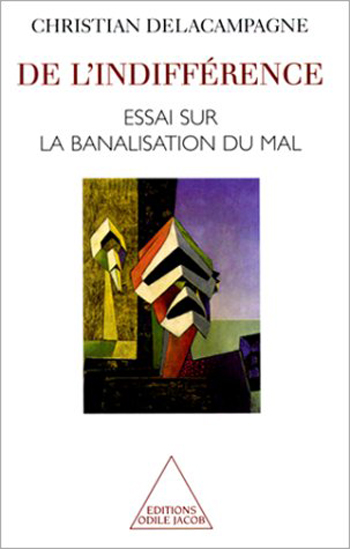
Christian Delacampagne
Of Indifference An Essay on the Banalization of Good and Evil
What can we forget, and what had we best remember? What is "good" and what is "bad" indifference? Christian Delacampagne proposes a re-evaluation of genocide and of crimes against humanity in the face of an intellectual confusion that leads, according to Hannah Arendt, to a real "banalization of evil." Christian Delacampagne is a philosopher and a journalist at Le Monde.
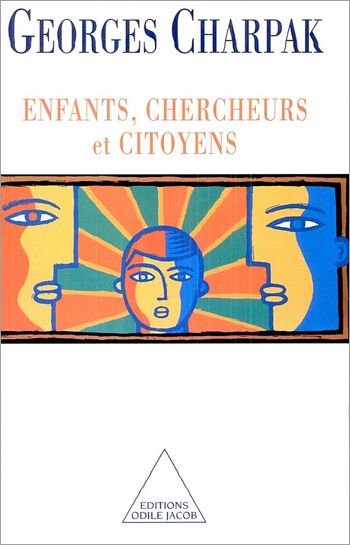
Georges Charpak
Children, Researchers and Citizens
Georges Charpak has taken the initiative for a complete reform of our methods of science teaching. He proposes a teaching method based on creativity and problem-solving, instead of the old theoretical, book-based approach. This book recounts the experiences of two teams of French educators in a research institution created by Leon Lederman in Chicago, and the lessons which we can take from their experiences. Pollens shows that to learn is to discover, and that it is in discovering that one learns. Georges Charpak is a Nobel laureate in physics, and the author of La vie à fil tendu and Feux follets et champignons nucléaires, both published by Editions Odile Jacob.