Catalog All books
Patrice Queneau, Claude de Bourguignon
Saving the General Practitioner
A powerful argument for keeping medicine human, citing the general practitioner as the guarantor. A book that can contribute to the debate on healthcare, and one that will find a favourable reception among general practitioners.

Libby Purves
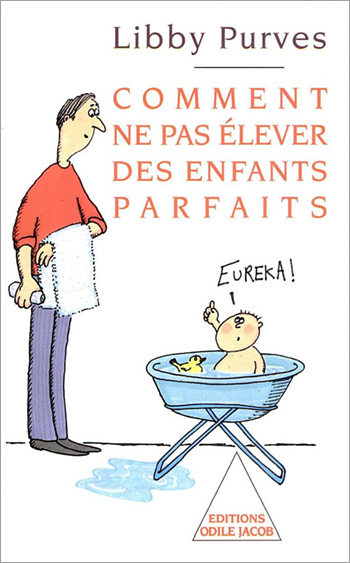
How Not to Raise Perfect Children
All parents want to raise exceptional children : well-balanced, healthy, clean behind the ears and gifted for everything...
Libby Purves
How Not to be a Perfect Family
Perfect families, as we know, live in perfectly kept houses, have admirably well-organized vacations...
Libby Purves
How Not to Be a Perfect Mother
Are you a perfect mother or a real mother? Perfect mothers are forever smiling, their homes are immaculate, and they never raise their voices.

Libby Purves
How Not to be a Perfect Mother
Are you one of those perfect mothers or are you a real mother? Perfect mothers always smile, always have immaculate homes, never raise their voices....
Stanley B. Prusiner
The Madness and Memory The Discovery of Prions — A New Biological Principle of Disease
Stanley B. Prusiner’s fascinating discovery, which revolutionised medicine
Joëlle Proust
Thinking Fast or Thinking Well
By revealing the individual and social implications of cognitive functioning, an overview of up-to-date knowledge enabling us to understanding our thinking and to control it more in practice.
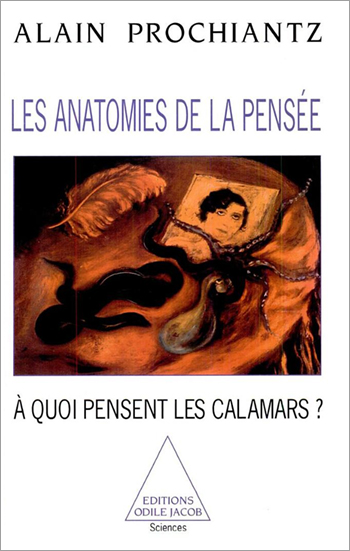
Alain Prochiantz
The Anatomies of Thought What do squid think about ?
When we watch a squid facing up to a predator, we see it recoil, agitate the tentacles, spray a jet of ink, and then make use of the temporary blindness of the predator in order to escape to a safe hiding place. Are we able to say what it is thinking ? Evidently, we know that this behaviour is not the result of a reflex unleashed by the sight of an enemy. The mollusc is not however conscious of its acts, at least not in the sense that we, as human beings, understand this term. It is true that we are the product of a evolution of species, and that, although this may not be welcome news for everyone, we share a common ancestry with the octopus, or even the fly. Even if the structure of our cortex, and the invention of language allows us to write about octopuses (or flies), and not the other way round, the fact remains that these evolutive roots, in the same way as other animal species, including invertebrates, have something to teach us about the nature of our thoughts. Alain Prochiantz
Alain Prochiantz
Darwin: 200 Years
More than an homage to a great scientist, this book, written by eminent specialists, is a perfect introduction to understanding the impact of Darwinism on contemporary thinking and science