Catalog All books

André Grimaldi, Didier Tabuteau, François Bourdillon, Frédéric Pierru, Olivier Lyon-Caen
Manifesto for Fair and Egalitarian Healthcare
In the run-up to the French presidential elections, two healthcare specialists denounce the constant and catastrophic deterioration of hospitals in France — and propose effective solutions

Luc Ferry, Axel Kahn
Legalize Euthanasia?
Based on a comparison of euthanasia legislation in several countries and an analysis of specific cases revealing the paradoxes of contemporary individualistic values...
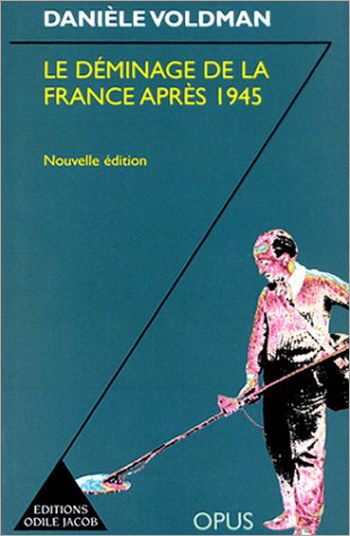
Danièle Voldman
The Mine Clearance of France after 1945
At the liberation of France, the country was covered in mines, planted by the Germans, the Allies and the Resistance during the conflict. The population were fearful of resuming normal life in the face of this danger: France had to remove the mines. Thus in 1945, mine clearance was invented, as before then no-one had any idea how to defuse these weapons of death! Who would be given the heavy responsibility of leading this task ? What did it involve ? What role did the German prisonners of war play ? Danièle Voldman, a historian, is the research director of the CNRS (Institute of Contemporary History).
Jean-Marie Bourre
The Dietetics of the Brain New Edition
How should we eat to think well and work productively? J.-M. Bourre, a neurotoxicologist, celebrates the pleasures of a greedy brain, a gastronomical brain. He takes us on a fascinating exploration of the complex chemistry which links our brain to our plate in the world of proteins, vitamins, mineral salts, and lipids. By providing the keys to proper nutrition, this book shows the way to greater mental awareness, energy, health and fulfilment, while respecting the real needs of both the body and the brain that most crucial organ. Throughout the book, pleasure (adapted to every budget) remains one of the authors main concerns.
Jean-Didier Vincent
The Biology of Passions (New Edition)
"A fascinating book, which demonstrates that the ensemble of the brain, neurons, and synapses is literally immersed in a chemical sea. We must rid ourselves of the notion that the brain is a supercomputer." Le Figaro
Michael S. Gazzaniga
The Social Brain
This book investigates the concepts of the "right brain" and the "left brain". According to the author the brain is most certainly made up of relatively autonomous modules which react independantly to environmental pressures. At least one of the modules, situated on the left side of the brain, is responsible for the interpretation of answers which may be contradictory with others, whereas yet another module on the same side translates into words the result of this interpretation. So, instead of being a unique, monolithic system that we imagined, the brain would appear to be a collectivity of systems - a social brain. This approach enlightens us as to the functioning of the human brain, and according to Gazzaniga, affects the very roots of our belief systems and societies. Renowned American neurologist, Michael Gazzaniga is Director of the Cognitive Neuroscience Division of Cornell University and chairman of Neuropsychology.
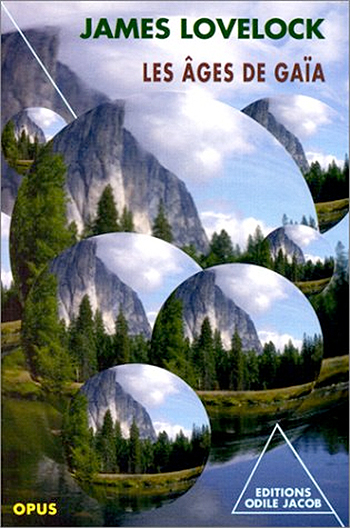
James Lovelock
The Ages of Gaia A Biography of Our Living Earth
The fascinating, controversial and most-worshipped hypothesis of ecologists - that of considering the Earth as the biggest living organism, referred to as Gaïa. It is here discussed by its inventor in person, who shows us that if our planet hasn't always had the same face, it's because there have been several ages corresponding to the predominance of very different species. In three centuries, humanity has wrought more modifications to the face of Gaïa than natural evolution did in millions of years. Although he does not doubt that the Earth, today turned completely upside-down by industrial activities, will find a new equilibrium, he does suppose that it could at the price of the disappearance of man, whose reign represents only one of the ages of Gaïa. Born in 1919, James Lovelock is the author of The Gaïa Hypothesis, a book which shook up the scientific world in the beginning of the seventies and met with great public acclaim.
Stanley Greenspan, Jacqueline Salmon
The Challenging Child (Coll. Opus) Understanding, Raising, and Enjoying the Five
There always comes a time when parents think that their child has become impossible. Hyper-sensitivity, withdrawal, systematic indiscipline, concentration difficulties, aggressiveness : through five cases of difficult children, Stanley Greenspan explains how to help by emphasising the sensory and motional differences of each of child. Importantly this book allows parents to identify for themselves the personality of their child, in order to find in the childs weaknesses the ingredients for future success. Stanley Greenspan is a doctor of medicine, and a teacher of psychiatry, behavioural psychology et paediatrics at the George Washington Faculty of Medicine in the United States. Jacqueline Salmon is a journalist at the Washington Post.