
Catalog All books

Saïda Douki Dedieu, Hager Karray
The Veil on the Couch Hidden ramifications unveiled
The visible or hidden ramifications of the headscarf explained from the point of view of two psychiatrists who aim to reveal its importance in the status and mental health of women, from its origins to the present.
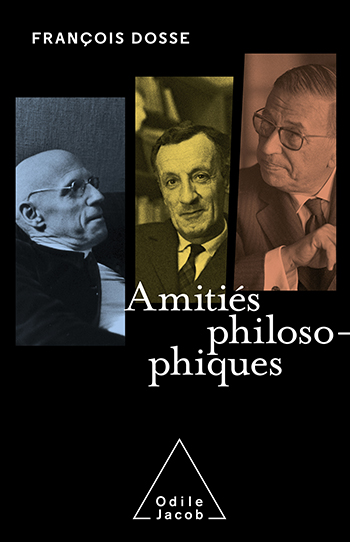
François Dosse
Philosophical Friendships
A sensitive light shed on the philosophical subjects that the reader thus (re)discovers, from existentialism to event philosophy...
Barbara Donville
New Paths for Navigating Autism in Children
Autistic children are misunderstood because they think and act in ways that are unfamiliar to the rest of us. A therapist brings her personal experience to the subject in this profound yet practical book.
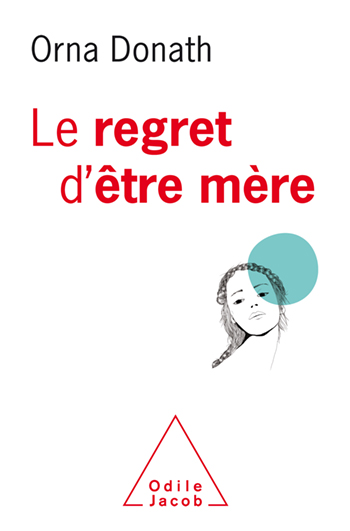
Orna Donath
Regretting Being a Mother Being a Mother and Being Oneself Isn’t Easy
A controversial subject: one can have children, love them, and think that one has not completely succeeded in life. A book based on a fieldwork survey. The words of liberated women.
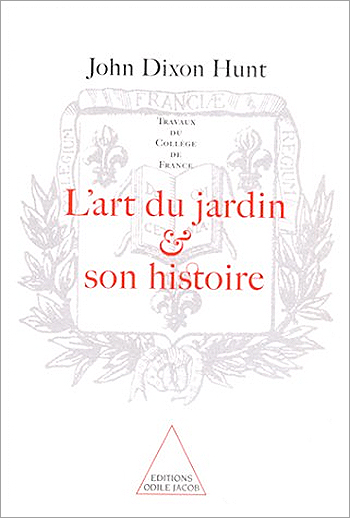
John Dixon Hunt
The Art of the Garden and its History (Product of the Collège de France)
What can a garden reveal about ourselves and our culture ?
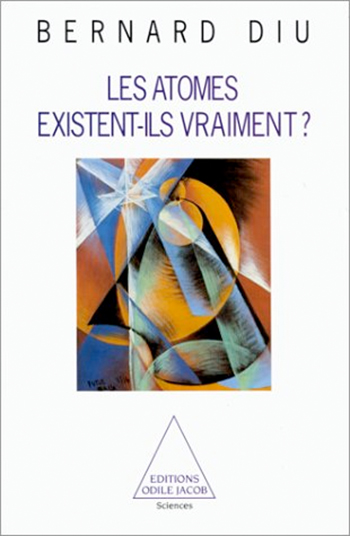
Bernard Diu
Do atoms really exist ?
Few scientific notions have aroused the speculative imagination like the thermodynamic entropy. All organised systems - societies, living creatures - are destined without exception to decline and eventual death. This book clearly exposes the historical and conceptual development of thermodynamics. Born from a desire to understand and master steam powered machines - the symbol of our industrialised societies - it became the science of the human body. However, it was suddenly passed over in favour of the theory of atoms. It was thus demolished by statistical mechanics which ceded to the imperatives dictated by the atomical structure of the body. After an epic struggle, sometimes quite ferocious, thermodynamics and statistical mechanics have been reconciled by adopting the base of the second with the techniques of the first. This book reads like a novel about contemporary physics. Bernard Diu, a graduate of the Ecole Normale Supérieur, is a professor at the University of Paris VII.
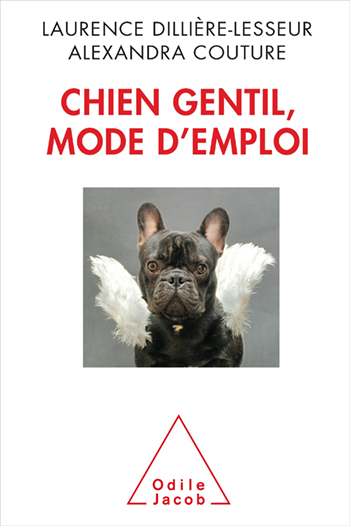
Laurence Dillière-Lesseur, Alexandra Couture
Good-Dog Training
Practical training tips to make sure your dog remains gentle and well-behaved in all situations
Alain Devaquet
The Amoeba and the Student University and Research: A State of Emergency
The student revolt of December 1986 translated the profound disarray of a university world faced with the mutations at work in modern-day France. In an analysis of the causes of the events that led to the repeal of his project of law on the universities. Alain Devaquet underlines the importance of the stakes represented by higher education and research on the future of a country and formulates an ensemble of propositions in light of their development. Alain Devaquet is a former minister of higher education and research, and a professor at the faculty of sciences of Paris.
Martin Desseilles, Moïra Mikolajczak
Living better With Your Emotions
Learning to master your emotions will make you stronger to overcome life’s difficulties
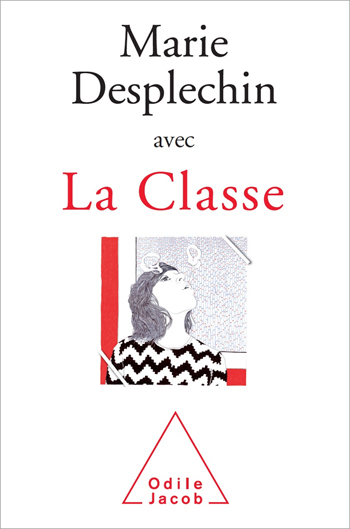
Marie Desplechin
The Class
Teenagers from a school in Lille speak out about their lives, joys and difficulties: Marie Desplechin has put together a fascinating book

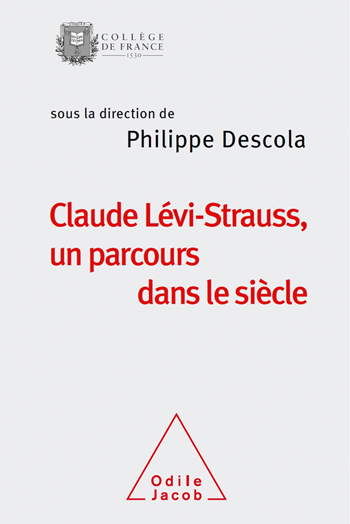
Philippe Descola
Claude Lévi-Strauss, A Journey Through the Century
Eminent specialists on Claude Lévi-Strauss, his disciples and intellectual heirs, from Brazil, Canada, France and the U.S., give us a wide-ranging view of every facet of the works and thought of the author...
Philippe Descola
Natures in Question Collège de France Autumn Colloquium
The most recent thinking on nature in the era of biotechnology and artificial intelligence
Philippe Desan
Montaigne Thinking about the Social
A study destined to become a work of reference, one that will be required for all courses on Montaigne.
Philippe Desan
Montaigne The Self, the Other and Time
A reference book by one of the best Montaigne specialists in the world.
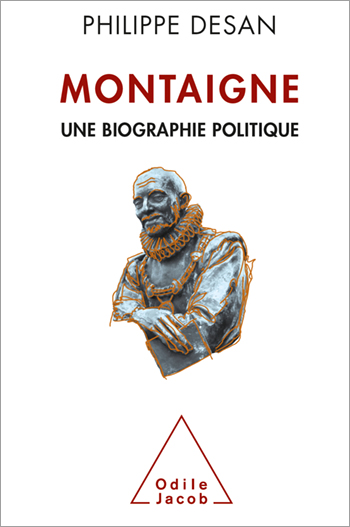
Philippe Desan
Montaigne A Political Biography
A brilliant, erudite biography that demolishes many received ideas about the great French philosopher

Jean-Philippe Derenne
Covid-19
All that we know about the plasticity of this virus, which is constantly mutating and changing, which makes it completely unpredictable. Even in countries where the crisis was believed to be over (China, Iceland, Slovakia, etc.), new cases are emerging.
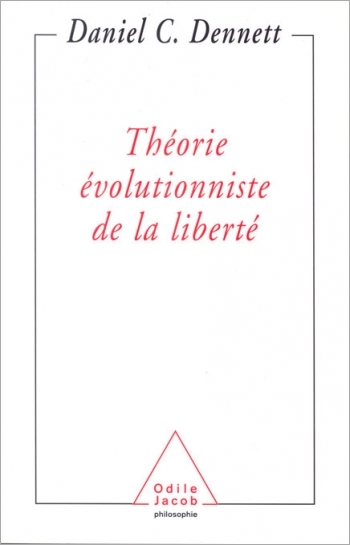
Daniel C. Dennett
Evolutionist theory of freedom
Billions of years ago, there was no freedom on earth, for the simple reason that there was no life. What forms of freedom have evolved since the first stirrings of life? Can freedom and free will exist in a deterministic universe? If we are free, are we responsible for our freedom, or is it governed by chance? Drawing on evolutionary biology and the cognitive sciences, Daniel Dennett provides a series of unorthodox replies to these traditional philosophical questions. It is generally held that what is determined is inevitable and that freedom can only exist in a non-deterministic universe. This is untrue, says Dennett. It is also held that in a pre-determined universe, we have no real choices: all we have is the illusion that we can choose. This too is false, argues Dennett. He then goes on to explain how, some day, we will be able to create robots endowed with free will. In this groundbreaking book, written in a striking, lively style, Dennett interweaves philosophical creativity with the latest scientific developments, and challenges a series of philosophical orthodoxies. Daniel C. Dennett is University Professor and Director of the Center for Cognitive Studies at Tufts University, Mass., U.S.A. He is the author of Consciousness Explained and Darwin's Dangerous Idea.
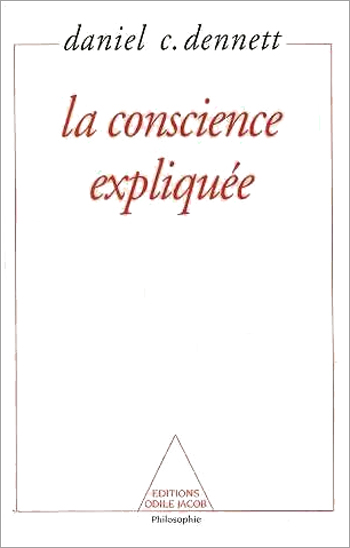
Daniel C. Dennett
Consciousness Explained
What is it that transforms a small piece of matter into an animated being? What is it that gives to certain physical structures the enigmatic privilege of feeling sensations and having experiences? Conscience. But what do we know about conscience? Daniel C. Dennet proposes a new explicative model founded on the modern revelations of psychology, neurology, and artificial intelligence. Daniel C. Dennett directs the Center for Cognitive Studies at Tufts University. He is one of the leaders in the philosophy of the spirit in the United States.
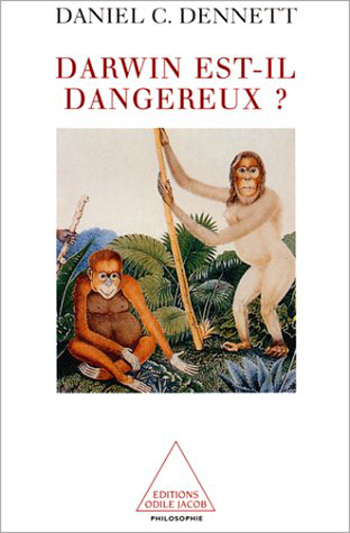
Daniel C. Dennett
Darwin's Dangerous Idea: Evolution and the Meanings of Life
In this book, he confronts this approach with the ideas of Charles Darwin and Darwinism, and addresses the question of evolution. What are the implications of the theory of evolution by natural selection? Why is evolution such a disturbing idea, not only for religious believers but also for philosophers and even for some biologists? How does it affect the concept of mind? In the midst of the current neo-Darwinian wave, this book offers a timely dialogue between the ideas of an important contemporary philosopher and those of the greatest nineteenth-century biologist. Daniel C. Dennett teaches cognitive sciences at Tufts University.