Catalog All books
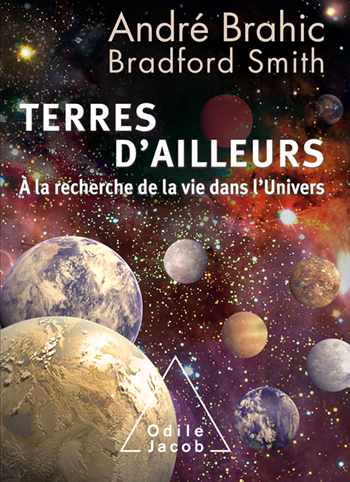
André Brahic, Bradford Smith
Exoplanets Looking for life in the Universe
A brilliant, enthusiastic and accessible work by two of the greatest living astronomers
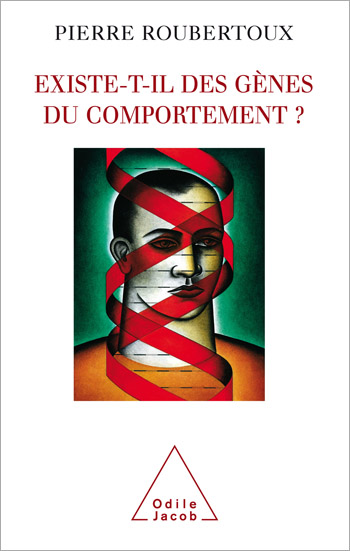
Pierre Roubertoux
Existe-t-il des gènes du comportement ?
Recent advances in genetic research have had widespread and far-reaching influences in fields as varied as animal and plant biology and medicine. They have also upset some ethical rules. Genetics today is in a triumphant, seductive phase, but its limits are yet to be defined. In this book, the eminent French geneticist Pierre Roubertoux argues that genetics has strayed too far from its justifiable areas of application. Soon, genetics may even be applied to the mind and to consciousness, just as it is already being applied to behaviour by scientists who contend that each type of conduct has its corresponding gene (this is tantamount to saying a specific gene is responsible for each virtue and each vice). Scientists who defend this theory say that they have discovered genes linked to various degrees of activity in mice and flies. Thus, intemperance and gluttony would be linked to a genetic partiality to alcohol, sugar or fats. Pride could be explained by a gene for dominance which has allegedly been found in mice. Greed, too, could be explained by a gene. The supposed existence of an infidelity gene was much in the news three years ago. This is a sound scientific synthesis which will enable readers to grasp the contribution of genetics to our comprehension of who and what we are. It should also help them resist the temptation of reducing everything to genetics. Pierre Roubertoux is a professor at the University of Aix-Marseille and a research fellow at the Institute of Physiological and Cognitive Neuroscience at the Centre National de la Recherche Scientifique (CNRS).


Nicolas Franck
Exercises to Maintain Your Brainpower
Practical exercises to maintain and enhance your mental capacities

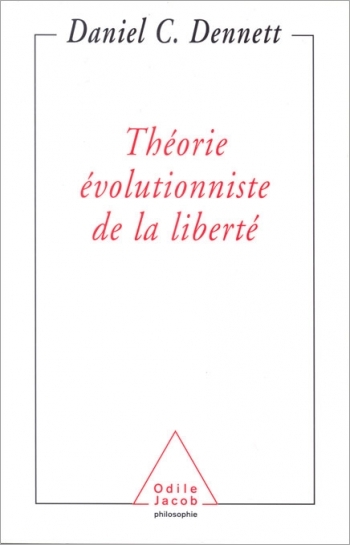
Daniel C. Dennett
Evolutionist theory of freedom
Billions of years ago, there was no freedom on earth, for the simple reason that there was no life. What forms of freedom have evolved since the first stirrings of life? Can freedom and free will exist in a deterministic universe? If we are free, are we responsible for our freedom, or is it governed by chance? Drawing on evolutionary biology and the cognitive sciences, Daniel Dennett provides a series of unorthodox replies to these traditional philosophical questions. It is generally held that what is determined is inevitable and that freedom can only exist in a non-deterministic universe. This is untrue, says Dennett. It is also held that in a pre-determined universe, we have no real choices: all we have is the illusion that we can choose. This too is false, argues Dennett. He then goes on to explain how, some day, we will be able to create robots endowed with free will. In this groundbreaking book, written in a striking, lively style, Dennett interweaves philosophical creativity with the latest scientific developments, and challenges a series of philosophical orthodoxies. Daniel C. Dennett is University Professor and Director of the Center for Cognitive Studies at Tufts University, Mass., U.S.A. He is the author of Consciousness Explained and Darwin's Dangerous Idea.