
Catalog All books
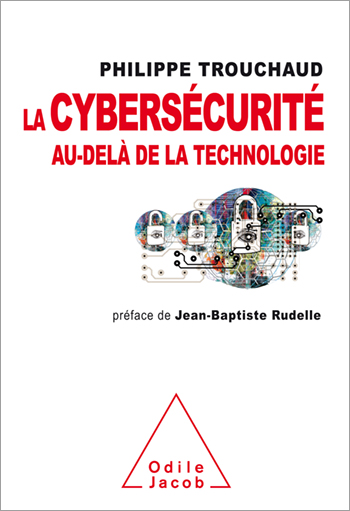
Philippe Trouchaud
The Cybersecurity beyond technology
The protection of personal data has become a major issue for businesses

Philippe Trouchaud
Cybersecurity
All specialists agree that hacking incidents are only increasing. This book proposes ways to learn how to protect oneself while acknowledging that zero risk no longer exists.
Pierre Lévy
Cyberdemocracy
This book offers a synthesis of the various ways in which the advent of the Internet has transformed daily life in democratic societies, both on a regional and international level," writes Pierre Lévy. This ambitious and down-to-earth analysis is well served by Pierre Lévys style and prophetic vision. He has taken into account the latest and most innovative developments, as well as the political changes brought about by the new information society. Pierre Lévy, a philosopher, teaches at the University of Quebec, in Trois Rivières. He is the author of Cyberculture and World Philosophy.
Pierre Lévy
Cyberculture
What is cyberculture? What are the social and cultural implications behind this technical phenomenon? Could it be held responsible for altering our relationship to knowledge? These are some of the questions addressed in Cyberculture, which covers such aspects of new technology as numerisation, navigation, memory, programming, software, virtual reality, multimedia, interactivity, and electronic mail. Written for the non-power user, this is a clear, complete and highly accessible presentation of new technologies, their uses and future stakes. Pierre Lévy is a philosopher who teaches at the University of Paris-VIII, in the hypermedia department.
Laurent Berrebi
Currency and Capital The New Patrimonial Economy
A very ambitious book: it proposes nothing short of a new theoretical economic model, going beyond both classic economics and the Keynesian model.

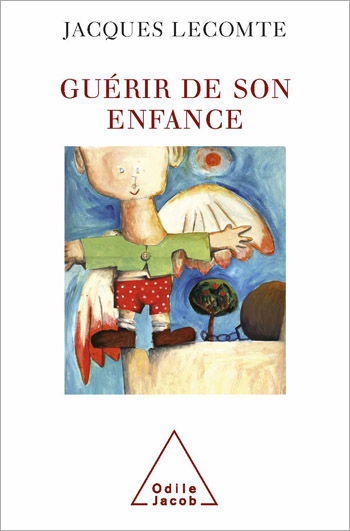
Jacques Lecomte
Cured of Childhood
How does a child whom life has hurt become resilient? Jacques Lecomte examines every aspect of a child's environment that can help him or her overcome misfortune. He stresses the crucial need for markers in the reconstruction of the child's personality, and on the importance of finding meaning in suffering. This is a thorough study of resilience, its foundations and how it works. It is also a polemical work which questions the role played by psychotherapists in building resilience. Jacques Lecomte argues that they are not the only ones who can do this - and that sometimes psychotherapists can do more harm than good. The author suggests specific plans of action, for families and children, so that those who are suffering and in pain may learn to become resilient and happy. This book offers a powerful message of hope - happiness, says the author, lies in acquiring a better understanding of resilience. Jacques Lecomte is a doctor in psychology and a lecturer at the University of Paris-X. He specialises in training professionals who work with children and is secretary general of the International Observatory on Resilience, presided by Boris Cyrulnik.
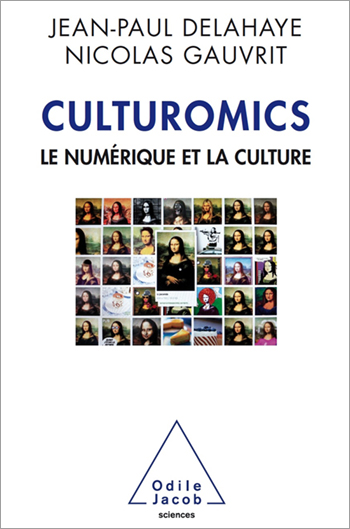
Jean-Paul Delahaye, Nicolas Gauvrit
Culturetech: Digital Culture
The development of electronic databases (and of Internet search engines to explore them) has given rise to such new behaviours as egosurfing...