Catalog All books
Nicolas Véron, Matthieu Autret, Alfred Galichon
Crise in Financial Information Accounting and Capitalism
Enron, Andersen, Worldcom: although these companies have stopped dominating the headlines, the shock waves they sent through the business community in 2002 have not yet subsided. The belief that accounting is an exact science has been shattered, while economic relations are upset by the knowledge that financial information may be untrustworthy. Yet the market economy profoundly requires relevant and reliable information about the activity and financial situation of businesses. Taking into account the increasing strength of capital markets and international investors, the authors outline the basic elements that could constitute a new, balanced system of accounting that would accompany the necessary changes in capitalism, particularly in France and the rest of Europe. Nicolas Véron, an engineer and high-ranking civil servant, is the founder of Etudes et Conseil pour l'Information Financière (ECIF). Matthieu Autret is an expert currently working for the European Commission. Alfred Galichon is a doctoral candidate in economics at Harvard University.
Antoine Garapon
Crimes Which Can Neither be Punished Nor Forgiven Towards an International Justice
The creation of a system of international criminal justice was one of the greatest political upheavals of recent decades. The fact that international criminal law has been allowed to question national sovereignty is a revolution in itself. The detractors of international justice contend that it is simply the justice of the victors. Could they be right? Have law and ethics been muddled? Have the trials conducted in its name helped heal the victims? Can justice prevent civil war? A former magistrate, Antoine Garapon heads the Institut des hautes études sur la justice.


Alain Berthoz
Creative Inhibition To act is also to inhibit
A neglected concept, inhibition holds the key to our individual and social behaviors. A broad bio-sociological panorama for observing human behavior with fresh eyes.
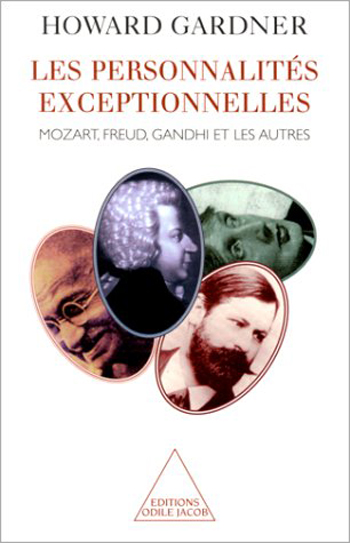
Howard Gardner
Creating Minds An Anatomy of Creativity Seen Through the Lives of Freud, Einstein, Picasso, Stravinsky, Eliot, Grah
What is creativity? Do there exist psychological traits common to all creative geniuses? Can one characterize creativity in different forms and in different areas? It is impossible to respond to these questions without examining variegated and specific cases of creative genius: artistic, literary, scientific and even political. Thus, Gardner proposes seven psychobiographies characteristic of each type of genius: Freud, Einstein, Picasso, Stravinsky, T.S. Eliot, Martha Graham, and Gandhi. What were the different paths that they chose? How did their creative spirits work? Howard Gardner is a cognitive psychologist.