
Catalog All books
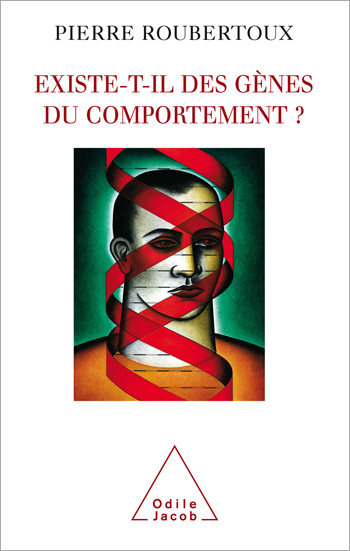
Pierre Roubertoux
Existe-t-il des gènes du comportement ?
Recent advances in genetic research have had widespread and far-reaching influences in fields as varied as animal and plant biology and medicine. They have also upset some ethical rules. Genetics today is in a triumphant, seductive phase, but its limits are yet to be defined. In this book, the eminent French geneticist Pierre Roubertoux argues that genetics has strayed too far from its justifiable areas of application. Soon, genetics may even be applied to the mind and to consciousness, just as it is already being applied to behaviour by scientists who contend that each type of conduct has its corresponding gene (this is tantamount to saying a specific gene is responsible for each virtue and each vice). Scientists who defend this theory say that they have discovered genes linked to various degrees of activity in mice and flies. Thus, intemperance and gluttony would be linked to a genetic partiality to alcohol, sugar or fats. Pride could be explained by a gene for dominance which has allegedly been found in mice. Greed, too, could be explained by a gene. The supposed existence of an infidelity gene was much in the news three years ago. This is a sound scientific synthesis which will enable readers to grasp the contribution of genetics to our comprehension of who and what we are. It should also help them resist the temptation of reducing everything to genetics. Pierre Roubertoux is a professor at the University of Aix-Marseille and a research fellow at the Institute of Physiological and Cognitive Neuroscience at the Centre National de la Recherche Scientifique (CNRS).
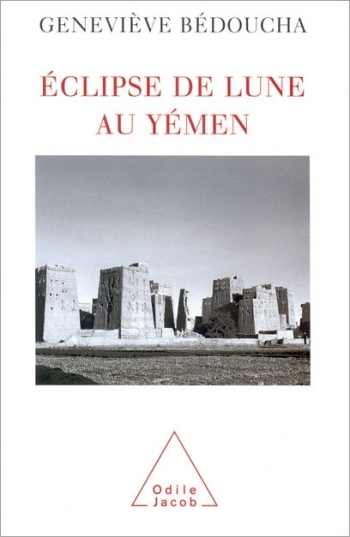
Geneviève Bédoucha
Lunar Eclipse in Yemen An Anthropologist's Emotions and Feelings of Bewilderment
This is a fascinating approach by a woman of a tribal society in a mountain valley in northern Yemen, near the Saudi Arabian border. Partly a travel book and partly a journal of the author's fieldwork, it restores an anthropologist's unique first-hand experience, questionings, hesitations and discoveries, from the first moments spent in an unfamiliar village. There are few anthropological works on Yemen, and even fewer about private life in rural societies in the hinterland of the former Arab Republic of Yemen (the author's fieldwork dates from the 1980s, before reunification). At the time, the presence of a female anthropologist led both men and women to talk openly, often jokingly and provocatively, of male-female relations, and it seemed to encourage women to voice strong criticisms of male behaviour and privileges. The women's comments reveal them to be lucid independent thinkers, and not at all submissive. This book is an invitation to discover a little-known rural community at close quarters, and to penetrate the secret universe of Yemen's many-storied mud houses. It reveals relations between men and women in a closed, but curious and hospitable, Muslim Arab society. An anthropologist and research fellow at the Centre National de la Recherche Scientifique (CNRS), Geneviève Bédoucha is a specialist in the relations between socio-political structures and irrigation systems in Arabic and Islamic societies.
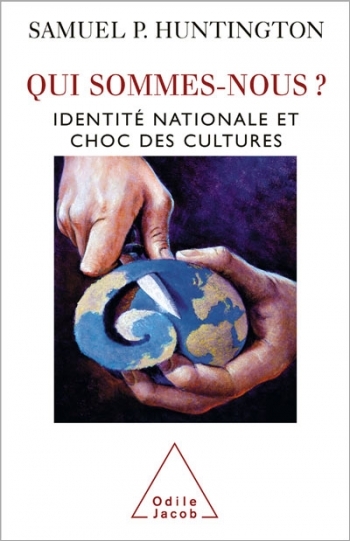
Samuel P. Huntington
Who are we ?
Huntington's latest book provides a caustic analysis of some of the fundamental issues under discussion in the U.S. today.

Sebastian Roché
Réformer la police et la sécurité
Demands for increased public safety are prevalent in both Europe and the United States, and they take similar forms. Do policies based on such notions as zero tolerance, local policing, partnership and mediation serve any real purpose or do they simply act as decoys? In New York City, as elsewhere, improved public safety resulted from the decentralisation of resources and power and, therefore, of responsibilities. In the articles included here, the writers, who are all experts in public safety in their respective countries, examine the issues in a dispassionate manner and offer a comparative study of the results obtained in different countries. Finally, they make some concrete suggestions to resolve the problem of petty crime and incivilities. Sébastian Roché is a professor at the Institut d'Etudes Politiques, in Grenoble. He is the author of Tolérance zéro? Incivilitié et insecurité, published by Editions Odile Jacob.
Jacques Bouveresse, Daniel Roche
Freedom Through Knowledge: Pierre Bourdieu, 1930-2002 (Travaux du Collège de France)
Gathered in this volume are the texts of lectures given in memory of Pierre Bourdieu at an international colloquium held on 26-27 June 2003 and jointly organised by the Collège de France and the Ecole Normale Supérieure, with the backing of the Hugot Foundation.
Daniel C. Dennett
Evolutionist theory of freedom
Billions of years ago, there was no freedom on earth, for the simple reason that there was no life. What forms of freedom have evolved since the first stirrings of life? Can freedom and free will exist in a deterministic universe? If we are free, are we responsible for our freedom, or is it governed by chance? Drawing on evolutionary biology and the cognitive sciences, Daniel Dennett provides a series of unorthodox replies to these traditional philosophical questions. It is generally held that what is determined is inevitable and that freedom can only exist in a non-deterministic universe. This is untrue, says Dennett. It is also held that in a pre-determined universe, we have no real choices: all we have is the illusion that we can choose. This too is false, argues Dennett. He then goes on to explain how, some day, we will be able to create robots endowed with free will. In this groundbreaking book, written in a striking, lively style, Dennett interweaves philosophical creativity with the latest scientific developments, and challenges a series of philosophical orthodoxies. Daniel C. Dennett is University Professor and Director of the Center for Cognitive Studies at Tufts University, Mass., U.S.A. He is the author of Consciousness Explained and Darwin's Dangerous Idea.
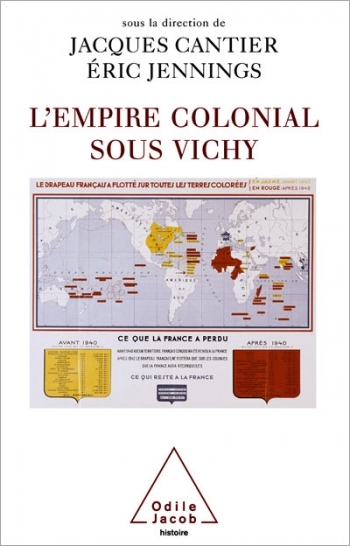
Jacques Cantier, Éric Jennings
The French Colonial Empire under Vichy
In the 1990s, historians began studying the Vichy government in the French colonial empire. The articles gathered here by Jacques Cantier and Eric Jennings are the outcome of recent exchanges among historians on the subject. The book reflects the writers' various research interests and includes: an examination of the political decision-making process, the composition of governing bodies, the development of institutions to strengthen government control of society, and the reaction of the local population to the new political measures. The editors' purpose is dual. First of all, the colonial mirror serves to elucidate the underlying logic and the workings of the regime that resulted from the French defeat. Secondly, the editors have sought to place the Vichy period into the wider context and more extended time frame of colonial history and decolonisation. They have done this by structuring their analysis of Vichy in the empire into several sections. The first part of the book examines the conditions under which the Vichy government tried to unite the colonial bloc to mainland France. The second part analyses Vichy's authoritarian policies, particularly those that aimed at controlling youth. The large demonstrations that took place in Vichy Algeria in 1941 illustrate the efforts undertaken to showcase the National Revolution in Algeria. The third part studies the different forms of repression exercised by the regime, particularly the conditions governing the application of anti-Semitic legislation in the empire, the stifling of the Masons, and the existence of internment camps in North Africa. The fourth part reveals the tactics used by the European and colonial elites in French West Africa (Afrique Occidentale Française) to preserve their influence. The Vichy legacy is examined in a final section, which provides both an overview of the situation in the empire as a whole and a detailed analysis of the telling example of Madagascar. This is a unique and highly innovative study by eminent historians of a little-known aspect of French colonial history during the Vichy period. Jacques Cantier is a lecturer at the University of Toulouse-Le-Mirail, France. He is the author of L'Algérie sous le régime de Vichy and Jules Roy: l'Honneur d'un rebelle. Eric Jennings is an assistant professor at the University of Toronto, Canada. He is the author of Vichy in the Tropics.