
Catalog All books

Frédéric Fanget
Assert Yourself! (New Edition) For more productive relationships with others
Do you have trouble expressing your needs? Is it difficult for you to say 'no'? Are you afraid of speaking in public? Written in the form of a self-help manual, this book should enable you to pinpoint those situations in your professional and personal life that give you most difficulty: expressing yourself during a meeting; starting up a conversation when you don't know anyone; criticising your partner; saying 'no' to a friend who wants a favour; asking your boss for a raise. This book aims to help you (re)develop a balanced relationship with others, so you can learn to express yourself while avoiding the extremes of passivity or aggression. Frédéric Fanget is a medical psychiatrist and company consultant specialising in disorders related to lack of assertiveness. He teaches and practises in Lyon.
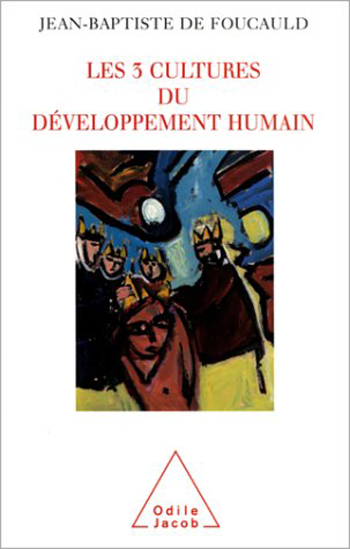
Jean-Baptiste de Foucauld
The 3 Cultures of Human Development Resistance, Regulation, Utopia
Today, economic growth has taken off again, creating jobs and making full employment a feasible goal. And yet, at a time when we seem to be at the brink of a new recession, nothing seems to have really changed. Modernisation may exclude fewer members of our society than had been previously feared, but, if we are not careful, their exclusion will be all the greater. It is no longer possible to retain a soft procedural approach to democracy. Democracy needs to return to its origins; it must be given a goal, based on a strong vision of humanity and of humanity as part of society. It is necessary to construct human development along the lines of three political and spiritual cultures which represent our common heritage : resistance, regulation and utopia. Jean-Baptiste de Foucauld is a senior official in the French Treasury. Until 1995 he was a commissioner of Frances economic plan. He is active in numerous think-tanks and associations that struggle against social exclusion and unemployment.

Pierre Khalifa
How to be Well Treated
"The goal of this book is to answer some of the many questions that are asked about patient-doctor relations and healthcare. How should we go about choosing the doctor in whom we will entrust our health? How can we contribute to make our consultation more effective, in order to help our doctor make a better diagnosis and find the most appropriate solutions? And when should we put an end to the relationship of trust with our doctor?" Pierre Khalifa Pierre Khalifa, a specialist in internal medicine, has worked as a house doctor in Parisian hospitals and was formerly a clinical director at the Hôpital Cochin, in Paris.

Antoine Jeancourt-Galignani
Disorientated Finance
This book analyses the events that shook French and international finance during the last twenty-five years of the twentieth century. In a straightforward style, eschewing all clichés, the author shows why Pierre Bérégovy was instrumental in bringing about the revolution in French finance, how Edouard Balladurs closest followers created a caste which is now in control of upper management, and how they prevented the creation of pension funds in other words, how they prevented the realisation of the Gaullist dream of participation and finally, how and why U.S. banks have managed to take over financial control of large French businesses. Antoine Jeancourt-Galignani is now chairman of the board of directors of GECINA.

Jacques Cantier
Algeria Under the Vichy Regime
On 25 June 1940, both the Franco-German and Franco-Italian Armistice came into effect. In Algeria, appeals to carry on the struggle in Frances colonial empire no longer served any purpose. The Vichy regime, which came into existence following the parliamentary vote of 10 July 1940, was thus able to extend its rule over Algeria. Claiming to be at the head of a National Revolution which would create a new Man and fight against the forces of Anti-France, the Vichy government was able to flourish until the Anglo-American landings in North Africa in 1942. The author has given us a thorough review of this little-known period. This is not just a historical parenthesis as the study of the consequences of the National Revolution in Frances colonies casts a new light on the discussion about the nature and actions of the Vichy regime. It also illuminates a frequently concealed stage in the development of colonial society, which had had to confront a growing number of internal difficulties since the 1930s. Jacques Cantier is a lecturer at the University of Toulouse-Le-Mirail.