
Catalog All books

Françoise Héritier
On Violence II
In this new volume, anthropologists, biologists, psychoanalysts and political scientists continue their interdisciplinary examination of violence. What are our links with the animal world? Is the animal metaphor relevant when discussing violent acts committed by human beings against other human beings? What is the relationship between pain and violence? What part does violence play in social relations? What is nonviolence? Could the concept of nonviolence enable us to develop a universal ethical system? Françoise Héritier is an honorary professor at the Collège de France.
Bernard Roques
The Danger of Drugs
This book is the result of a study on drugs carried out by Bernard Roques at the request of the French Secretary of State for Health, Bernard Kouchner. The author has reviewed and summarised a large body of information from all over the world, so this is a thorough, detailed scientific examination of what is known today of the potential dangers, particularly for the brain, of toxic and psychotropic drugs including alcohol and tobacco which are often associated with the consumption of other drugs. Roques study will doubtless play a major role in public health discussions and decisions, particularly in the fight against alcoholism and nicotine addiction. Bernard Roques is a member of the French Académie des Sciences.
Hervé de Carmoy
Entreprise, Individual and State Leading to Change
The author believes that France is suffering from numerous ills, including inertia, demagogy, unemployment, corruption, corporotism, elitism, and a general withdrawal from the outside world. He also thinks that much more than clear-headedness and a desire for change are required if a cure is to be found. What is the best way of making the necessary changes? How have others gone about implementing those changes? He believes the business world provides an excellent model for learning how to deal with an ever-changing environment. Hervé de Carmoy was formerly general director of the Midland Bank in London.
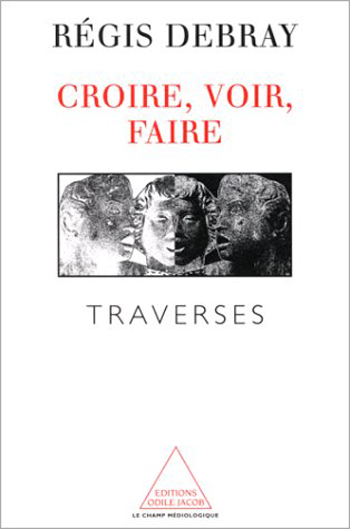
Régis Debray
Believe, See, Do Crossings
In this work, Régis Debray gives free rein to his thoughts and tackles the varied subject matter provided by daily events encountered " in the news, out of the blue, or through friendship or surprise, at a moments notice and without great forethought. " The subjects he writes about range from " the Gulf War to a photo exhibit, from Tatis Jour de Fête to copyright registration, from a daydream about water to a meditation on road travel. " Other works by Régis Debray published by Editions Odile Jacob include Que Vive la République!, Tous Azimuts, and Transmettre.
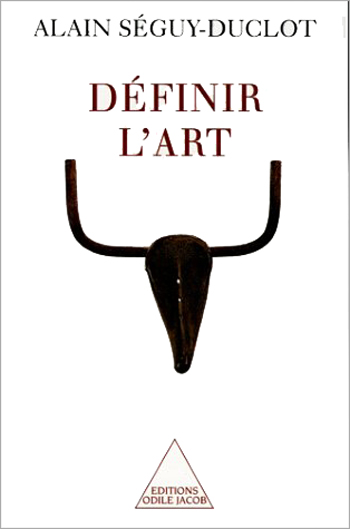
Alain Séguy-Duclot
Defining Art
The general consensus is that art is impossible to define and that the evaluation of works of art is always subjective. Countering these affirmations, Alain Séguy-Duclot shows in this work that art can, in fact, be defined. Duchamp's readymades (industrial objects in series, snow shovels, wine racks, etc) constitute a point of departure for this reflection. He argues that, rather than showing that art was undefinable, the readymades proved that art was definable. It is this that Séguy-Duclot sets out to prove in this incisive and passionate work. Alain Séguy-Duclot is a philosopher, and a professor at the University of Tours.