
Catalog All books
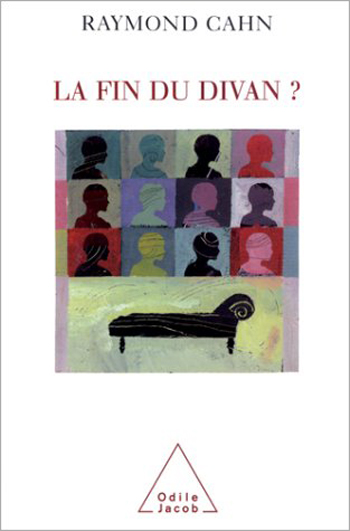
Raymond Cahn
The End of the Couch ?
Why do psychoanalysts refuse to review their methods, while simultaneously recognising that life-styles have evolved and that new pathologies have come into existence? Why, for example, do they remain devoted to the psychoanalysts couch, while realising that certain cures are at a dead-end? This is a controversial work on the challenges facing psychoanalysis a field that had its hour of glory in the 1960s but has since been somewhat discredited. Raymond Cahn is a psychiatrist and psychoanalyst.

Paul Garde
The End of the Century in the Balkans
Fortunately, the situation is less tragic in 2000 than it was in 1992. There is no more fighting. And yet, none of the problems have been resolved and several conflicts remain pending. In two regions, Bosnia and Kosovo, peace is maintained thanks to a powerful international presence; hundreds of thousands of refugees have no hope of returning to their homes; most of the main criminals of war are still at large; and intolerance and poverty are widespread. It is thus necessary to make a correct diagnosis of the problems of the region, where surprises are always possible. I would be happy if this book could help contribute toward this. Paul Garde Paul Garde is a former professor of Slavic languages and literature at the University of Provence, France.

Lauric Henneton
The End of the American Dream?
A book that helps understand the history of the United States and American society today.
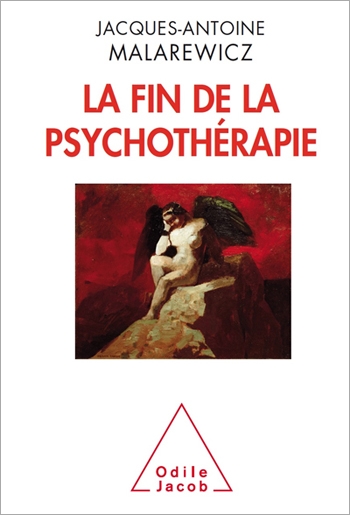
Jacques-Antoine Malarewicz
The End of Psychotherapy
Psychotherapy is becoming extinct. This book warns us of a process that threatens society.
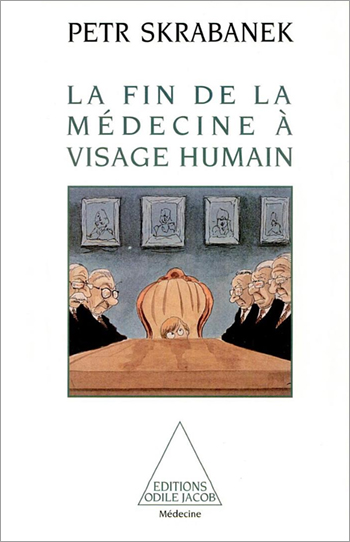
Petr Skrabanek
The End of Humanitarian Medicine
Medicine is at a crossroads. Traditionally, practitioners helped patients who came to them looking for support, for something to alleviate their suffering. However, the progress which has been accomplished in the last few decades has changed everything. Doctors now claim to be fighting death itself, they believe medicine to have almost limitless powers, and they try to prevent illness by changing behaviour. From this point onwards, our entire existence becomes overmedicalized. In the name of health at any price, doctors now dictate, prescribe and legislate whilst forgetting the essential meaning of their job : to help and to care. A violent criticism of contemporary medicine.
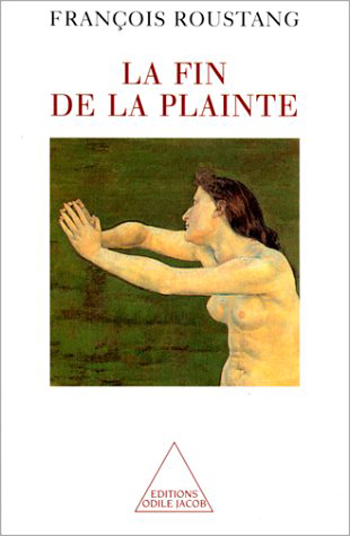
François Roustang
The End of Complaining
What is the most common reason for going to a therapist? Most patients say it is wanting to change. By the same token, they complain about their present lives. According to François Roustang, all forms of complaining must be dropped; patients must forget their precious egos which serve only to nurture more complaining and whining. Once patients have let go of these trappings, they will be able to remould their lives. This book offers a powerful criticism of traditional therapy and of its failure to reach its avowed goal: to help us to change. It argues for a spiritual approach to inner development. François Roustang is a philosopher, psychoanalyst and unconventional practitioner.

Ilya Prigogine
The End of Certainties (Coll. Opus)
As we come to the end of the century, the question of the future of science is often posed. I believe we are just at the beginning of a new endeavour. We are witnessing the development of a science which is no longer limited to simplified, idealised situations, but makes us face the complexity of the real world. This new science will allow human creativity to be experienced as the unique expression of a fundamental trait common to all aspects of nature. Ive tried to present this conceptual transformation, which implies the beginning of a new chapter in the fruitful relations between physics and mathematics, in a manner that will be comprehensible and accessible to all readers interested in the evolution of our ideas of nature. We are but at the threshold of a new chapter in the history of our dialogue with nature, writes Ilya Prigogine. Ilya Prigogine, winner of the Nobel Prize for Chemistry, teaches at the Free University of Brussels and at the University of Texas, in Austin.
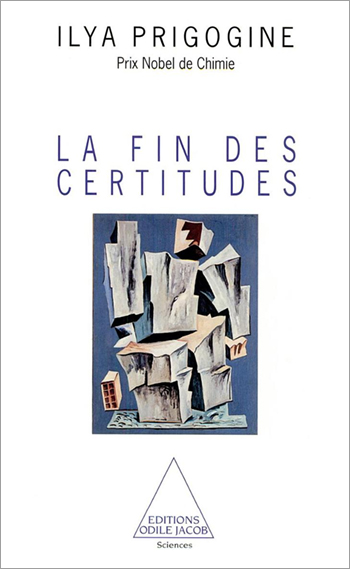
Ilya Prigogine
The End of Certainties
As we come to the end of the century, the question of the future of science is often posed. I believe we are just at the beginning of a new endeavour. We are witnessing the development of a science which is no longer limited to simplified, idealised situations, but makes us face the complexity of the real world. This new science will allow human creativity to be experienced as the unique expression of a fundamental trait common to all aspects of nature. Ive tried to present this conceptual transformation, which implies the beginning of a new chapter in the fruitful relations between physics and mathematics, in a manner that will be comprehensible and accessible to all readers interested in the evolution of our ideas of nature. We are but at the threshold of a new chapter in the history of our dialogue with nature, writes Ilya Prigogine. Ilya Prigogine, winner of the Nobel Prize for Chemistry, teaches at the Free University of Brussels and at the University of Texas, in Austin.
Boris Cyrulnik
The Enchantment of the World
In this book, Boris Cyrulnik analyses empathy, our capacity to put ourselves in the place of the other, hypnosis, the power of fascination that we have on others or that others have over us...
Pierre Boulez, Jean-Pierre Changeux, Philippe Manoury
The Enchanted Neurons The Brain and the Music
A unique event: two major intellectuals of our time discuss the links between the neurosciences and music
Alain Berthoz, Gérard Jorland
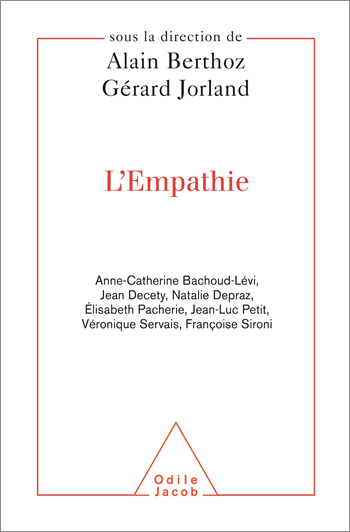
The Empathie
Empathy is the ability to put oneself in the position of others, and thus to understand and know them. Ever since Darwin, empathy has been regarded as the basis of all human social behaviour, and most notably of ethics. Some major psychological disorders - autism, for example - can be described as the inability to empathise. Certain types of perverse behaviour, such as the torture of defenceless victims, have been explained as distortions of empathy. This book offers an overview of studies on empathy for the past 250 years. It also describes the latest research on the subject in a variety of fields: cognitive psychology, philosophy, ethology and ethics. Alain Berthoz is a professor at the Collège de France and a member of the French Academy of Sciences. He is the author of Le Sens du mouvement and La Décison, both published by Editions Odile Jacob. Gérard Jorland is a director of studies at the Ecole des Hautes Etudes en Sciences Sociales and the author of Les Paradoxes du capital (Editions Odile Jacob) and La Science dans la philosophie.