Catalog All books
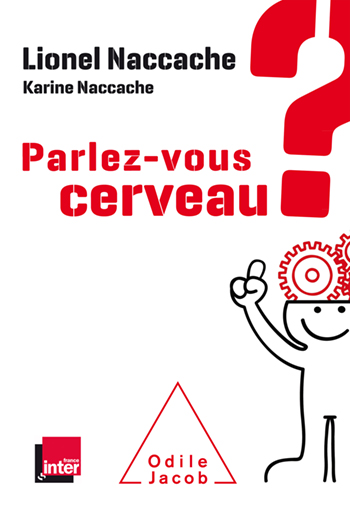
Lionel Naccache, Karine Naccache
Do you Speak “Brain”? The brain is part of our everyday lives
Instructive and entertaining, important facts about the brain by one of the great French neurologists. A proven format, since Lionel Naccache’s chronicles on the brain were the most popular podcasted shows last summer on French Inter radio.
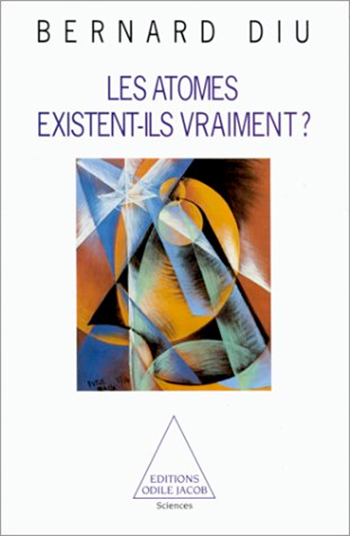
Bernard Diu
Do atoms really exist ?
Few scientific notions have aroused the speculative imagination like the thermodynamic entropy. All organised systems - societies, living creatures - are destined without exception to decline and eventual death. This book clearly exposes the historical and conceptual development of thermodynamics. Born from a desire to understand and master steam powered machines - the symbol of our industrialised societies - it became the science of the human body. However, it was suddenly passed over in favour of the theory of atoms. It was thus demolished by statistical mechanics which ceded to the imperatives dictated by the atomical structure of the body. After an epic struggle, sometimes quite ferocious, thermodynamics and statistical mechanics have been reconciled by adopting the base of the second with the techniques of the first. This book reads like a novel about contemporary physics. Bernard Diu, a graduate of the Ecole Normale Supérieur, is a professor at the University of Paris VII.
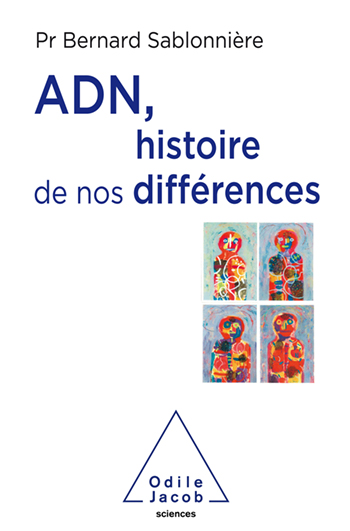
Bernard Sablonnière
DNA, a History of Our Differences
A stimulating look at the current state of knowledge about the genetic determinants of differences between individuals, regarding both the body and character or behavior traits.
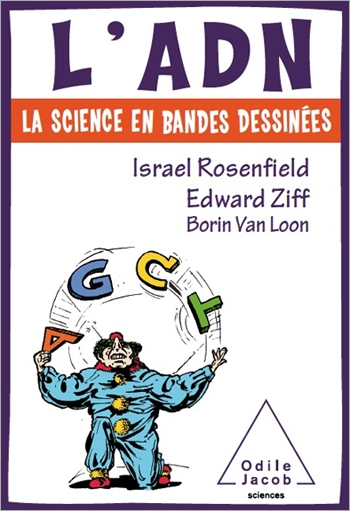
Israel Rosenfield, Edward Ziff, Borin Van Loon
DNA for Beginners
The amazing story of DNA is recounted here in an entertaining comic-book form...
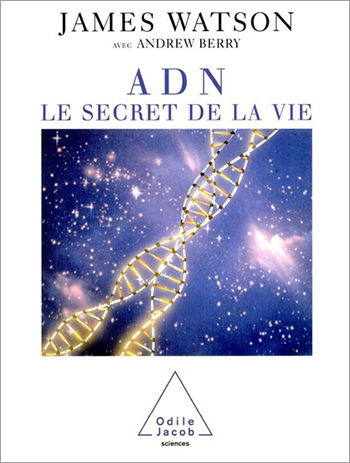
James Watson
DNA The Secret of Life
Fifty years ago, when he was only 24, James Watson contributed to cracking the genetic code and thus helped resolve one of the greatest scientific mysteries of our age. In DNA: The Secret of Life, he goes back in time and offers an overall view of the genetic revolution. He gives us the keys to understanding the molecular foundations of life and shows to what extent our knowledge of genetics affects how we regard our origins and our own identity. Drawing on his long experience at the forefront of genetic research, he examines the brave new world that lies before us all and the consequences of the genetic revolution. James D. Watson is best known as the co-discoverer, with Francis Crick and Maurice Wilkins, of the molecular structure of DNA. For this accomplishment, the three men shared the 1962 Nobel Prize for Physiology or Medicine. In 1968, he was appointed director of Cold Spring Harbor Laboratory, on Long Island, New York, and has served as its president since 1994. Andrew Berry is a junior fellow at the Museum of Comparative Zoology at Harvard University


Edward O. Wilson
The Diversity of Life
What are the mechanics of evolution? What is the force behind diversity and the proliferation of the species? Why does nature never stop inventing new forms of life? What is the effect of great catastrophes on the evolution of the species? What is the real effect of human action on nature? A professor at Harvard University, Edward O. Wilson is one of the most important theoricians of biological evolution. He is also one of the most ardent lobbyists for the preservation of nature.

Dominique Mongin
Dissuasion and Simulation From the End of French Nuclear Testing to the Simulation Programme
the evolution of the place of nuclear defense since the end of the Cold War that is retraced here, as well as the role that dissuasion continues to play in the twenty-first century, in a world that is far from stable.

Le Cercle des économistes
The Disruptions in the World Acting to confront the disruptions in the world
Edited by Phillippe Aghion, professor at the Collège de France, and Jean-Marie Chevalier, emeritus professor at the University Paris-Dauphine.
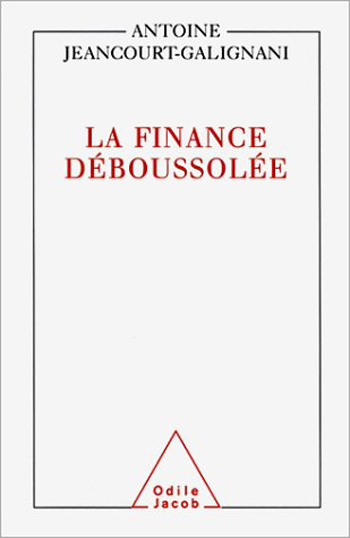
Antoine Jeancourt-Galignani
Disorientated Finance
This book analyses the events that shook French and international finance during the last twenty-five years of the twentieth century. In a straightforward style, eschewing all clichés, the author shows why Pierre Bérégovy was instrumental in bringing about the revolution in French finance, how Edouard Balladurs closest followers created a caste which is now in control of upper management, and how they prevented the creation of pension funds in other words, how they prevented the realisation of the Gaullist dream of participation and finally, how and why U.S. banks have managed to take over financial control of large French businesses. Antoine Jeancourt-Galignani is now chairman of the board of directors of GECINA.
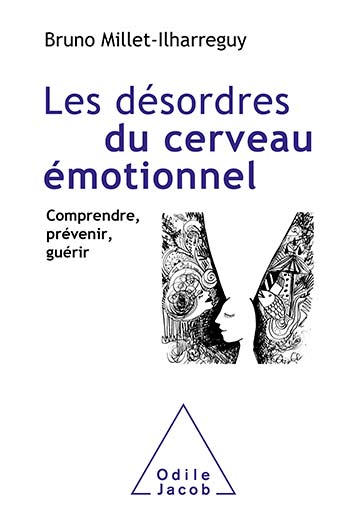
Bruno Millet-Ilharreguy
Disorders of the Emotional Brain Understanding, Preventing, Healing
Emotion at the heart of psychiatric disease and its treatment.
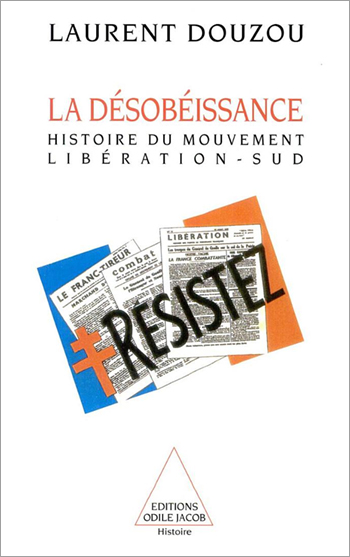
Laurent Douzou
Disobedience History of the Liberation Movement
Not everybody in the world become a Pétainist after the debacle and not all the resistance movements were infiltrated by communists working for the benefit of Moscow. Drawing upon numerous archives, Laurent Dazou explains why several men and women as diverse as a freewheeling navy officer, a normalien philosopher obsessed with maths, a young militant communist from the Latin Quarter and a founding banker from an anti-Semetic league, refused to crack under pressure, joining the ranks of disenchantment, and learning to resist by organizing themselves to fight and to blaze the trail of disobedience. Laurent Douzou is a specialist in the history of the Resistance.
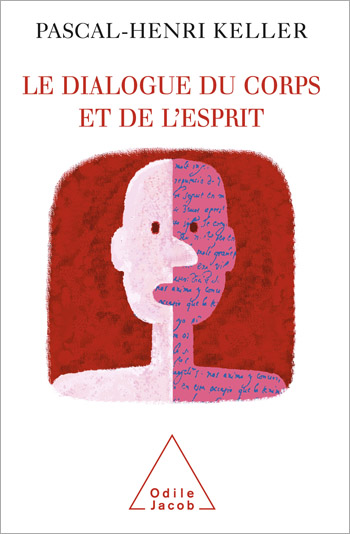

Maxime Schwartz, Jean Castex
The Discovery of the AIDS virus The Truth about Gallo/Montagnier affair
In Stockholm, on 10 December 2008, the King of Sweden awarded the Nobel Prize in medicine to Françoise Barré-Sinoussi and Luc Montagnier, for their discovery of the AIDS virus...