Catalog All books

Robert Dautray
Quelles énergies pour demain ?
If there is such a thing as a French exception, it is in matters of energy. Lacking natural energy resources, France has developed a vast electro-nuclear programme which not only guarantees the country's political independence but also produces budget surpluses. Since the existing electro-nuclear equipment is not everlasting, and must thus be renewed, the question of the total dependence on nuclear energy has arisen once again. This book, by one of the most influential French scientists of the post-war period, is an in-depth analysis of the country's energy system and its problems, and the prospects for future development. The author begins by an examination of production methods by major categories (oil and natural gas, coal, hydraulic energy, solar energy, biomass, nuclear energy, geothermal energy, wind, renewable energy, bioenergy, thermonuclear energy). He then describes the role that energy plays in our society, and how society reacts to energy problems. He concludes that present and future citizen-consumers should be placed at the centre of all discussions about energy methods, that consumers should be satisfied and respected and that their opinions should be considered. But this, he says, is exactly the opposite of what has happened up to now. The last part of the book, which deals with scientific and technical research, tries to answer the questions: What should be done? What actions should be undertaken? Time is running out and irreparable harm is being done to the environment. How much time is left to discover and develop the new procedures that will enable us to save what may still be salvaged? As was amply illustrated by the heatwave of 2003, the environment remains a crucial issue. In this important book, the author has had the courage to urge scientists and experts to step out of their ivory tower, to meet with citizens, and to provide for their needs. And he takes the risk of outlining some highly specific measures to be undertaken in the next ten years. Robert Dautray is an engineer and physicist at the French Atomic Energy Commission and a member of the Academy of Sciences.
Pierre Roubertoux
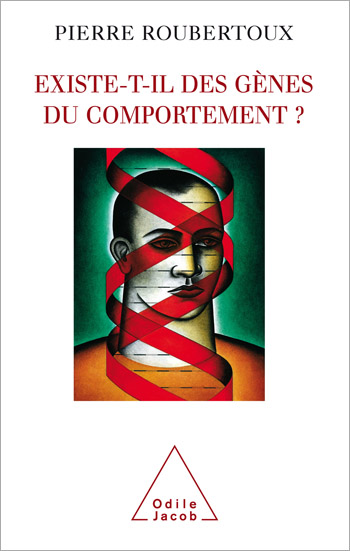
Existe-t-il des gènes du comportement ?
Recent advances in genetic research have had widespread and far-reaching influences in fields as varied as animal and plant biology and medicine. They have also upset some ethical rules. Genetics today is in a triumphant, seductive phase, but its limits are yet to be defined. In this book, the eminent French geneticist Pierre Roubertoux argues that genetics has strayed too far from its justifiable areas of application. Soon, genetics may even be applied to the mind and to consciousness, just as it is already being applied to behaviour by scientists who contend that each type of conduct has its corresponding gene (this is tantamount to saying a specific gene is responsible for each virtue and each vice). Scientists who defend this theory say that they have discovered genes linked to various degrees of activity in mice and flies. Thus, intemperance and gluttony would be linked to a genetic partiality to alcohol, sugar or fats. Pride could be explained by a gene for dominance which has allegedly been found in mice. Greed, too, could be explained by a gene. The supposed existence of an infidelity gene was much in the news three years ago. This is a sound scientific synthesis which will enable readers to grasp the contribution of genetics to our comprehension of who and what we are. It should also help them resist the temptation of reducing everything to genetics. Pierre Roubertoux is a professor at the University of Aix-Marseille and a research fellow at the Institute of Physiological and Cognitive Neuroscience at the Centre National de la Recherche Scientifique (CNRS).
Samuel P. Huntington
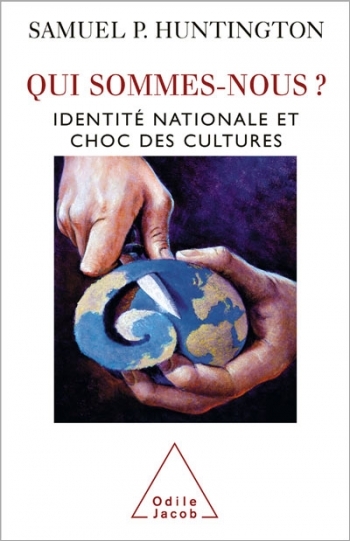
Who are we ?
Huntington's latest book provides a caustic analysis of some of the fundamental issues under discussion in the U.S. today.

Sebastian Roché
Réformer la police et la sécurité
Demands for increased public safety are prevalent in both Europe and the United States, and they take similar forms. Do policies based on such notions as zero tolerance, local policing, partnership and mediation serve any real purpose or do they simply act as decoys? In New York City, as elsewhere, improved public safety resulted from the decentralisation of resources and power and, therefore, of responsibilities. In the articles included here, the writers, who are all experts in public safety in their respective countries, examine the issues in a dispassionate manner and offer a comparative study of the results obtained in different countries. Finally, they make some concrete suggestions to resolve the problem of petty crime and incivilities. Sébastian Roché is a professor at the Institut d'Etudes Politiques, in Grenoble. He is the author of Tolérance zéro? Incivilitié et insecurité, published by Editions Odile Jacob.
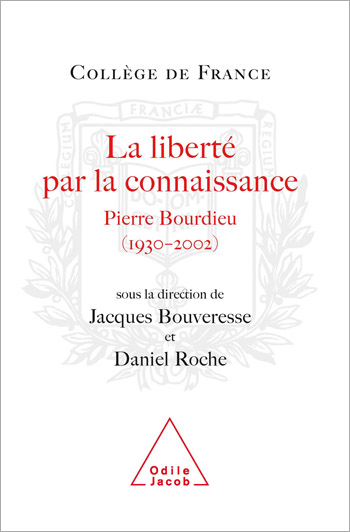
Jacques Bouveresse, Daniel Roche
Freedom Through Knowledge: Pierre Bourdieu, 1930-2002 (Travaux du Collège de France)
Gathered in this volume are the texts of lectures given in memory of Pierre Bourdieu at an international colloquium held on 26-27 June 2003 and jointly organised by the Collège de France and the Ecole Normale Supérieure, with the backing of the Hugot Foundation.
Yves Michaud
New Therapeutics
Advances in medical science are constantly being made, but it is often difficult for patients to realise what these advances entail and to understand their applications. The twelve lectures collected in this new volume in the series L'Université de tous les savoirs aim to inform us about some of these recent advances by addressing the following questions: What is the procedure for putting new medication on the market? How is new medication tested? What are the policies for furthering pharmaceutical innovation? How are health care structures organised? What will the hospital of the future be like? What are biotechnologies? What has been the impact of the neurosciences on therapeutics? What advances have been made in genetic mapping? What benefits can patients hope to gain from it? Gathered here are contributions by a geneticist, a surgeon, a psychiatrist, an emergency doctor, a neurologist and a philosopher. They examine the state of medical research today and address a question that concerns us all: What will medical care be like in the future? Contributions by Yves Agid, Pierre Carli, Alain Carpentier, Patrick Couvreur, Claude Debru, Bernard Golse, Didier Houssin, Gérard Le Fur, Jacques Marescaux, Arnold Munnich, Luis Omnès and Olivier Saint-Jean. Other books in the series include Qu'est-ce que la vie?, Qu'est-ce que l'humain?, Qu'est-ce que la société?, Qu'est-ce que l'Univers?, Qu'est-ce que les technologies?, Qu'est-ce que la culture?, Qu'est-ce que la vie psychique?, Le Renouvellement de l'observation dans les sciences, La Chine aujourd'hui, Egalité et inégalités, Qu'est-ce que la diversité de la vie?, Qu'est-ce que la globalisation?, Paris and La Guerre d'Algérie 1954-1962.
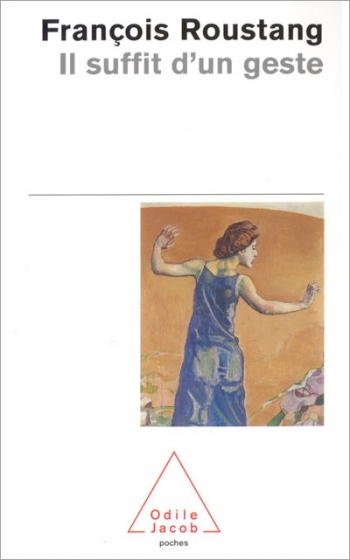
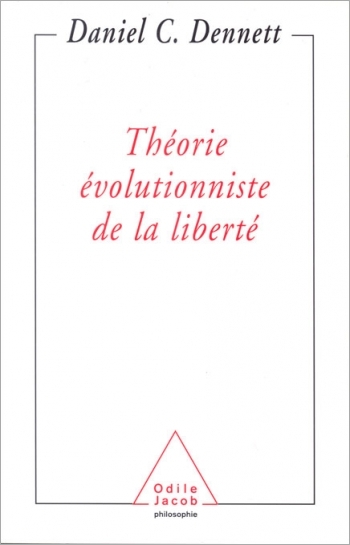
Daniel C. Dennett
Evolutionist theory of freedom
Billions of years ago, there was no freedom on earth, for the simple reason that there was no life. What forms of freedom have evolved since the first stirrings of life? Can freedom and free will exist in a deterministic universe? If we are free, are we responsible for our freedom, or is it governed by chance? Drawing on evolutionary biology and the cognitive sciences, Daniel Dennett provides a series of unorthodox replies to these traditional philosophical questions. It is generally held that what is determined is inevitable and that freedom can only exist in a non-deterministic universe. This is untrue, says Dennett. It is also held that in a pre-determined universe, we have no real choices: all we have is the illusion that we can choose. This too is false, argues Dennett. He then goes on to explain how, some day, we will be able to create robots endowed with free will. In this groundbreaking book, written in a striking, lively style, Dennett interweaves philosophical creativity with the latest scientific developments, and challenges a series of philosophical orthodoxies. Daniel C. Dennett is University Professor and Director of the Center for Cognitive Studies at Tufts University, Mass., U.S.A. He is the author of Consciousness Explained and Darwin's Dangerous Idea.

Jacques Cantier, Éric Jennings
The French Colonial Empire under Vichy
In the 1990s, historians began studying the Vichy government in the French colonial empire. The articles gathered here by Jacques Cantier and Eric Jennings are the outcome of recent exchanges among historians on the subject. The book reflects the writers' various research interests and includes: an examination of the political decision-making process, the composition of governing bodies, the development of institutions to strengthen government control of society, and the reaction of the local population to the new political measures. The editors' purpose is dual. First of all, the colonial mirror serves to elucidate the underlying logic and the workings of the regime that resulted from the French defeat. Secondly, the editors have sought to place the Vichy period into the wider context and more extended time frame of colonial history and decolonisation. They have done this by structuring their analysis of Vichy in the empire into several sections. The first part of the book examines the conditions under which the Vichy government tried to unite the colonial bloc to mainland France. The second part analyses Vichy's authoritarian policies, particularly those that aimed at controlling youth. The large demonstrations that took place in Vichy Algeria in 1941 illustrate the efforts undertaken to showcase the National Revolution in Algeria. The third part studies the different forms of repression exercised by the regime, particularly the conditions governing the application of anti-Semitic legislation in the empire, the stifling of the Masons, and the existence of internment camps in North Africa. The fourth part reveals the tactics used by the European and colonial elites in French West Africa (Afrique Occidentale Française) to preserve their influence. The Vichy legacy is examined in a final section, which provides both an overview of the situation in the empire as a whole and a detailed analysis of the telling example of Madagascar. This is a unique and highly innovative study by eminent historians of a little-known aspect of French colonial history during the Vichy period. Jacques Cantier is a lecturer at the University of Toulouse-Le-Mirail, France. He is the author of L'Algérie sous le régime de Vichy and Jules Roy: l'Honneur d'un rebelle. Eric Jennings is an assistant professor at the University of Toronto, Canada. He is the author of Vichy in the Tropics.
Alain Bentolila
All about scholl
This is a brilliant, clearly argued demonstration of how the inability of the school system to evolve and develop a critical spirit may lead to the general failure of our entire society.

Boris Cyrulnik
Talking About Love Near The Abyss
Resilience, the human capacity to recover from trauma and to overcome hardship, can come into play at any age...

Françoise Héritier, Margarita Xanthakou
Body and Affects
The articles gathered here, written by eminent French anthropologists, present a novel angle on the way societies function. The writers argue that because societies are not abstract intellectual constructions, they cannot be dissociated from the physical individuals that constitute them, or from the affects (feelings and emotions) expressed by them. Included here are studies of Western and non-Western societies on such subjects as skin colour, religious rituals involving animals, witchcraft and flying sorcerers, passion in traditional North African cultures, and breast-feeding (both induced lactation to breastfeed infant girls and spontaneous lactation to breastfeed infant boys) in parts of Italy. Françoise Héritier is an anthropologist and teaches at the Collège de France. She is the author of Les Deux Soeurs et leur mère and Masculin/Féminin I and II, published by Editions Odile Jacob. Margarita Xanthakou, an anthropologist, is a research fellow at the Centre National de la Recherche Scientifique (CNRS).
Claudine Biland
Liar's Psychology
When people tell lies what are they really trying to do? The goal of liars is to convince others that an event that never occurred took place or that they have opinions and feelings that they do not. The function of liars is thus to simulate fictional states and to dissimulate real situations; their task is to convince others - and to avoid being found out. What is it that makes liars so unbearable? Lying has a negative connotation in every culture. Children are taught not to tell lies. As a little girl says in an advert, you mustn't cheat, “'cause if you do, you betray the trust that your parents have planted inside you”. Lying always implies deceiving trust or even manipulating another's naiveté - both highly unpleasant experiences for the liar's interlocutor. How can liars be detected? Lying is a delicate, complex art, and non-verbal communication is highly fugitive and difficult to read. Nevertheless, certain conversations leave us with strange, discordant feelings. Then there are those hastily formed opinions about someone or a situation that linger on in our memories. Almost imperceptibly, the impression of sincerity is communicated through words, a voice and gestures. The goal of this book is not to determine if and when lying is justifiable, but to explain to us the types of behaviour that liars do or do not adopt and to develop our ability to unmask them. Shunning a Manichaean approach, the author shows that truth cannot govern all our everyday relations with others - neither in our professional lives nor in our private dealings with friends and partners. If we told the truth all the time, life would become unbearable. Lying is an indispensable human activity, which everyone indulges in. In this work of social psychology, the author has made available to professionals and general readers alike the results of the most advanced research on the subject of lying. Claudine Biland is a psychologist specialising in non-verbal communication. She teaches in Paris.

Pascal Picq, François Savigny
Tigers
The tiger is charged with symbolism. In myth and poetry it represents untamed force that can strike suddenly; it can appear stealthily out of nowhere, and vanish just as suddenly.
Gilbert Hottois
Philosophy of Science, Philosophy of Technology (Travaux du Collège de France)
Is the philosophy of science concerned with the technique and the philosophy of technology?

Thierry Lévy
In Praise of Judicial Barbarity
In March 2004, France instituted a special legal procedure, to be applied in infractions judged as serious, as part of an effort to give police more powers to combat new types of crime. If money-laundering and giving assistance to illegal immigrants may be regarded as relatively recent infractions, stealing, murder, procuring and counterfeiting are all ancient violations. The new procedure extends the powers of police to hold prisoners in custody; it will also allow some offenders who plead guilty and accept the public prosecutor's sentence to avoid a public trial. Thierry Lévy, a renowned criminal lawyer, shows that the new law only confirms a tendency that has been at work for a long time, since many trials are no more than empty ceremonies sanctioning decisions that have already been reached. The author examines the way Justice in France today functions and puts some current dysfunctions of the legal system in their historical perspective. He argues that Justice cannot be served if the rights of the defence are ignored. Thierry Lévy is a lawyer and a member of the Paris Bar. He is the author of Justice sans Dieu and the co-author, with Jean-Denis Bredin, of Convaincre.

Alain Berthoz, Gérard Jorland
The Empathie
Empathy is the ability to put oneself in the position of others, and thus to understand and know them. Ever since Darwin, empathy has been regarded as the basis of all human social behaviour, and most notably of ethics. Some major psychological disorders - autism, for example - can be described as the inability to empathise. Certain types of perverse behaviour, such as the torture of defenceless victims, have been explained as distortions of empathy. This book offers an overview of studies on empathy for the past 250 years. It also describes the latest research on the subject in a variety of fields: cognitive psychology, philosophy, ethology and ethics. Alain Berthoz is a professor at the Collège de France and a member of the French Academy of Sciences. He is the author of Le Sens du mouvement and La Décison, both published by Editions Odile Jacob. Gérard Jorland is a director of studies at the Ecole des Hautes Etudes en Sciences Sociales and the author of Les Paradoxes du capital (Editions Odile Jacob) and La Science dans la philosophie.

Fondation pour la Recherche Stratégique, François Heisbourg
Strategic and Military Yearbook 2004
As the consequences of U.S. involvement in Iraq are making themselves felt worldwide, and as the U.S. presidential campaign comes to a climax, this book provides a timely survey of the changing strategic and geopolitical landscape. The articles included here, written by some of the top experts in their fields, evaluate the repercussions for all of us of developments in the world's most powerful nation; they also examine the so-called clash of civilisations and consider the real risks of such a clash. This is an indispensable, complete and informed book that will enable readers to understand present and future changes in the global situation. A veritable gold mine of information, the Annuaire stratégique et militaire provides an annual examination of France's defence situation and allows a comparison with France's partners. François Heisbourg, an internationally renowned specialist in international and defence issues, is the director of the Fondation pour la Recherche Stratégique (FRS) and president of the International Institute of Strategic Studies. He is the author of Hyperterrorisme: la nouvelle guerre (2001) and the editor of Annuaire stratégique et militaire 2002 (English edition: French Strategic and Military Book) and Annuaire stratégique et militaire 2003, all published by Editions Odile Jacob.
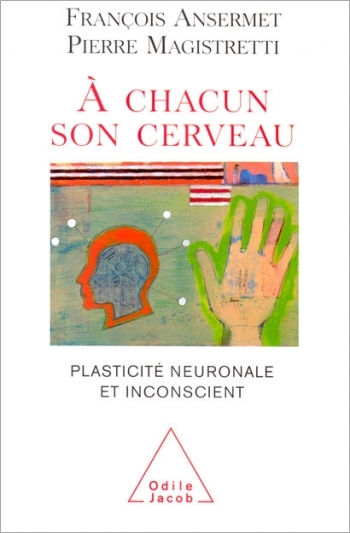
François Ansermet, Pierre Magistretti
To Each His Own Brain Biology of the Unconscious
This book is the result of the coming together of psychoanalysis and neuroscience around the shared observation that experience leaves a mark. Although the idea that experience produces psychic imprints - whether conscious or unconscious - has always been central to psychoanalysis, it was not until recently that findings in neurobiology demonstrated that neuronal plasticity existed and that it operated throughout a person's life. This constant remodelling in relation to experience poses certain basic questions about each individual's identity and future. How does psychic life emerge from experience and from what it imprints? What are the respective contributions of external stimuli (the reality behind experience) and of internal stimuli (the imprinted marks)? How do the mechanisms of synaptic plasticity participate in the establishment of an unconscious internal reality? What is the role of the body in this new dynamic organisation? This book provides the foundations for a better understanding of the relations between neuroscience and psychoanalysis and offers an original theory of the unconscious, by combining recent findings in neurobiology with the basic principles of psychoanalysis. Eschewing genetic determinism, it shows that each individual is different and each brain unique. Pierre Magistretti, a physician and neurobiologist, is a professor of physiology and director of the Centre for Psychiatric Neuroscience at the University of Lausanne's medical school. In addition, he is the president of the Federation of European Neuroscience Societies. François Ansermet is a psychoanalyst and professor of child and adolescent psychology at the University of Lausanne. He is the co-author, with O. Halfon and B. Pierrehumbert, of Filiations psychiques (Presses Universitaires de France, 2000).

Jean-Paul Betbèze
French people's economic fear
France has economic possibilities, but it remains blocked in several areas. Although the country's leaders are aware of this, they seem unable to make the necessary reforms to move forward. France seems to be the prey of fears that paralyse it, but which have benefited a new class of economic as well as social rentiers who constitute a powerful economic, ideological and political group. These new rentiers are fully cognisant that the defence of their acquired privileges is not a practical long-term solution - as has been shown by rising deficits, decreased competitiveness and job losses. The author argues that it is necessary to make changes and implement reforms - and to do so it is essential to understand and overcome existing fears. It cannot be expected that everything will be changed at once, but some initial efforts must be made. The single reform that will fix everything does not exist, he says, but this is hardly an excuse for refusing to make a start. In other countries, programmes for economic reform are being implemented. Yet France is only beginning to consider such reforms. The object of this book is to provide a greater understanding of the present situation, in the form of a how-to manual. A ruthless analysis of some of France's psychological blocks, apprehensions and economic fears, this book can be regarded as a sort of economic psychotherapy. In addition, the author provides a critique of the false solutions that hinder modernisation and proposes his own solutions for change and reform. Jean-Paul Betbèze is a professor of economics at the University of Paris Panthéon-Assas and a member of the French prime minister's Council for Economic Analysis. He is a consultant to the president and the C.E.O. of a major bank and the author of Les Dix Commandements de la finance, which was awarded the Risques-Les Echos Prize in 2004.

Claude Béata
Dog Psychology Stress, anxiety and depression
Many dogs suffer from such psychological problems as phobias, hyperactivity, separation anxiety and depression. This book recounts the stories of seven dogs, whose behaviour had become so erratic that their owners were on the verge of getting rid of them. Their veterinarian (the author) presents their stories as an investigation, taking the reader back to the origin of each disorder and then describing the form of therapy he used to enable each dog and its owner to cohabit in harmony. Written in a lively, often humorous style, this practical book will help readers understand the emotional life and behaviour of dogs. The chapters are presented in the form of accessible stories interspersed with sidebars containing relatively more technical information. Claude Béata is a behaviourist veterinarian and a member of the European College of Behaviourist Veterinarians. A specialist in emotional attachment, he is the co-author, with Boris Cyrulnik, of several interdisciplinary studies in comparative pathology.
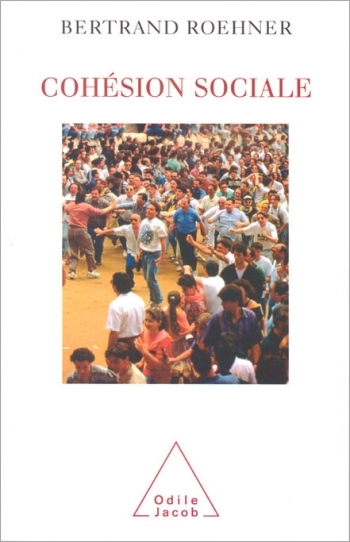
Bertrand Roehner
Social cohesion
The methodology of physics is now being applied to the social sciences. Social cohesion, which assures social stability and continuity, is both observable and measurable. It may be observed in events that repeat: in test events such as the destruction of the mosque in Ayodhya, India (1992), and of the twin towers of the World Trade Center in Manhattan (2001); in catastrophes such as the Great Fire of London (1666), the earthquakes and fires of San Francisco (1906) and Tokyo (1923); in the riots of rejection in Lawrence, Mass., U.S.A. (1984), and in Aigues-Mortes, France (1893); in the protest riots in Brixton, U.K. (1981); and in resistance to foreign occupation, as in France (1940). Social cohesion can be measured through the reactions of a given society in the aftermath of a shock: for example, in the number of Hindu temples that were burned down or mosques that were destroyed following the first two test events listed above. By borrowing the methods of physics, social scientists have been able to make predictions in their own field. Bertrand Roehner is a member of the Laboratory of Theoretical Physics at Pierre et Marie Curie-University of Paris VII. He is the author of Un siècle de commerce du blé en France (Economica), Theory of Markets (Springer), Application of Physics in Economic Modelling, Pattern and Repertoire in History (Harvard University Press) and Separatism and Integration (Rowman and Littlefield).