Catalog All books
Gerald M. Edelman
Wider than the Sky
The brain is wider than the sky, For, put them side by side, The one the other will include With ease and you beside, wrote the American poet Emily Dickinson in the mid-nineteenth century. The fundamental mechanisms governing mental life are now the subject of scientific study. In this book, Gerald Edelman examines a major aspect of the mind - consciousness. How can the firing of neurons give rise to subjective sensations, thoughts and emotions? How can the disparate domains of mind and body be reconciled? A scientific explanation of consciousness must take into account the causal connections between these two domains. Such a theory must show how the neural bases of consciousness appeared during the evolutionary process and how certain animals developed consciousness. These are some of the key issues that Gerald Edelman examines here. He shows that consciousness cannot be located in a specific area of the brain, because it is a process linked to how the brain functions as a whole, to its wealth of connections and to its great complexity. The brain, he argues, is not a kind of computer. Edelman is regarded as one of the greatest theoreticians of the brain, and his notion of consciousness dominates all discussions on the subject among the international scientific community. This book offers the most accessible version of his theories that is available today. The winner of the 1972 Nobel Prize in Medicine, Gerald Edelman heads the Institute for Neurosciences, in La Jolla, California.
Stella Baruk
Si 7 = 0. Quelles mathématiques pour l'école ?
Stella Baruk is known for her uncompromising criticism of the way mathematics is taught at school. She sees children's frequent aversion to the subject as a clear demonstration of the failure of current methods. Following her earlier book, L'Age du Capitaine, in which she denounced the meaningless mathematical problems that children were burdened with and enjoined to solve, she now addresses the difficulties encountered by the new generation of the captain's children. She has reproduced pages from the exercise books of primary school pupils, with a commentary underlining the confusion created by modern maths in the minds of children who are not yet familiar with mathematics. Her message is clear: the fault lies not in modern maths, but in the fact that the cart has been put before the horse. Modern maths was created to generalise operations and structures that recur in every aspect of mathematics, and modern maths cannot be correctly understood without the full mastery of those operations and structures. Yet, the teaching of mathematics has been turned on its head, with the abstract being taught before the concrete and the general before the specific - with the result that empty formalism is all that is being passed on. Baruk's very precise analyses, illustrated with specific examples, will help parents understand their children's mistakes and difficulties, so that they can help them overcome them. Stella Baruk is a mathematics teacher and pedagogical researcher.
Anne de Kervasdoué
Women's Questions New, revised and enlarged edition
This is the revised and expanded fourth edition of Anne de Kervasdoué's highly successful handbook on women's health, Questions de Femmes. The author, a gynaecologist, answers a large range of questions about the female body, sexuality and the control of fertility. She provides an extensive survey of gynaecological information for each stage of a woman's life, from birth to old age. What type of contraception should be used before the age of twenty, and after forty? How can a woman increase her chances of becoming pregnant when she wishes? What should be done if a woman has one miscarriage after another? How can medicine further sexual fulfilment? What can plastic surgery do for breast enhancement? How does breast cancer develop? What are the effects of AIDS on maternity? What are some of the symptoms of sexually transmitted diseases? Anne de Kervasdoué also offers precise and detailed information about such recent developments as intracytoplasmic sperm injections (ICSI) for the treatment of male sterility, she explains what is the third-generation Pill, and she examines the secondary effects of Hormone Replacement Therapy (HRT). Most of the changes in this new edition concern the treatment of the menopause. Following the recent publication in Britain and the United States of three studies revealing a higher incidence of breast cancer and cardiovascular diseases among women who take hormones, questions are being raised about the benefits and risks of HRT, and women want to be able to make informed decisions. Included here are a practical guide and a list of useful addresses, which have also been updated. Anne de Kervasdoué is a gynaecologist working in the maternity clinic Saint-Vincent-de-Paul, in Paris. She is the author of Jours de Femmes, and the co-author (with Janine Mossuz-Lavau) of Les Femmes ne sont pas des hommes comme les autres and (with Dr. Jean Bélaïsch) of Questions d'Hommes, all three published by Editions Odile Jacob.

Nicolas Véron, Matthieu Autret, Alfred Galichon
Crise in Financial Information Accounting and Capitalism
Enron, Andersen, Worldcom: although these companies have stopped dominating the headlines, the shock waves they sent through the business community in 2002 have not yet subsided. The belief that accounting is an exact science has been shattered, while economic relations are upset by the knowledge that financial information may be untrustworthy. Yet the market economy profoundly requires relevant and reliable information about the activity and financial situation of businesses. Taking into account the increasing strength of capital markets and international investors, the authors outline the basic elements that could constitute a new, balanced system of accounting that would accompany the necessary changes in capitalism, particularly in France and the rest of Europe. Nicolas Véron, an engineer and high-ranking civil servant, is the founder of Etudes et Conseil pour l'Information Financière (ECIF). Matthieu Autret is an expert currently working for the European Commission. Alfred Galichon is a doctoral candidate in economics at Harvard University.
Dominique Reynié
Europeans in 2004
What does Europe's future hold? To answer this question, Dominique Reynié examines trends and developments in Europe's civil society, current events, and the debates and ideas currently under public discussion in the E.U. and in the rest of Europe. The information included here covers statistics and opinion polls; political events; political, economic and social issues; legal and constitutional questions; as well as European character traits, mind-sets and lifestyles. This is an indispensable work for anyone who wishes to become familiar with the reality of Europe in flux. Also included here is a unique synthesis of election results in all of Europe during the past year. Dominque Reynié teaches at the Institut d'Etudes Politiques, in Paris, and is the director of the Observatoire Interrégional du Politique. He is most notably the author of Le Triomphe de l'Opinion Publique.


Willy Pasini
Jealousy
The sexual revolution of the 1960s undermined fidelity as well as jealousy, both of which were regarded as out-dated bourgeois concepts. Since then, jealousy has become unacceptable - something that should be hidden because it is somehow shameful. But what if jealousy were intrinsic to human nature, asks Willy Pasini. What if it were an essential part of all of us - a disease that some of us develop while others remain healthy carriers? If jealousy concerns all of us, argues Pasini, we must accept its reality, learn not to be afraid of it and put an end to our feelings of shame and embarrassment. That is the first step. The second step consists in trying to educate our feelings of jealousy, instead of denying them. We can do this by playing with allusions and illusions, with the extraordinary - and forgotten - power of flirtation, with the lightness of being. Here is a book that should help turn jealousy into a positive factor - and even into an aphrodisiac. A psychiatrist and sexologist, Willy Pasini is the author of many best-selling books, including À quoi sert le couple? and Les Nouveau Comportements sexuels, both published by Editions Odile Jacob.


Georges Charpak, Roland Omnès
Becoming a Magician is Becoming Prophet
In a simple, accessible style the authors address questions that we all ask ourselves about science: Why hasn't science made human beings wiser? Hasn't it even had the opposite effect, rendering humans' criminal tendencies even more devastating? To answer these questions, the authors develop the idea that the advent and triumph of modern science have induced a profound change in humanity because science has given human beings the capacity to understand and master phenomena occurring on the microscopic level - a scale that is alien to them. Some of the fundamental elements of contemporary physics are presented here in game form. The authors argue that physics has left free human beings face to face with an equally free interplay of natural forces and that, without causality and finality, the world has become deprived of meaning. It is therefore hardly surprising that many have taken refuge in religion. But the authors propose an alternative to religion, arguing that we can fulfil our modernity by helping our children develop their love of experimentation so that they can discover the meaning of things for themselves - instead of embracing ideologies that can only be imposed through terror. Georges Charpak is a physicist and Nobel Prize Laureate in Physics. Roland Omnès is a physicist and Emeritus Professor at the University of Paris XI-Orsay.
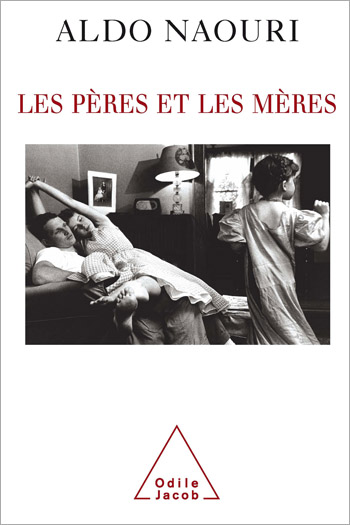
Aldo Naouri
Fathers and Mothers
The author's thesis is that in Western societies the father has been ejected from his central position in the family structure, while the mother's role has been heightened, and the child placed at the top of the family pyramid - a situation that is not good for the child.
Yves Simon
How to Overcome Bulimia
Bulimia is increasingly common, particularly among girls. A recent study of high-school-age girls revealed that 20 % suffered from regular bulimic episodes. Approaching bulimia from both a psychological and a behavioural angle, the authors offer a practical, scientifically tested method to overcome the disorder. This is an indispensable book for patients, their friends and family, as well as for members of the medical profession Yves Simon is a medical psychiatrist and director of the anorexia/bulimia programme at the Free University of Brussels. François Nef is a psychologist teaching at the Free University of Brussels. Both Doctors Simon and Nef are specialists in eating disorders and behaviour.


Didier Pleux
Handbook of Education for Modern Parents
Parents often feel overwhelmed by their children's omnipotence. It is easy enough to say that parents must recover their authority and lay down rules, but what are the practical ways of going about this in everyday life?
Gérard Apfeldorfer
Slimming: It's All in the Head New, revised and enlarged edition
Perhaps you think that if fat people wish to become thin all they have to do is lose weight - and to lose weight they just have to follow a slimming diet...
Claude de Calan, Pierre Etaix
The Clown and the Wise Man
"One of us is an acrobat and a filmmaker who tries to provoke laughter; the other one tries to contribute to the progress of mathematical physics. Yet, we could endlessly throw our ideas back and forth. The surprising closeness of our approaches, the strange fraternity between our two disciplines, which are as far away from each other in their goals as in their techniques, gave us great joy. It is our feeling of wonder that wed like to share here," write Pierre Etaix and Claude de Calan. Sometimes known as the French Buster Keaton, Pierre Etaix is a master of burlesque and the inventor of unequalled visual gags. Claude de Calan is a scientist at the Centre of Theoretical Physics at the Ecole Polytechnique.


Patrick Gepner
Osteoporosis
Osteoporosis is characterised by a loss in the quality and quantity of bone tissue. The consequences are serious: they include fractures and the compression and curving of the spinal column, and the disease is responsible for more deaths than breast cancer. It is estimated that one-third of menopausal women suffer from osteoporosis, and the proportion is likely to rise as a result of bone damage caused by extreme dieting and anorexia among female adolescents. The fear of high cholesterol and weight gain among women older than 50 years of age is also responsible for decreased bone density. In addition, the incidence of osteoporosis among males is on the rise. Recently, there has been increased interest in the subject of osteoporosis, which has been described as "an invisible enemy" because it rarely produces symptoms. It is usually detected when a fracture occurs and by then it is too late. For this reason, early diagnosis and, particularly, prevention are of the utmost importance. Like the other books in the "Santé au Quotidien" series, this is a practical handbook, which reviews all that is known today about the disease and offers much useful advice: Which kinds of mineral water contain the most calcium? How can you eat plenty of calcium-rich milk products without gaining weight? Is hormonal replacement treatment during menopause an effective method of preventing osteoporosis? The outline of the book: When should you become concerned about osteoporosis? How is it diagnosed? What can you do to ensure good bones for life? How can osteoporosis be treated? False notions and honest tips. Patrick Gepner is a rheumatologist, practising at the Hôpital Foch, in Suresnes, near Paris. He is the author of Mal de dos, published by Editions Odile Jacob in the "Santé au Quotidien" series.
Conseil franco-britannique, Giles Radice, Jacques Viot
A Century of the Entente Cordial Franco-British Council
The publication of this book commemorates the centenary of the signing of the Entente Cordiale, a key date in Anglo-French relations. T

Jacques Fricker
Be Slim, Healthy and Feel Good in Your Skin
How should you eat to keep healthy while remaining slim? What should you do to maintain your ideal weight, without having to diet constantly and without putting on excess kilos over the years? If you have successfully followed a diet, how can you keep from putting the extra weight back on? How can you avoid the cycles of weight loss and weight gain? Above all, how can you keep your figure, as well as your health, and safeguard against illness by eating an optimal diet? This book shows how a single diet can enable you to simultaneously achieve these three goals figure, form, health. Jacques Fricker is a physician specialising in nutrition.
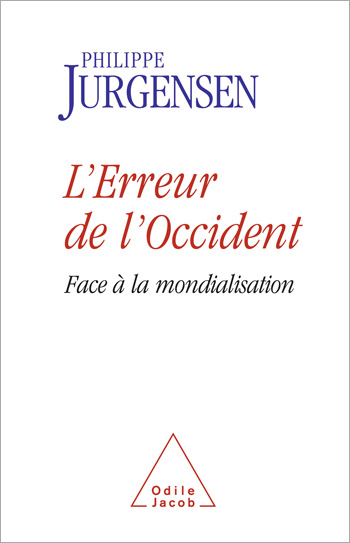
Philippe Jurgensen
The Error of the West In the face of globalization
Philippe Jurgensen shows how the growing economic gap between North and South is responsible for four major threats that, in the short or long term, will endanger the small group of rich nations that possess three-quarters of the worlds wealth. These four threats demographics, health, the environment, strategy are each analysed in turn in a way that is accessible to non-specialists. Jurgensen shows that the current selfish attitude of the West is not only reprehensible but, above all, dangerous and therefore politically untenable. Philippe Jurgensen is a senior official of the French Treasury.


Raymond Boudon
Why intellectual peoples don't like liberalism
Given the intellectual force of liberalism, its political appeal, its economic effectiveness and its historical significance, why is it so unpopular among French intellectuals? Why does it elicit so little serious discussion? And why is it the object of so much confusion, so many clichés and misunderstandings? Is it simply out of resentment, because intellectuals feel that the market does not afford them the material and symbolic rewards that they believe they deserve? Is it just because they prefer to play a critical role in a society where capitalism is triumphant? Perhaps, but these reasons do not explain everything and they certainly dont explain the systematic rejection of liberal thought in France. A sociologist of knowledge rather than of social determinism, and a specialist in belief systems, Raymond Boudon ruthlessly analyses the cognitive mechanisms that make liberalism so hateful in the eyes of French intellectuals. The result is a keen, detailed review of the clichés that have encumbered discussions for more than thirty years. Raymond Boudon, a professor at the University of Paris-IV, is a member of the Académie des Sciences Morales et Politiques. He us the author of numerous works, most notably LInégalité des chances, La logique du social, LIdéologie ou lorigine des idées reçues, LArt de se persuader, Le Sens des valeurs and Déclin de la morale? Déclin des valeurs. He is the co-author, with R. Leroux, of Y a-t-il encore une sociologie?