
Catalog All books
Jean-Marie Bourre
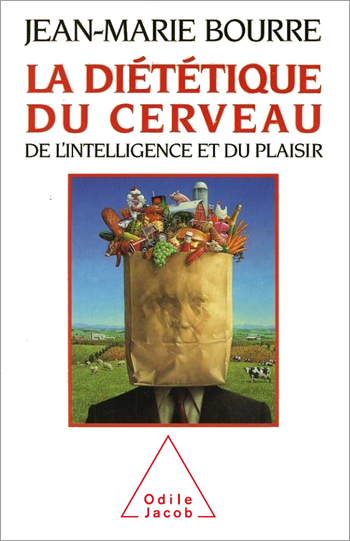
The Dietetics of the Brain Intelligence and Pleasure
What mechanisms govern our cravings, our taste, our nutritional needs? How should we eat to think well and work productively? J.-M. Bourre, a neurotoxicologist, celebrates the pleasures of a greedy brain, a gastronomical brain. He takes us on a fascinating exploration of the complex chemistry which links our brain to our plate in the world of proteins, vitamins, mineral salts, and lipids.

Jean-Didier Vincent
The Biology of Passions
What is it to love? Can one explain the love of Romeo for Juliet? What are desire, pleasure and pain, the taste for power and domination? Moving beyond the traditional split between body and mind, Jean-Didier Vincent proposes a new theory of emotions which brings harmony to our concept of mankind. Jean-Didier Vincent is a neurobiologist and director of the Alfred Fessard Institute of CNRS at Gif-sur-Yvette.

Dennis Shasha
Mathematical Mind Games and Enigmas I The Amazing Aventures of Dr. Ecco
Under the supervision of Dr Ecco, a modern Sherlock Homes who solves the most difficult, mystifying problems, its your turn to play! No prior knowledge is necessary-- a paper and pencil will suffice. And, of course, some common sense! A researcher in computer science and artificial intelligence, professor Dennis Shasha teaches at the Mathematics Institute at the University of New York.


Julien Damon
Cities to Live In
Complementing and mirroring the views of these urban residents are a series of studies by experts...


Claude Allègre, Patrick Artus, Jean-Louis Borloo, Yves Cochet, Vincent Courtillot, Jean Jouzel, Jacques Le Cacheux
Ecological quarrels and political choices
Polemics over global warming, the security of nuclear power plants after Fukushima, the depletion of reserves of non-renewable raw materials continue to fuel public concern without succeeding in establishing shared objective representations...
Frédéric Fanget
Assert Yourself! (New Edition) For more productive relationships with others
Do you have trouble expressing your needs? Is it difficult for you to say 'no'? Are you afraid of speaking in public? Written in the form of a self-help manual, this book should enable you to pinpoint those situations in your professional and personal life that give you most difficulty: expressing yourself during a meeting; starting up a conversation when you don't know anyone; criticising your partner; saying 'no' to a friend who wants a favour; asking your boss for a raise. This book aims to help you (re)develop a balanced relationship with others, so you can learn to express yourself while avoiding the extremes of passivity or aggression. Frédéric Fanget is a medical psychiatrist and company consultant specialising in disorders related to lack of assertiveness. He teaches and practises in Lyon.
Gilbert Lagrue
Trying to quit smoking ?
Why do people smoke ? What is the role of nicotine, which produces all the pleasant sensations of tobacco inhalation ? Why do smokers find it so difficult to quit, when their health and even their lives are at risk? This is book is aimed at smokers, and all those who are interested in the mysteries of human behaviour. In order to break the futile vicious circle of guilt and failure, Gilbert Lagrue examines both the positive and the negative effects of tobacco.The authors goal is to lead the reader from understanding to action. How do smokers decide to quit? What are the different methods used in giving up smoking? How can smokers fight against physical and psychological dependence? And how can those who have quit ensure that they will not start smoking again? Professor Gilbert Lagrue is a renowned specialist on tobacco abuse and withdrawal. He is the founder of the tobacco-withdrawal unit at Hôpital Henri Mondor in Créteil.
Christine Mirabel-Sarron
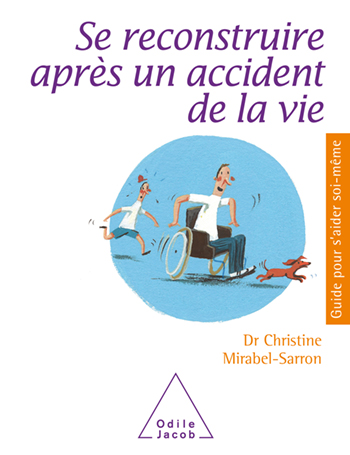
Rebuilding Oneself After a Life-Altering Incident
A very supportive voice, with enough optimism to encourage a beneficial change, and simple advice to instill confidence and to encourage practice.
Laura Nattiez, Denis Peschanski, Cécile Hochard
November 13th
The book attempts to reconstruct both the precise unfolding of facts and the way in which those facts were experienced by those who were involved.
Éric Baratay
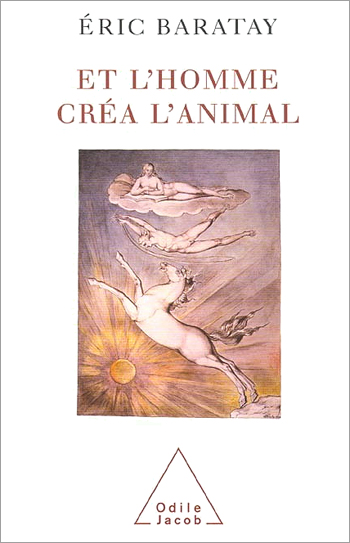
And Man Created the Animal History of a Condition
In this book, Baratay holds a mirror up to humanity. He reviews the changing status of animals throughout human history: from ancient myths about animal domestication to the invention of bullfighting, from the great pastoral epics to modern slaughterhouses, from the ancient role played by animals in the human imagination to modern laboratory testing. Eric Baratay is a historian specialising in the contemporary world and in the status of animals.

Christophe Paradas
The Mysteries of creativity Psychoanalysis and aesthetic
A reflection on the mystery of creativity and on why art can be so disturbing
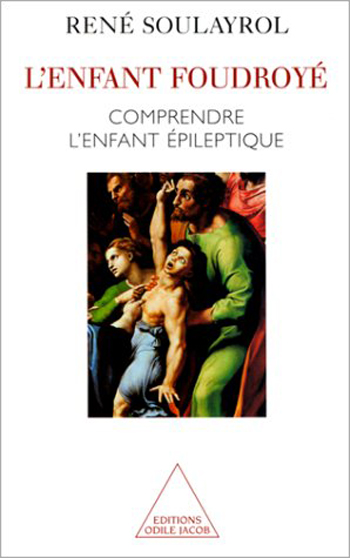
René Soulayrol
The Stricken Child Understanding the epileptic child
Do epileptic seizures occur completely out of the blue? Or is there an underlying cause? How do epileptic children live with their bodies on a day-to-day basis? Can epilepsy result in the impairment of the childs intelligence? What are the links between epilepsy and neuroses or psychoses? This book springs from an attempt to understand the psychological behaviour of the epileptic child, and the efforts that the child must make in order to adapt and continue to live as normal a life as possible, in spite of the disease. René Soulayrol teaches child psychology in the Faculté de Medécine, in Marseille.

Sylvie Cadolle
Being a Step-parent The Recomposition of the Family
More than one million children in France live permanently or occasionally with a step-parent. What place does a step-parent hold in the family of a child whose parents are divorced or separated? What role does he or she play? Is it sufficient to know how to love in order to succeed in reconstructing a family? This is the first French investigation into the relations between step-parents and step-children that allows both the adults and the children to freely express themselves. Sylvie Cadolle teaches philosophy and educational sociology.