Catalog All books
Georges Hansel
Talmudic Explorations
Shrouded in legend, wrapped in mystery, disparaged, censored, and sometimes even burned, the Talmud remains one of the cornerstones of Judaism. Yet the general reader knows little about it. What is the source of the shared inspiration underlying Talmudic texts which are known to address every aspect of human existence? What are the basic Talmudic notions of morality, politics, and the law, as well as of family and social relationships? Georges Hansel unveils the basic Talmudic principles as well as the underlying inspirational forces that are responsible for their coherence. Georges Hansel is a mathematician and professor emeritus at the University of Rouen.
Patrick Pageat
Man and his Dog
How can you teach your dog to live in the house, to obey, to walk on a lead, to be clean ? What should you do if he constantly barks or if he destroys everything in the house ? Should you punish him ? Can this be cured ? What if he is depressed, anxious or stressed ? Is a dog who bites aggressive by nature ? What goes on in a dogs head ? How can we understand him, and how much does he understand of our language ? Why do dogs become attached to humans ? A book which provides practical advice in training and educating your dog, in addition to being an indispensable tool for a harmonious relationship between a happy master and a well-adjusted dog. A vet and ethologist, Patrick Pageat is the founder of the French School for the Behaviour of Dogs.


Howard Gardner
Multiple Intelligences
What is intelligence ? A precise, measurable and well-defined faculty ? No, says Howard Gardner, there a many different kinds of intelligence constituting the unique cognitive profile of each individual. This book opens new horizons for those who believe that intelligence is a phenomenon far too complex to be measured by simple I.Q. texts and explores new ways of comprehending human nature. Howard Gardner is a professor at Harvard University in the United States.
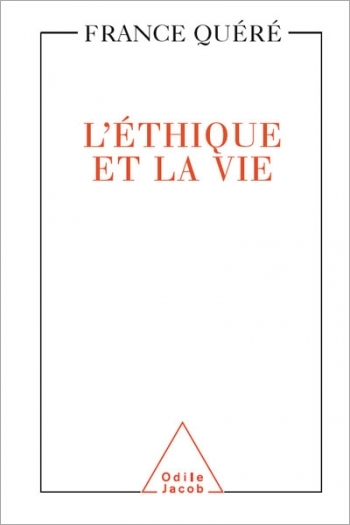
France Quéré
Ethics and Life
The recent advances in life sciences have modified our knowledge about the nature of man. Genetic engineering has given us a certain power over his future. Which principles must preside over artificial procreation and organ donation? How far can we allow genetic engineering and medical experimentations to go? What are the moral and ethical barriers of human science?