
Catalog All books

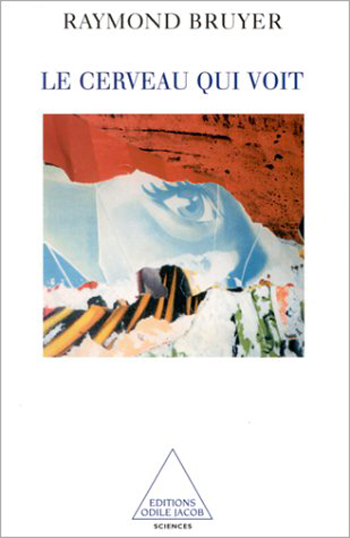
Raymond Bruyer
The Brain that "Sees"
Based on numerous examples, this book describes and explains the phenomenon of perceptive recognition: how with minimal information the human brain can identify not only general forms (a man, a woman, a cat, a dog, a house, and so forth), but also specific individuals who might seem scarcely distinguishable from one another, unless a large amount of information is provided. This study of the brain that sees is also an exploration of the perceived world. Raymond Bruyer teaches experimental psychology at the University of Louvain La Neuve, Belgium.
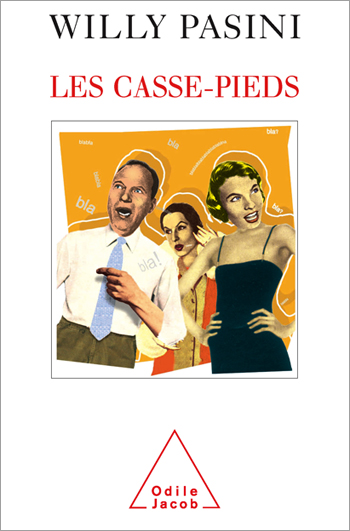
Willy Pasini
The Nuisance People
Does your best friend never seem to overcome any of her problems? Does your boss seem overly anxious? Is your partner depressed because he feels inadequate? Even though you may feel that life is generally uncomplicated and happy, recently youve been having trouble coping and fighting off the ambient dejection and the psychological problems of everyone around you. Based on numerous case studies, Willy Pasini reviews the different types of situations that are likely to spoil your everyday life so you can avoid this kind of trouble in the future.
Steven Pinker
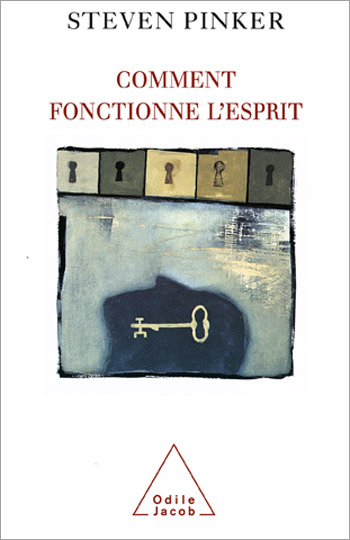
How the Mind Works
In his new book, Steven Pinker studies the human mind. What is it? How did it evolve? How does it enable us to see, think, feel, laugh, interact with others, have aesthetic experiences, and reflect on our own lives? This is the long-awaited synthesis encompassing all the major explanations offered by evolutionary biology and the cognitive sciences concerning mental life of human beings. Steven Pinker heads the Center of Cognitive Neurosciences at the Massachusetts Institute of Technology. He is the author of the highly acclaimed Language Instinct.
Jean-François Peyret, Jean-Didier Vincent
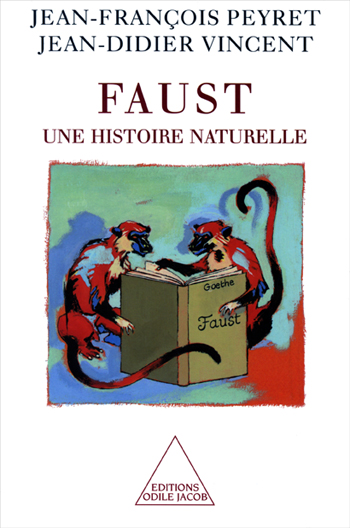
Faust A Natural History
It all began in July 1995, when theatre director Jean-François Peyret met with biologist Jean-Didier Vincent, in the latters lab. The intellectual exchange and friendship that developed from that meeting resulted, several years later, in a theatrical production based on a free adaptation of Goethes Faust, until then deemed unperformable. In this book, they look back on their production of Faust, and take stock of their experience. Their book can be regarded as a novel, a dialogue, a confession, a reinterpretation of Faust, or simply a mind game. Quietly and without ostentation, Peyret offers the reader a brilliant examination of the theatre today, and Vincent upholds his views more freely and strongly than ever before.