
Catalog All books

André Grimaldi
My Battle for Health Putting an End to 20 Years of Neglect
For a complete understanding of our health system and the succession of reforms “for increased productivity” of hospitals that have harmed it, without responding to the true new challenges happening now and to come.

Jacques Fricker
Be Slim, Healthy and Feel Good in Your Skin
How should you eat to keep healthy while remaining slim? What should you do to maintain your ideal weight, without having to diet constantly and without putting on excess kilos over the years? If you have successfully followed a diet, how can you keep from putting the extra weight back on? How can you avoid the cycles of weight loss and weight gain? Above all, how can you keep your figure, as well as your health, and safeguard against illness by eating an optimal diet? This book shows how a single diet can enable you to simultaneously achieve these three goals figure, form, health. Jacques Fricker is a physician specialising in nutrition.
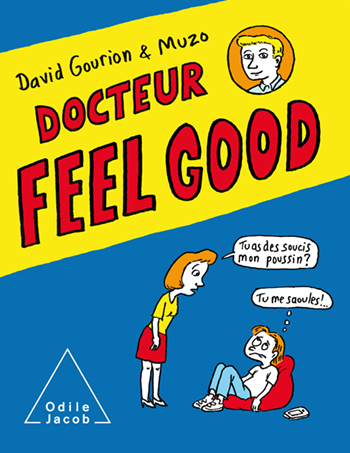
David Gourion, Muzo
Doctor Feel Good The First Comics Consultation for Teens
A comic book: an original and entertaining form to get the message across to adolescents. All the subjects that involve their health, well-being, and existence are tackled in a lively and illustrated format.




Éric Albert
How to Use Stress to Your Advantage
Stress, which is a product of our busy and agitated societies, does not necessarily occupy our private life. For many of us, stress is part of our professional life. What should we do in order to work better? How is it possible to put into place working and relational methods which favour efficiency and dynamism without exerting undue pressure? How can we avoid falling apart ? Éric Albert, a psychiatrist, explains what we know of stress today and moreover gives us facts which can help us analyze the way we work and how we can improve what can be improved.

Libby Purves
How Not to Raise Perfect Children
All parents want to raise exceptional children : well-balanced, healthy, clean behind the ears and gifted for everything...



Jacques Fricker
Maigrir vite et bien (Nouvelle édition)
How should you eat to keep healthy while remaining slim? What should you do to maintain your ideal weight, without having to diet constantly and without putting on excess kilos over the years? If you have successfully followed a diet, how can you keep from putting the extra weight back on? How can you avoid the cycles of weight loss and weight gain? Above all, how can you keep your figure, as well as your health, and safeguard against illness by eating an optimal diet? How can you stay slim while remaining energetic and without feeling tired - i.e. by keeping at the top of your physical and mental form? This book shows how a single diet can enable you to simultaneously achieve these three goals - figure, form, health - since all food types that are good for your figure are also good for you and, inversely, those that are bad for the figure are also bad for you. All you have to do is follow some basic dietary rules and adapt them to your own lifestyle. In this practical, useful book the author offers advice that is both scientifically sound and applicable to everyday life: choosing and cooking the most suitable foods to meet the three goals, making the best shopping selections, composing balanced menus in relation to age and lifestyle. He also addresses such questions as: What other means, besides diet, are there to meet the three goals? What role does exercise play? What should you do to have a flat tummy? Numerous recipes are given at the end of the book. Jacques Fricker is a physician specialising in nutrition at Hôpital Bichat, in Paris, and the author of Le Guide du bien maigrir, Maigrir vite et bien and Bien manger pour être au top.

Serge Renaud
A Healthy Diet
It is possible to eat in a manner that reconciles the demands of staying slim, good health, and general well being - although the steady stream of unhealthy and sometimes dangerous slimming diets would tend to make us believe otherwise. The new health diet proposed here draws much from traditional Cretan eating habits - which seem to be responsible for the populations tenaciously long life. Crete has the highest life-expectancy rate, and its people have the lowest incidence in the western world of cardiovascular diseases, that scourge of the industrialised nations. Serge Renaud is the scientist who discovered that wine can play a role in protecting against cardiovascular diseases - a finding that has become known as the French paradox. After spending much of his career in the United States, he directed a research unit of INSERM (France) for twenty years.
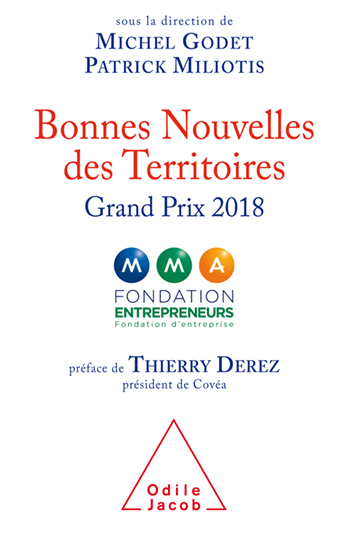
Michel Godet, Patrick Miliotis
Good News Territories Prize-Winning 2018
The 2018 Grand Prize honoured thirteen winners, whose beautiful, powerful and reproducible stories are told here.