
Catalog All books
François Lelord, Christophe André
How to Manage Difficult People
In this book, François Lelord and Christophe André provide advice drawn from their own vast experience, on how to better understand and manage these difficult personalities.

François Lelord, Christophe André
The Power of Emotions Love, Anger, Joy
Should we express our emotions? How can we use them? How can we improve our understanding of the emotions of others? How does the transition from emotion to passion occur? This book is not only a guide to help readers find their way in the myriad of recent findings about the emotions, it is also a practical handbook. For each one of the major emotions, the authors have listed the practical advice that they give to their patients and that they try to apply in their own lives. Christophe André and François Lelord are psychiatrists.
Claude Lelièvre
School Today in the Light of History
A light-hearted and fascinating review of all that we thought we knew about School

Claude Lelièvre, Christian Nique
The School of Presidents From Charles de Gaulle to François Mitterrand
What kind of education shaped Charles de Gaulle, Georges Pompidou, Valéry Giscard d'Estaing and François Mitterand? Who were their mentors? What was their opinion of school? What role is played in educational politics by a nationalist "Saint-Cyrien", a conservative "Normalien," a liberal from Polytechnique or ENA, or a socialist from Sciences-Po? How did their different educational experiences affect their actions and their views? A story of four great men who were once just schoolboys like everyone else.

Fleur Lejeune, Édouard Gentaz
The Premature Child Cognitive Development in Premature Infants
Is brain development slower in preterm infants?
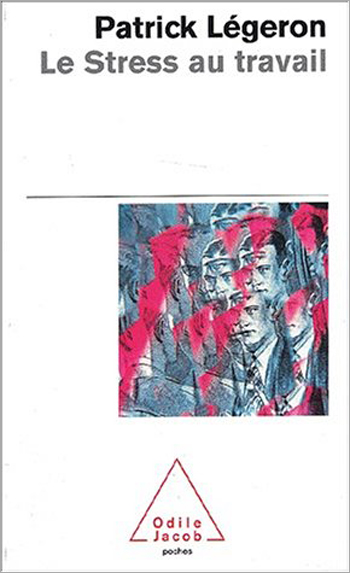

Patrick Légeron
Stress in the Workplace
A new, completely revised edition of an outstanding reference work on stress in the workplace


Jacques Lecomte
Cured of Childhood
How does a child whom life has hurt become resilient? Jacques Lecomte examines every aspect of a child's environment that can help him or her overcome misfortune. He stresses the crucial need for markers in the reconstruction of the child's personality, and on the importance of finding meaning in suffering. This is a thorough study of resilience, its foundations and how it works. It is also a polemical work which questions the role played by psychotherapists in building resilience. Jacques Lecomte argues that they are not the only ones who can do this - and that sometimes psychotherapists can do more harm than good. The author suggests specific plans of action, for families and children, so that those who are suffering and in pain may learn to become resilient and happy. This book offers a powerful message of hope - happiness, says the author, lies in acquiring a better understanding of resilience. Jacques Lecomte is a doctor in psychology and a lecturer at the University of Paris-X. He specialises in training professionals who work with children and is secretary general of the International Observatory on Resilience, presided by Boris Cyrulnik.
