
Catalog All books
Daniel N. Stern
Forms of Vitality Exploring Dynamic Experience in Psychology, the Arts, Psychotherapy, and Development
The author renews a concept that had been abandoned for more than a century but which is central to our understanding of our intimate experience of existence

Dominique Wolton
Forms of Indiscipline
A brilliant, authoritative synthesis of Dominique Wolton’s thought and work
Jean-Luc Gaffard, Mario Amendola, Francesco Saraceno
The Forgotten Time in Economics
An innovative book that completely overhauls economic theory and proposes a more dynamic and more realistic view of entrepreneurs, finance, and possible action by governments.
Louis Roussel
Forgotten Childhood
Roussel points to a number of frightening signs among children today failure at school, depression, suicide, juvenile delinquency, violent behaviour and concludes that childhood itself is seriously threatened. The changes in family relations have played a determining role in affecting the lives of all children each and every one of them potential victims of the upheavals that shake our society. Such is the theory that Roussel presents in this book, as he traces more that 20 years of changes in the family and examines their impact on education. Louis Roussel is a scientific adviser for Frances national institute of demographic studies.
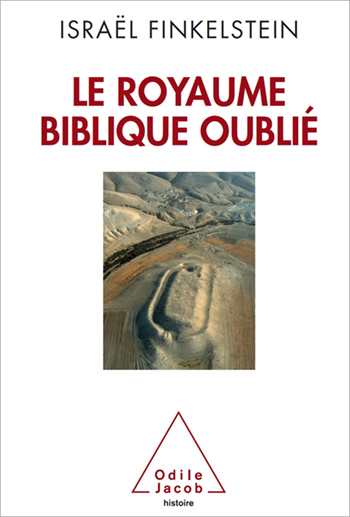
Israël Finkelstein
The Forgotten Biblical Kingdom
One of the world’s greatest archaeologists reveals what the Bible doesn’t tell us.
Jean-Pierre Danjean
Forgetfulness and Memory Lapses
From banal forgetfulness to serious memory disorders: tests and essential guidelines to help decide how and when to take action.
Marie Rose Moro, Jean-Louis Brison
For the Well-Being and Health of Young People
A new approach to well-being as a condition for the academic success of our children: one learns better when one feels good!

Jacques Tassin
For an Ecology of the Sentient Weaving a new connection with nature
Beyond the posturing and more or less effective remedies, what does “protecting nature” really mean?
Alain Bentolila
For a School of Resistance
An original and documented program of education policy that offers a response to the success of disinformation and extremisms confronting the young.
Pierre-André deChalendar
For a City That Is Desirable Once Again Cities are our future: what can be done so they will ultimately be desirable again?
Should we leave cities? The subject is very timely, and this book, which argues that we shouldn’t, deals with it intelligently, and without being overly-technical, which is rather rare in the realm of urbanism.
Viviane de La Guéronnière
The Food We Eat How it Really Affects Health
Find out what you should really eat to preserve health and prevent disease

Jean-Marie Bourre
Food for Thought And Pleasure
"Why do we eat? For our intelligence capacity, aswell as the harmonious functioning of the body. Yes, for the brain you must eat eggs, charcuterie, red meat, as oily fish as possible, accompanied by fruit and vegetables, and complemented by wine and beer. Yes, you must derive pleasure from eating. And no, you don't need to become a herbivore, which would only serve to hinder the development and operation of your brain!" Jean-Marie Bourre
Raymonde Bonnefille
Following Lucy Expeditions in Ethiopia
A unique account by one of the few women to have actively participated in the great archeological expeditions in the Omo Valley in the 1970s.
Jean-Didier Vincent
The Flesh and the Devil
"If I did not exist, nothing would exist, because there would be nothing to which oppose oneself", writes Fernando Pessoa in the devil's name. Is this the invention of a poet? Nothing is less sure. The scientist confirms the notion that life is born from the confrontation between molecules. J.D. Vincent invites us here to explore with him all the aspects, the ramifications, from animal life to the human brain, which are nurtured by this principle of opposition. The devil is constantly at work in the heart of the living, and neurobiologist Jean-Didier Vincent demonstrates this evidence with humor in his book, a continuation of the spirit present in his Biology of Passions.
John Lukacs
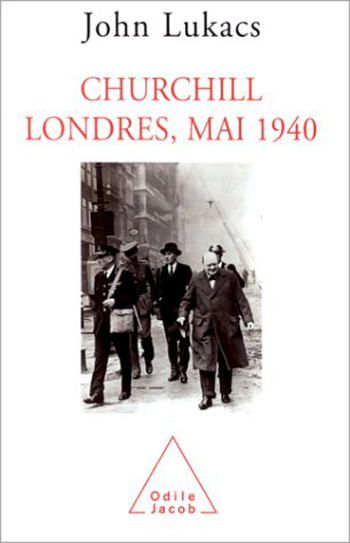
Five Days in London: May 1940
The days from 24 to 28 May 1940 significantly altered the course of the history of the past century. When German troops reached the Atlantic coast, the British counterattack resulted in the disaster of Dunkirk. Europe was on its knees. Britain seemed powerless. For several critical days, at 10 Downing Street, the British cabinet debated whether to negotiate or to continue the war against Hitler. And if the war was to be continued, how would it be fought? What hope was left? Lukacs takes us into the crucial unfolding of these five days that changed history. The events described here provide a lesson in courage as much as in politics. John Lukacs is a former professor of history at Chestnut College in Philadelphia.
Yves Jacquin Depeyre
Fiscal Appeasement
The author urges the French to get rich and to become less hostile toward taxation