Catalog All books
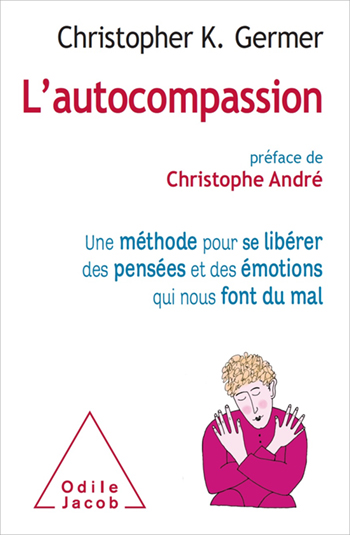
Christopher K. Germer
The Mindful Path to Self-Compassion Freeing Yourself from Destructive Thoughts and Emotions
An introduction to self-compassion by an eminent clinical psychologist and bestselling author

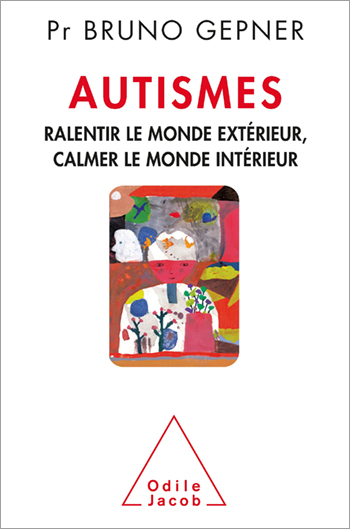
Bruno Gepner
Autisms Autism, cerebral tempo and consciousness
Hope for autistics: a new approach recommends reducing noise levels and visual stimulation in their environment
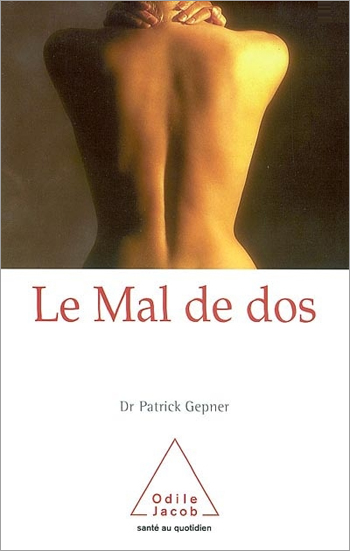
Patrick Gepner
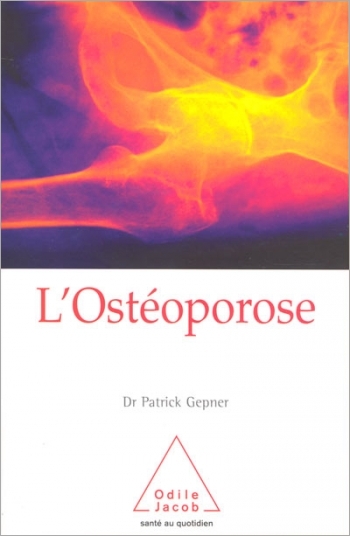
Osteoporosis
Osteoporosis is characterised by a loss in the quality and quantity of bone tissue. The consequences are serious: they include fractures and the compression and curving of the spinal column, and the disease is responsible for more deaths than breast cancer. It is estimated that one-third of menopausal women suffer from osteoporosis, and the proportion is likely to rise as a result of bone damage caused by extreme dieting and anorexia among female adolescents. The fear of high cholesterol and weight gain among women older than 50 years of age is also responsible for decreased bone density. In addition, the incidence of osteoporosis among males is on the rise. Recently, there has been increased interest in the subject of osteoporosis, which has been described as "an invisible enemy" because it rarely produces symptoms. It is usually detected when a fracture occurs and by then it is too late. For this reason, early diagnosis and, particularly, prevention are of the utmost importance. Like the other books in the "Santé au Quotidien" series, this is a practical handbook, which reviews all that is known today about the disease and offers much useful advice: Which kinds of mineral water contain the most calcium? How can you eat plenty of calcium-rich milk products without gaining weight? Is hormonal replacement treatment during menopause an effective method of preventing osteoporosis? The outline of the book: When should you become concerned about osteoporosis? How is it diagnosed? What can you do to ensure good bones for life? How can osteoporosis be treated? False notions and honest tips. Patrick Gepner is a rheumatologist, practising at the Hôpital Foch, in Suresnes, near Paris. He is the author of Mal de dos, published by Editions Odile Jacob in the "Santé au Quotidien" series.


Édouard Gentaz
The True Contribution of Neuroscience to School A Neuromyth?
A clear and practical book, based on several multidisciplinary studies, which critically evaluates the true contribution of neuroscience to teaching and learning.

Édouard Gentaz, Solange Denervaud, Léonard Vannetzel
The Secret Life of Our Children
Understanding our children to help them through their development

Génération Snooze
Snooze
Written by two practitioners of Artificial Intelligence, this book is both very accessible and very concrete.
Guiliana Gemelli
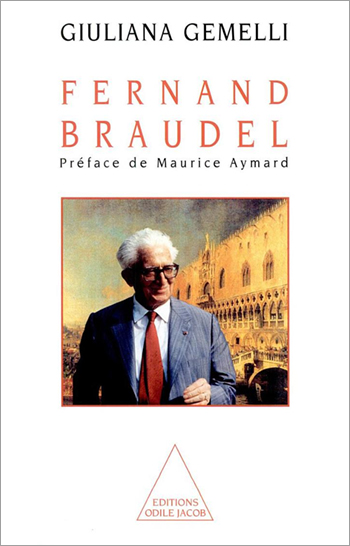
Fernand Braudel
Fernand Braudel is considered as one of the major historians of the XXth century. Making his stand against factual history, he was one of the founders of the triumph of new history: the history of human societies rooted in their geographical space and obstinately determined to produce their material civilization there. This biography takes its strength from friendly conversations between Braudel and Giuliana Gemelli, who because she is Italian, had the necessary distance to make a demanding quest.
Gisèle Gelbert
Speaking, Reading, Writing In Other Words
A completely original approach to aphasic language disorders...

Gisèle Gelbert
The Illiterate Brain
Is illiteracy a social scourge, or is it an aphasia-like disorder? To find the answer, Gisèle Gelbert delves into the mysteries of the brain of an illiterate person, and teaches us the art of `repairing' it. By thoroughly breaking down each linguistic act, she is able to define and localise with great accuracy the disorders observed in both written and oral expression. She also makes use of the schema to develop exercices that are especially adapted to the clinical observation of localised disorders, thus opening the door to new therapeutic possiblilities. Gisèle Gelbert is a neurologist and aphasiologist. She is the author of "Lire c'est vivre "(Opus, 1996) and "Lire c'est aussi écrire" (1998).
Gisèle Gelbert
The Mechanics of Reading Skills Learning to read, but how and why?
A therapeutic approach to language disorders has been shown to work.


Sylvie Geismar-Wieviorka
Treating drug users From cold turkey to shooting galleries
A front-line doctor explains how to treat drug addicts

Walter J. Gehring
Master Control Genes in Development and Evolution: The Homeobox
What can be more amazing than an embryos development? How do the cells know that the eyes go on the face and not on a leg or some other part of the body? And why does this information sometimes go awry giving rise to a deformed creature? Walter J. Gehring, a renowned specialist in the genetics of embryonic development, traces recent developments in the field. Walter J. Gehring teaches cellular biology at the University of Basle, Switzerland.

Bernard Geberowicz
The Seven Virtues of Relationships A Special Alchemy
The keys to building a solid, lasting relationship
Michael S. Gazzaniga
The Social Brain
This book investigates the concepts of the "right brain" and the "left brain". According to the author the brain is most certainly made up of relatively autonomous modules which react independantly to environmental pressures. At least one of the modules, situated on the left side of the brain, is responsible for the interpretation of answers which may be contradictory with others, whereas yet another module on the same side translates into words the result of this interpretation. So, instead of being a unique, monolithic system that we imagined, the brain would appear to be a collectivity of systems - a social brain. This approach enlightens us as to the functioning of the human brain, and according to Gazzaniga, affects the very roots of our belief systems and societies. Renowned American neurologist, Michael Gazzaniga is Director of the Cognitive Neuroscience Division of Cornell University and chairman of Neuropsychology.
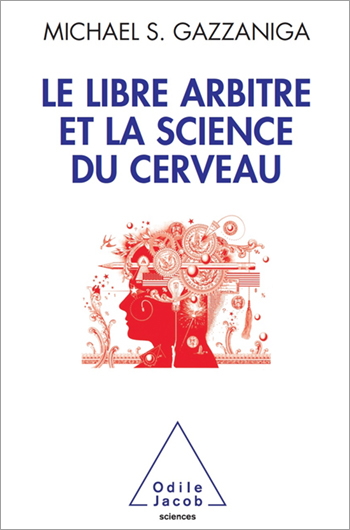
Michael S. Gazzaniga
Who’s in Charge? Free Will and the Science of the Brain
Are we really the masters of our actions and are we wholly responsible for what we do?

Mireille Gayraud-Andel , Marie-Pierre Poulat
Stuttering and How to Overcome It
This informative guide shows how to overcome stuttering and recover self-esteem.


Jean-François Gayraud, François Thual
Geostrategy of Crime
Crime has not escaped from the effects of globalisation — with dire results. Two experts examine here the threats to our present and future security.