Catalog All books
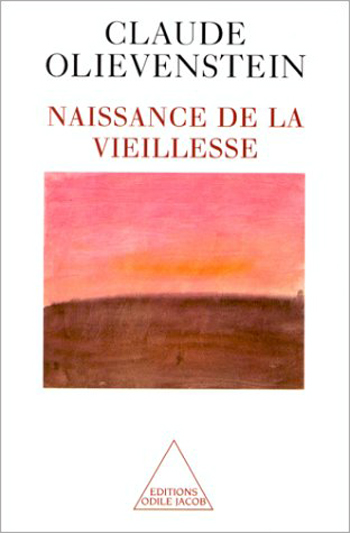
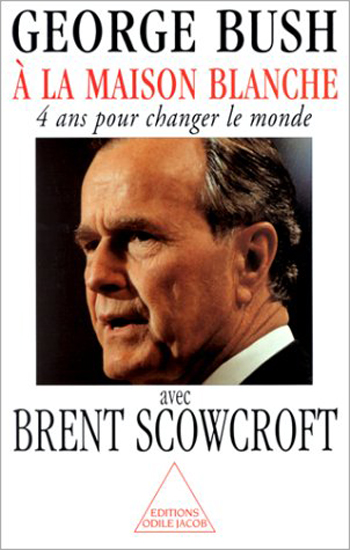
George Bush, Brent Scowcroft
A World Transformed
It was one of the pivotal times of the twentieth century - during George Bushs presidency an extraordinary series of international events took place that materially changed the face of the world. Now, former President Bush and his national secretary advisor, Brent Scowcroft, tell the story of those tumultuous years. Here are behind-the-scenes accounts of critical meetings in the White House and of summit conferences in Europe and the United States, interspersed with excerpts from Mr. Bushs diary. We are given fresh intriguing views of world leaders such as Mikhail Gorbachev, Boris Yeltsin, Margaret Thatcher, Helmut Kohl, and François Mitterrand--and witness the importance of personal relationships in diplomacy. There is the dramatic description of how President Bush put together the alliance against Saddam Hussein in the Gulf War. There are the intensive diplomatic exchanges with Beijing following the events of Tiananmen Square, and the intricate negotiations leading up to the German reunification. And there is the sometimes poignant sometimes grim portrayal of Gorbachevs final years in power. A World Transformed is not simply a record of accomplishment; Bush and Scowcroft candidly recount how the major players sometimes disagreed over issues, and analyze what mistakes were made. This is a landmark book on the conduct of American foreign policy-- and how that policy is crucial to the peace of the world. It is a fascinating inside look at great events that deepens our understanding of todays global issues. George Bush was President of the United States from 1989 to 1993. Brent Scowcroft was National Security Advisor under Presidents Ford and Bush.

Françoise Héritier
On Violence II
In this new volume, anthropologists, biologists, psychoanalysts and political scientists continue their interdisciplinary examination of violence. What are our links with the animal world? Is the animal metaphor relevant when discussing violent acts committed by human beings against other human beings? What is the relationship between pain and violence? What part does violence play in social relations? What is nonviolence? Could the concept of nonviolence enable us to develop a universal ethical system? Françoise Héritier is an honorary professor at the Collège de France.
Bernard Roques
The Danger of Drugs
This book is the result of a study on drugs carried out by Bernard Roques at the request of the French Secretary of State for Health, Bernard Kouchner. The author has reviewed and summarised a large body of information from all over the world, so this is a thorough, detailed scientific examination of what is known today of the potential dangers, particularly for the brain, of toxic and psychotropic drugs including alcohol and tobacco which are often associated with the consumption of other drugs. Roques study will doubtless play a major role in public health discussions and decisions, particularly in the fight against alcoholism and nicotine addiction. Bernard Roques is a member of the French Académie des Sciences.
Hervé de Carmoy
Entreprise, Individual and State Leading to Change
The author believes that France is suffering from numerous ills, including inertia, demagogy, unemployment, corruption, corporotism, elitism, and a general withdrawal from the outside world. He also thinks that much more than clear-headedness and a desire for change are required if a cure is to be found. What is the best way of making the necessary changes? How have others gone about implementing those changes? He believes the business world provides an excellent model for learning how to deal with an ever-changing environment. Hervé de Carmoy was formerly general director of the Midland Bank in London.
Régis Debray
Believe, See, Do Crossings
In this work, Régis Debray gives free rein to his thoughts and tackles the varied subject matter provided by daily events encountered " in the news, out of the blue, or through friendship or surprise, at a moments notice and without great forethought. " The subjects he writes about range from " the Gulf War to a photo exhibit, from Tatis Jour de Fête to copyright registration, from a daydream about water to a meditation on road travel. " Other works by Régis Debray published by Editions Odile Jacob include Que Vive la République!, Tous Azimuts, and Transmettre.
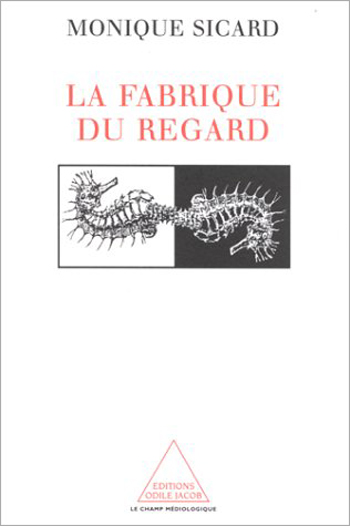
Monique Sicard
The Making of the Image
It was during the Renaissance that images and pictures were first used by anatomists, microscopists, and astronomers as scientific tools. In that era, scientific images served as a kind of inventory of the known world. In the 19th century, the popularization of scientific ideas gave science a new vigor. Photographic images gave science a new reality, explaining and legitimizing scientific concepts--movement, for example--to a fascinated public. In our days, the scientific image is often a construction--helping us to represent objects and ideas that, like fractals or black holes, cannot be defined through actual observation. Monique Sicard is Projects Director at CNRS Images Média.
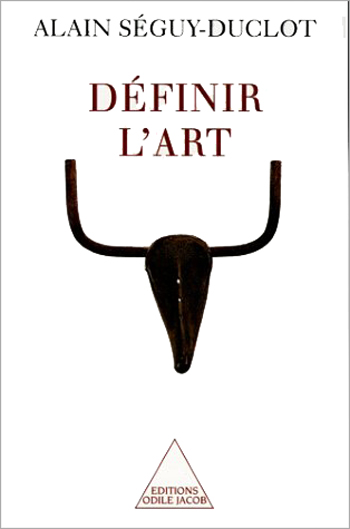
Alain Séguy-Duclot
Defining Art
The general consensus is that art is impossible to define and that the evaluation of works of art is always subjective. Countering these affirmations, Alain Séguy-Duclot shows in this work that art can, in fact, be defined. Duchamp's readymades (industrial objects in series, snow shovels, wine racks, etc) constitute a point of departure for this reflection. He argues that, rather than showing that art was undefinable, the readymades proved that art was definable. It is this that Séguy-Duclot sets out to prove in this incisive and passionate work. Alain Séguy-Duclot is a philosopher, and a professor at the University of Tours.
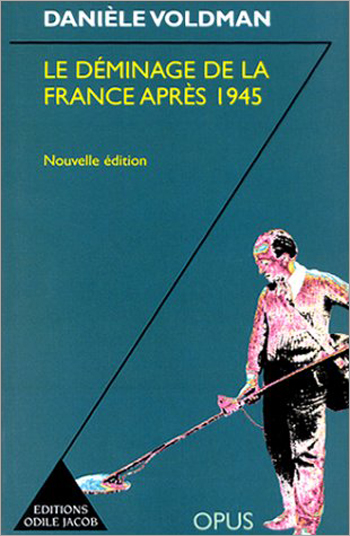
Danièle Voldman
The Mine Clearance of France after 1945
At the liberation of France, the country was covered in mines, planted by the Germans, the Allies and the Resistance during the conflict. The population were fearful of resuming normal life in the face of this danger: France had to remove the mines. Thus in 1945, mine clearance was invented, as before then no-one had any idea how to defuse these weapons of death! Who would be given the heavy responsibility of leading this task ? What did it involve ? What role did the German prisonners of war play ? Danièle Voldman, a historian, is the research director of the CNRS (Institute of Contemporary History).
Joseph Rovan
Bismarck, Germany, and a United Europe 1898-1998-2098
1898-1998: the difference between these two dates is vast, and it is likely that the difference between 1989 and 2098 will be even sharper. This gives us even more reason to reflect on the actions of a man who was able to anticipate and incite change. Joseph Rovan has taught German studies at the French universities of Vincennes and Paris-III. He is the author of many books and articles, including France-Allemagne: Le Bond en Avant, with Jacques Delors and Karl Lamers, published by Editions Odile Jacob.
Alain Ehrenberg
Tired of Yourself Depression and Society
Examining the changes that have occurred since the 19th century in both psychiatry and society at large, this book shows how the internal collapse that is depression is the ultimate symbol of our culture of powerlessness. The depressed person cannot rise above the demands imposed on him or that he imposes on himself. He has no recourse but fatigue, inhibition, and indecision. But what does it mean to learn to be oneself? Is our society merely creating huge numbers of hypochondriacs? Can we any longer draw a line between the small unhappinesses and frustrations of daily life, and pathological suffering? Alain Ehrenberg is a sociologist.

Georges Charpak
Children, Researchers and Citizens
Georges Charpak has taken the initiative for a complete reform of our methods of science teaching. He proposes a teaching method based on creativity and problem-solving, instead of the old theoretical, book-based approach. This book recounts the experiences of two teams of French educators in a research institution created by Leon Lederman in Chicago, and the lessons which we can take from their experiences. Pollens shows that to learn is to discover, and that it is in discovering that one learns. Georges Charpak is a Nobel laureate in physics, and the author of La vie à fil tendu and Feux follets et champignons nucléaires, both published by Editions Odile Jacob.
Émile Biasini
Africa and Us
Economist Charles Gide once described colonization as "a force of nature." Biasini believes that to imagine that our current phase of decolonization actually is an end to colonialism is just another manifestation of our society's megalomania. Africa today is going through a phase of change. It must stay faithful to its roots, digesting all the various cultures which have influenced it, while facing a new colonial menace. Its own elites, once fled abroad, have returned to Africa and are quickly becoming the colonists of their own countries. And such colonial ambitions, history teaches us, must inevitably lead to imperialism. Emile Biasini was a civil servant in colonial Africa. Under De Gaulle, he helped found the Ministry of Culture.