Catalog All books
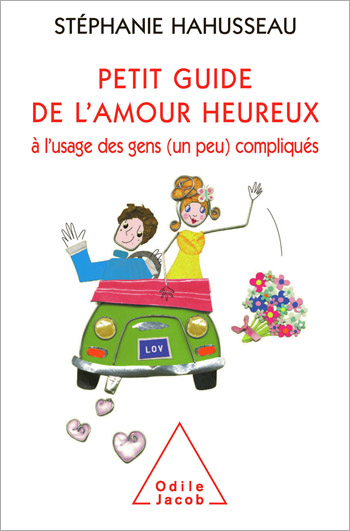
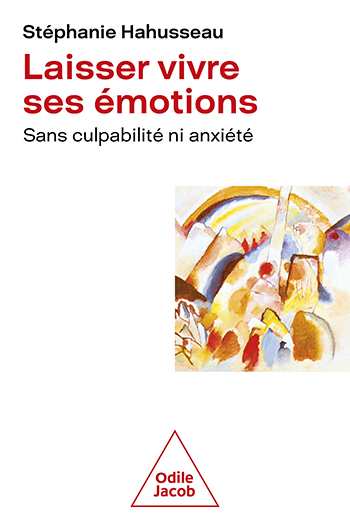
Stéphanie Hahusseau
Let Your Emotions Flow Without Guilt or Anxiety
33 crucial themes or key words – the acceptance of anger, attachment, self-confidence, humour, emotional phobia, feelings, loneliness, etc. to understand how emotions influence our health.
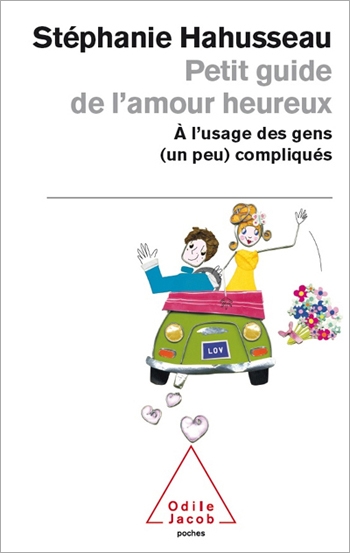
Stéphanie Hahusseau
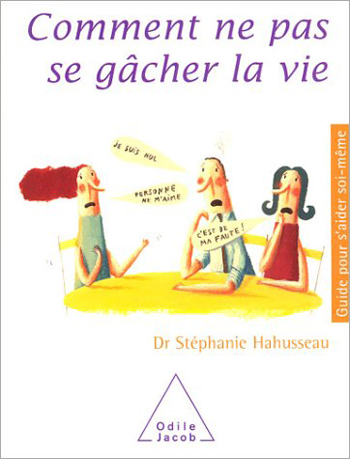
How to Stop Yourself Spoiling Your Life
Our lives are governed by patterns and beliefs which we have inherited from childhood and which, without our knowledge, make us repeat the same mistakes and relive the same distress. Stéphanie Hahusseau breaks down such patterns in this concise self-help book, which aims to help us change our lives. Illustrated with numerous case studies, the advice offered here is always concrete and specific. It should help us embark on a journey of self-discovery and to put an end to what makes us suffer. Stéphanie Hahusseau is a psychiatrist practising in Toulouse.
Stéphanie Hahusseau
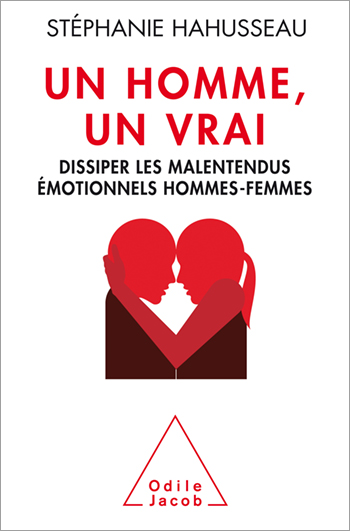
A real man Understanding the Opposite Sex
What makes men and women behave as they do? Finally, the keys to understanding each other
Stéphanie Hahusseau
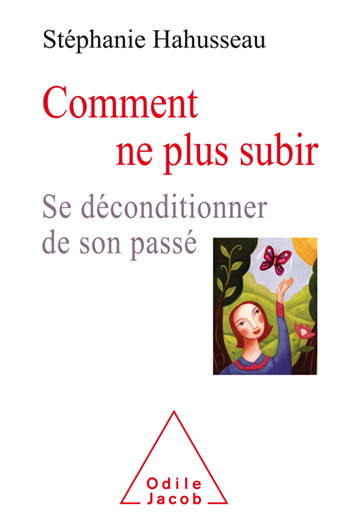
How Not to Endure Any Longer Deconditioning Oneself from One’s Past
A book for a general audience and for health-care professionals that explains how behavioral disorders, can be hiding repressed issues of abuse
Olivia Hagimont
Nothing Is Going My Way or How Panic Attacks Descend on Me, Out of the Blue
A comic book, in the popular “girly” style, which gives an alternative slant to psychiatric disorders and CBT.
Olivia Hagimont
Chubby Or How I Survived the Skinny Tyranny
A light-hearted take on being overweight in the form of a ‘psychological’ comic book, with an explanatory text by psychiatrist Christophe André
Olivia Hagimont
The Family Dinner or How to Survive Your Loving, Neurotic Family
Family dinners are the perfect opportunity to show a rogue’s gallery of characters with strong personalities, who will, over the course of a meal, offend and wound each other, but come to love each other once again. Family get-togethers, where neuroses take centre stage. Olivia Hagimont’s sense of humour works as a magnifying glass, allowing us to see our own idiosyncrasies in order to be able to put things that hurt us into better perspective, and to start letting go of past events.
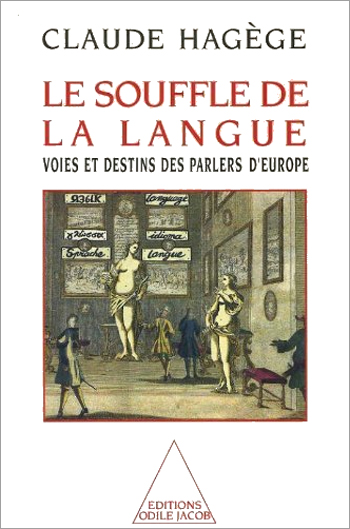
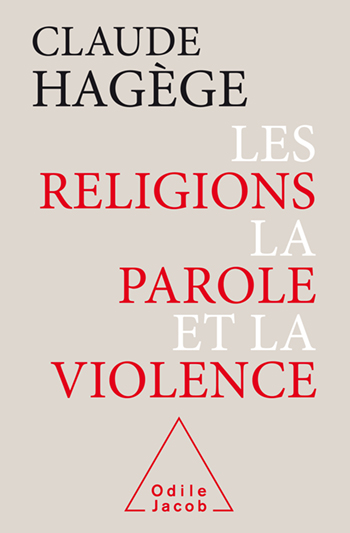
Claude Hagège
Religions, the Word and Peace
A unique and original contribution, both erudite and mordant, from a specialist, on the question of the ties between violence and religions, which is such a crucial one in today’s world.
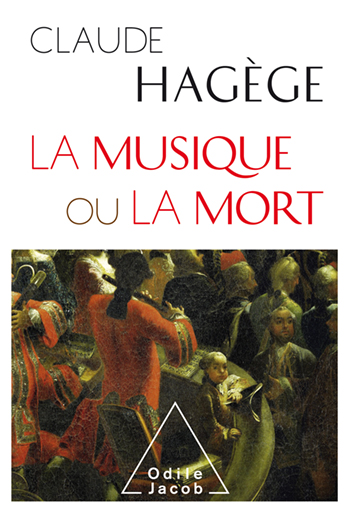
Claude Hagège
Music or Death The language of music explained by an eminent linguist
Music does indeed have a strong message to convey
Claude Hagège
The Child who speaks two languages
At what age should we learn a second language? Which are the intellectual faculties which bilinguism helps to develop? What is the compared efficiency of language learning in childhood and in adulthood? In which case does a person forget a language, particularly a mother tongue? Claude Hagège tells us here that anybody can become perfectly bilingual and how Europe, which is not the continent where the most bilingual people are found, can multiply their number. Indeed, the challenge of bilingualism is at the heart of European union. C. Hagège, professor at the Collège de France, has published in particular L'Homme de paroles and Le Souffle de la Langue.
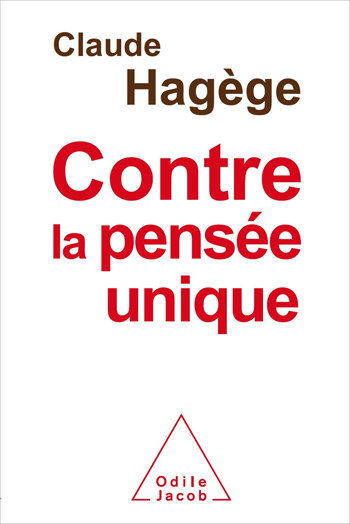
Claude Hagège
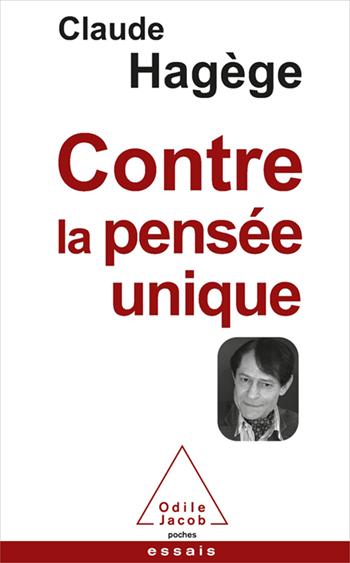
Against Uniform Thinking
The threat of uniform thinking, relayed notably through the English language, should lead us to react in defence of linguistic and cultural diversity.
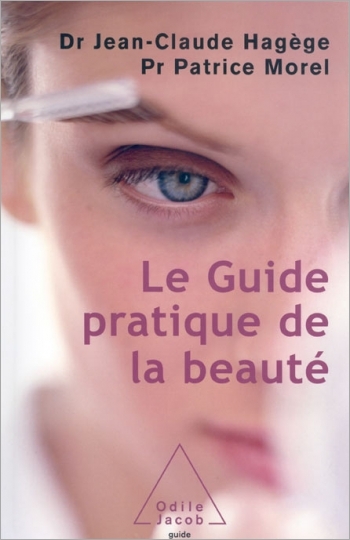
Jean-Claude Hagège, Patrice Morel
Guide to Beauty
In this manual on beauty, two doctors - a plastic surgeon and a dermatologist - present all the existing means of enhancing every facet of one's appearance (face, eyes, makeup, hair, legs, breasts, buttocks, weight). The authors review the entire gamut of existing techniques, from the simplest to the most complex. The book is divided into sections: What you can do yourself, What your dermatologist can do and What your surgeon can do. This serious, rigorous study provides scientific arguments to help readers make their way through a plethora of choices in the areas of cosmetics, aesthetic dermatology and plastic surgery. The information given here is straightforward and unbiased by commercial considerations. Le Guide de la Beauté is an attractive, abundantly illustrated book offering a broad panorama of ways of enhancing one's appearance. Jean-Claude Hagège is a plastic and cosmetic surgeon and a member of the International Society of Plastic Reconstructive Surgery. Patrice Morel is head of Dermatology at Hôpital Saint-Louis, in Paris.
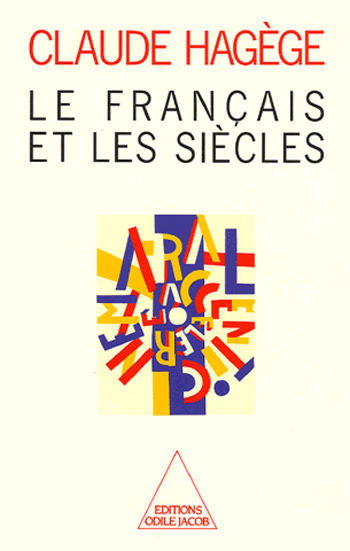
Claude Hagège
The French Language and the Centuries
Claude Hagege illustrates how the internal purity of the French language, less endangered than one might think, has been pushed aside in favor of its external promotion, less real than one might imagine. He increases our awareness of a major reality of the times. The French language is no longer the exclusive property of France; it has become an international affair. Claude Hagege is a professor at the Collège de France.
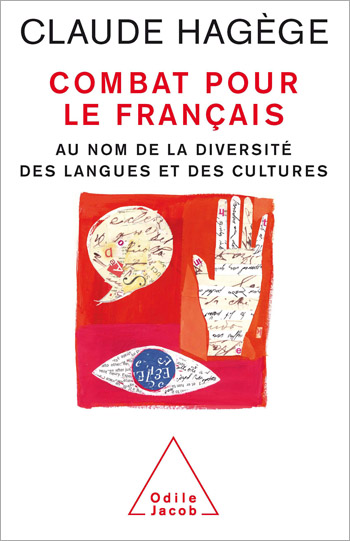
Claude Hagège
Against Uniform Thinking
An eminent linguist and popular media personality who has mastered more than 50 languages, Claude Hagège is the sole figure with the authority to defend linguistic diversity and to make his voice heard.
Raphaël Hadas-Lebel
The Future of France’s Fifth Republic and Its Institutions in 18 Questions
Should France abandon the five-year presidential term? Should it proscribe political cohabitation (following the failure of the presidential party to acquire a parliamentary majority)? Is a second chamber necessary? How can the Constitutional Council be made to evolve?
Étienne Guyon, Jean-Paul Troadec
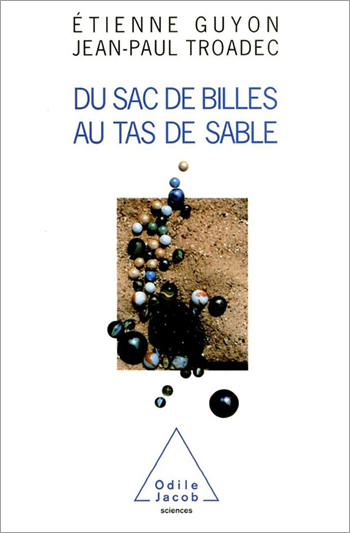
From a Bag of Marbles to a Heap of Sand
Why don't sand dunes collapse? How does sand flow in an hourglass? How is it possible to empty a silo of all its wheat? What's a ceramic? The answer to all these questions can be found in the science of the complex organizations of matter, a science which is pluridisciplinary. Étienne Guyon, head of the École Normale Supérieure, and Jean-Paul Troadec, a researcher, present the characteristics of grain matter, the rules by which it is organized (in both crystal and fluid) as well as its movements (in silos as in avalanches).