
Catalog All books
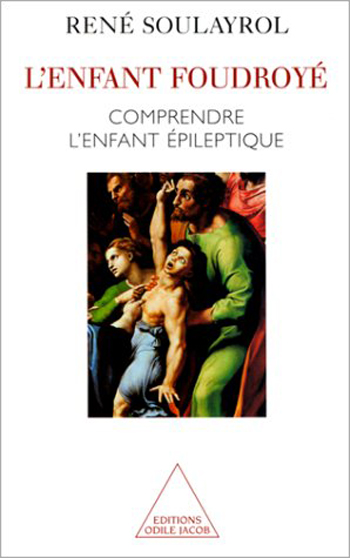
René Soulayrol
The Stricken Child Understanding the epileptic child
Do epileptic seizures occur completely out of the blue? Or is there an underlying cause? How do epileptic children live with their bodies on a day-to-day basis? Can epilepsy result in the impairment of the childs intelligence? What are the links between epilepsy and neuroses or psychoses? This book springs from an attempt to understand the psychological behaviour of the epileptic child, and the efforts that the child must make in order to adapt and continue to live as normal a life as possible, in spite of the disease. René Soulayrol teaches child psychology in the Faculté de Medécine, in Marseille.

Françoise Héritier
On Violence II
In this new volume, anthropologists, biologists, psychoanalysts and political scientists continue their interdisciplinary examination of violence. What are our links with the animal world? Is the animal metaphor relevant when discussing violent acts committed by human beings against other human beings? What is the relationship between pain and violence? What part does violence play in social relations? What is nonviolence? Could the concept of nonviolence enable us to develop a universal ethical system? Françoise Héritier is an honorary professor at the Collège de France.
Joseph Rovan
Bismarck, Germany, and a United Europe 1898-1998-2098
1898-1998: the difference between these two dates is vast, and it is likely that the difference between 1989 and 2098 will be even sharper. This gives us even more reason to reflect on the actions of a man who was able to anticipate and incite change. Joseph Rovan has taught German studies at the French universities of Vincennes and Paris-III. He is the author of many books and articles, including France-Allemagne: Le Bond en Avant, with Jacques Delors and Karl Lamers, published by Editions Odile Jacob.