
Catalog All books

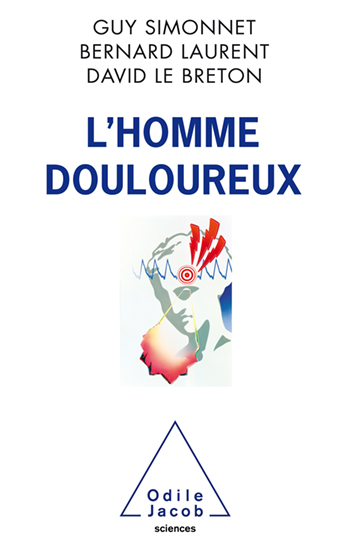
Guy Simonnet, Bernard Laurent, David Le Breton
Humans In Pain
A complete analysis of the phenomenon of pain on three levels: neurobiological, medical, and anthropological.

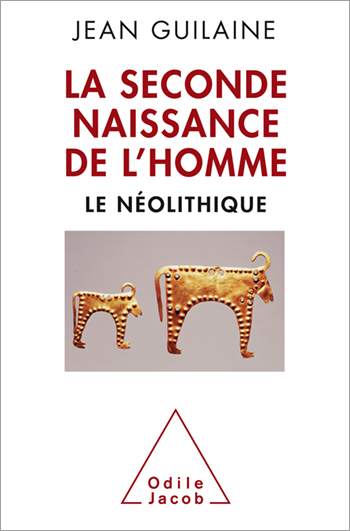
Jean Guilaine
Humanity’s Second Birth The Neolithic Revolution
The Neolithic Revolution, a major turning point in the history of humanity
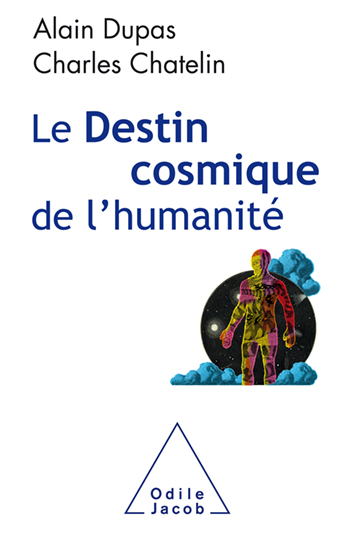
Alain Dupas, Charles Chatelin
Humanity’s Cosmic Destiny
An inspiring, sometimes disconcerting book. A new history of space exploration. A future-oriented look at the evolution of humanity in the light of the evolution of technology, both biological and that regarding space.

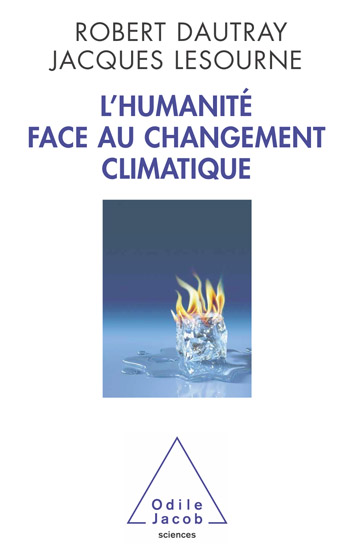
Robert Dautray, Jacques Lesourne
Humanity and the Challenge of Climate Change
A thorough examination of current scientific data concerning the evolution of climate change and related phenomena.


Lluis Quintana-Murci
The Human People On the genetic traces of migrations, crossbreeding and adaptations
A fascinating overview of what we have learned from genomics, after two decades of amazing progress: an unprecedented leap forward in our knowledge of human diversity and its history.

Olivier Houdé
Human Intelligence is Not an Algorithm
An original theory that proposes a new model of intelligence centered on intuition, logic, but also inhibition, indispensable for correcting our cognitive biases.
Jacques Lecomte
Human Goodness
Contrary to the prevalent view, the author argues that human beings are good by nature— and recent studies support his thesis.

Bruno Humbeeck
How We Choose Romantic Partners
The unconscious foundations of how we choose whom we fall in love with

Christine Tardieu
How We Become Bipeds The Wolf-Child Myth
A history of how and why humans are the only mammals that permanently adopted bipedalism.
Olivier Morin
How Traditions Are Born And Die Cultural Trans
A new approach to how culture is transmitted that helps us understand the multicultural society in which we live

Éric Albert
How to Use Stress to Your Advantage
Stress, which is a product of our busy and agitated societies, does not necessarily occupy our private life. For many of us, stress is part of our professional life. What should we do in order to work better? How is it possible to put into place working and relational methods which favour efficiency and dynamism without exerting undue pressure? How can we avoid falling apart ? Éric Albert, a psychiatrist, explains what we know of stress today and moreover gives us facts which can help us analyze the way we work and how we can improve what can be improved.
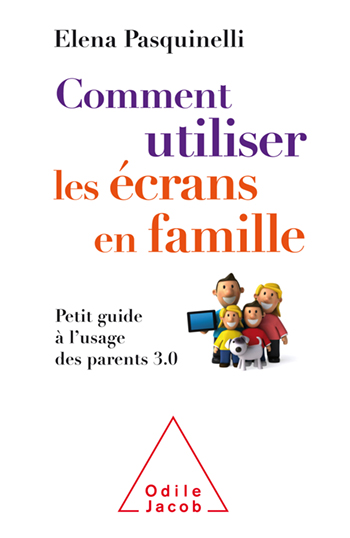
Elena Pasquinelli
How to Use Screens in Your Family A Guide for Parents 3.0
Everything you need to know on strategies to encourage a reasonable use of screens for our children and… for ourselves!

Bernard Duplan, Marc Marty
How to Treat Back Problems
Why do you have backache ? What are the treatments available to you ? Can osteopathy help ? What to do when the pain is persistant and recurring ? How can you protect your back ? What precautions need to be taken in pregnant women and children ? Does the "mental" aspect play a part in curing it ? This book is a thorough guide to current medical knowledge about the causes of backaches, how to prevent them and how to treat them. Bernard Duplan, a rheumatologist, heads a department at the rheumatology hospital in Aix-les-Bains. Marc Marty is a rheumatologist at the Hospital Henri Mondor, in Creteil.

Robert Axelrod
How to Succeed in a Selfish World A Theory of Cooperative Behaviour
How can one succeed in a world of selfish people ? This is the question at the heart of the work of Robert Axelrod because if cooperation is the social cement of life, it is also one of its greatest mysteries. Basing his analysis on Game theory, in addition to the trench warfare of 1914-1918, the behaviour of legislative bodies, or international negotiations, Robert Axelrod explores the reasons, in turn simple and surprising, which allows cooperation to take hold even in the worst situations. Strategists, negotiators, decision makers, managers, social reformers, people motivated by common sense, honesty or equally dishonesty everyone will find food for thought in the pages of this book, which is already considered as a classic. An expert in Game theory, Robert Axelrod teaches Political Sciences at the University of Michigan, in the United States.

Stéphanie Hahusseau
How to Stop Yourself Spoiling Your Life
Our lives are governed by patterns and beliefs which we have inherited from childhood and which, without our knowledge, make us repeat the same mistakes and relive the same distress. Stéphanie Hahusseau breaks down such patterns in this concise self-help book, which aims to help us change our lives. Illustrated with numerous case studies, the advice offered here is always concrete and specific. It should help us embark on a journey of self-discovery and to put an end to what makes us suffer. Stéphanie Hahusseau is a psychiatrist practising in Toulouse.
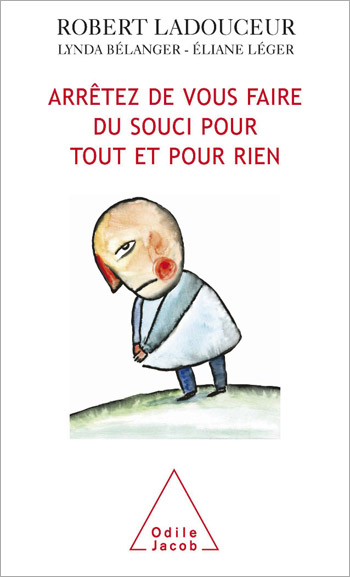
Robert Ladouceur, Lynda Bélanger, Éliane Léger
How to stop worrying about everything and nothing
Take the time to breathe deeply. Control your stress. Stop worrying about everything. Thats what youd like to do, but you believe that, for someone with an anxious temperament like your own, this is impossible. However, this 220-page book shows how you can overcome chronic anxiety. Included here are quizzes, questionnaires, examples and exercises - everything that you need to help you make the change and live a better life. A psychiatrist and psychotherapist, Robert Ladouceur is a professor of psychology at Laval University in Quebec City.


Henri-Jean Aubin, Patrick Dupont, Gilbert Lagrue
How to Stop Smoking
We are all aware that tobacco seriously damages health. Yet despite this, many of us continue to fall into the trap and start smoking. And many smokers who try to overcome their dependence fail to do so because quitting involves more than just will-power. This book will enable smokers to understand the mechanisms underlying their tobacco dependence so that they will be able to free themselves of it, without breaking down. Dependence may be physical, but it is also psychological and behavioural. Three eminent specialists have brought together their skills here to offer a real, step-by-step action programme. Professor Gilbert Lagrue is a specialist in vascular diseases. Dr. Henri-Jean Aubin is a psychiatrist and heads a section in a centre devoted to the treatment of addictions. Dr. Patrick Dupont works toward putting a stop to tobacco abuse for the Office Français de Prévention du Tabagisme.


Pierluigi Graziani, Daniela Eraldi-Gackiere
How to Stop Abusing Alcohol
Not only does alcohol abuse have serious consequences for physical and psychic health, it is also destructive of personal and social relationships. But putting an end to this form of drug abuse is particularly complex, because alcohol creates a dependence that is both physical and psychological, and because it is, in many cultures, closely linked to sociability. In trying to help alcohol abusers who wish to stop drinking, one is often confronted with resistance and denial. The authors, specialists in cognitive and behavioural therapies, describe methods that have been successfully used for many years in the treatment of alcohol abuse in a hospital setting. Pierluigi Graziani is a psychologist and lecturer on clinical psychology and psychopathologies at the University of Aix-Marseille-Ain, in Aix-en-Provence. Daniela Eraldi-Gackière is a psychologist.
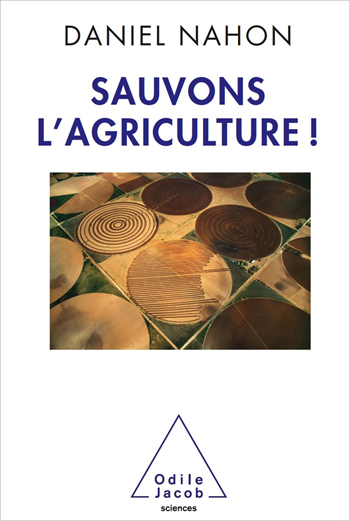
Daniel Nahon
How to Save Agriculture
Only a radical transformation of agriculture will enable us to feed all of humankind


Christine Mirabel-Sarron
How to Overcome Depression
How can depression be overcome? And how can someone suffering from depression recover a sense of well-being, self-esteem and joy? How can chronic fatigue be vanquished? During the past few years, both the diagnosis and treatment of depression have greatly evolved, and even if depression remains a complex illness, effective treatment is now available. The advice given in this book depends on the active participation of victims of depression. It is by learning to know themselves, by understanding what is happening to them, and by becoming less vulnerable that they will overcome their depression. Christine Mirabel-Sarron is a psychiatrist and physician at Hôpital Sainte-Anne, Paris.

Yves Simon
How to Overcome Bulimia
Bulimia is increasingly common, particularly among girls. A recent study of high-school-age girls revealed that 20 % suffered from regular bulimic episodes. Approaching bulimia from both a psychological and a behavioural angle, the authors offer a practical, scientifically tested method to overcome the disorder. This is an indispensable book for patients, their friends and family, as well as for members of the medical profession Yves Simon is a medical psychiatrist and director of the anorexia/bulimia programme at the Free University of Brussels. François Nef is a psychologist teaching at the Free University of Brussels. Both Doctors Simon and Nef are specialists in eating disorders and behaviour.